Category: Music tells – Novelle for young and old

"Music tells" is a short, ironic and informative book for young and old. Each story starts from a note, instrument or silence to explain music and, as it is, some strangeness of the human soul. Because musical theory may sound serious, but life is much less.

  • The awakening of the Giant

    A book that has been closed for too long. A boy decided to open it. And a music ready to return to the world.

    by Marialuisa Veneziano

    ***********

    🎧 MUSIC FOR LETTURE
    To accompany The awakening of the Giant, we recommend listening to the initial chorus "Kommt, ihr Töchter, helft mir klagen" from Passion according to Matthew, BWV 244 by Johann Sebastian Bach, in the execution of Netherlands Bach Society direct from Jos van Veldhoven. It is precisely the music at the center of our fairy tale: the great one Passion that, in 1829, Mendelssohn helped to bring back to the public.
    Two choirs, orchestra and choral intertwine in a monumental construction that seems to progress slowly from a long time to us. It is not only the beginning of a Passion: for our history it is the very voice of the Giant reopening his eyes, abandon the powder of the shelf and breathe back through other hands, other voices, another time. Click on the arrow of the logo "cuffie", press play and start reading.

    In Berlin, in a large hall where men spoke undervoice for respect for music and scores spoke loudly as soon as men left, there was a shelf that no one ever looked at.

    It was tall, dark and slightly crooked.

    On the last shelf, crushed between a volume of motets and a collection of corals that claimed to have personally known at least three principles, he rested a huge book.

    It had the worn cover, the folded corners and many pages that the little Minuetto, the most vain among the compartments of the room, considered it almost a manufacturing defect.

    — How many pages do you have? — He asked him one night.

    — Lots.

    — I see that. How many?

    — Enough.

    Minuetto sighed.

    — That's why they don't play you. Today we have to be brief.

    The great book did not answer.

    On the back he had a name that dust had almost hidden:

    Johann Sebastian Bach.

    And below, in letters now a little discolored:

    Passion according to Matthew.

    The other scores called him simply The Giant.

    Not because he was scared.

    Because it occupied a lot of space and spoke very little, two characteristics that, according to Minuetto, in the musical environments were often enough to be considered important.

    Every night, when the lights went out in the hall, the scores started their conversations.

    Ottavia the Chromium ran from one leggio to another bringing news that no one had asked her.

    — Tomorrow they try Mozart! I heard everything! Full orchestra! Two oboi! Two horns! And maybe even cookies in the range!

    — Cookies do not concern music — Herr Fagotto.

    Herr Fagotto was an old tool that lived in the corner and considered everything that had happened after his youth a progressive deterioration of civilization.

    — In my day... — He often said.

    No one had ever understood exactly what his time was.

    They changed according to the subject.

    Madame Ragnatela lived above the Giant.

    She was a small ragna convinced that she was appointed General Custodian of the Archive, although no one remembered by whom.

    — The Giant is perfectly preserved — He declared.

    — You're covering me with webs. — He was watching.

    — Preventive storage.

    — I can't almost see.

    — The light spoils the paper.

    And so years passed.

    The scores were coming.

    They were open.

    Play.

    Closed.

    Others became fashionable.

    Others stopped being.

    The Giant stayed there.

    But what no one knew was that he had not been completely forgotten.

    He was the one who learned to hide.

    A long time before he had known hands that peeled him, musicians who bowed on his pages, voices that turned those little black signs into something capable of filling a church.

    He remembered a man.

    Not his face with precision.

    Hands.

    Hands tired, strong, fast.

    Hands they wrote.

    Correct.

    Cleared.

    Recomposed.

    Those hands were gone.

    Not even those rumors.

    And the Giant had discovered one of the most difficult things to understand:

    time also takes away what we thought should remain.

    So he made a decision.

    He wouldn't sing anymore.

    If it had been closed, nothing would have changed.

    No new voice would take the place of the ancients.

    No one could have played it differently.

    The past would have been safe.

    Or at least he thought so.

    Every afternoon, however, a little girl arrived in the room.

    His name was Lotte.

    He was nine years old, two braids that never remained of the same length and a curiosity considered excessive by all adults except his father, who worked in the hall and had now given up to prevent her from asking questions.

    Lotte couldn't read a score.

    So, unlike adults, he wasn't afraid of important scores.

    One day he sat down in front of the shelf.

    He looked at the Giant.

    — You must be very sad.

    The book had a taste.

    Of course, Lotte couldn't hear him talk.

    Or maybe.

    In the fables this distinction has never been particularly useful.

    — Why? — asked the Giant.

    — Because no one opens you.

    — Maybe I don't want to be open.

    Lotte thought about it.

    — This is even more sad.

    The Giant is offended.

    — I belong to another time.

    — My grandfather belonged to another time.

    The book was silent.

    — Where is it?

    Lotte lowered his eyes.

    — There is no more.

    For some time no one said anything.

    Even Ottavia la Croma, who had passed to announce an urgent matter concerning a dynamic fork, decided to postpone.

    Then Lotte smiled.

    — But some things I say to her.

    The Giant didn't understand.

    Lotte got up and ran from his father.

    But that phrase remained in the pages.

    A young man came to the room some time later.

    She was twenty years old, hair that seemed to have discussed with the comb and lost all interest in reconciliation, and a curiosity at least equal to that of Lotte.

    His name was Felix Mendelssohn.

    Minuetto observed it.

    — Too young.

    Herr Fagotto:

    — In my time at 20 years, we had already the decency to look tired.

    Felix began to examine the scores.

    He opened one.

    Then another.

    Then he came to the giant shelf.

    Madame Ragnatela came down immediately.

    — Vietato.

    Felix, of course, didn't hear it.

    He extended his hand.

    The Giant stiffened.

    The cover was opened.

    A dust cloud hit Felix.

    Ottavia sneezed for seven consecutive games.

    Felix began reading.

    Slowly first.

    Then more and more carefully.

    The Giant felt something he hadn't felt for years.

    The notes inside him were moving.

    A distant voice seemed to wake up.

    Then another.

    Then a choir.

    The old book was afraid.

    Turn around.

    Felix stepped back.

    — Curious.

    — Damn it! — protested the Giant.

    — Interesting — said Felix.

    — I said rude!

    But Felix reopened it.

    Minuetto observed the scene with growing concern.

    — This young man does not know respect for ancient music.

    Herr Fagotto brontolò:

    — Finally.

    That night Felix had a dream.

    It was in the large hall, but the shelves had become very high and the leaves flew in the air like white birds.

    In the end there was the Giant.

    — Why don't you want to be played? — Felix asked him.

    — Because nobody can play me like that.

    Felix was silent.

    — That's true. — he finally said.

    The Giant didn't expect that answer.

    — Then leave me here.

    — No.

    — Why?

    Felix approached.

    — Because remembering doesn't mean remaking yesterday.

    — So what does that mean?

    Felix looked at his pages.

    — Allow yesterday to arrive until tomorrow.

    The Giant trembled.

    — But if new voices sing my notes, the old ones will disappear.

    Felix pointed out Lotte, who was sitting at the bottom of the room in his dream.

    — When you repeat a phrase from your grandfather, do you cancel your grandfather?

    The Giant looked at the baby.

    — No.

    — Then maybe a new voice doesn't erase the old one.

    Felix smiled.

    — Maybe the door farther.

    The Giant did not answer.

    Because there are thoughts that, when they really come deep, they need silence before finding an answer.

    The evidence began.

    And they were a disaster.

    At least according to Herr Fagotto.

    — Too fast.

    — We haven't started yet — they noticed.

    — Exactly. An unbearable rush.

    Ottavia the Chroma ran on the pentagrams shouting:

    — Wake up! Wake up! After almost a hundred years we can’t show up!

    Minuetto offered himself as an artistic consultant.

    — I'd notice.

    — What?

    — Everything.

    — Why?

    — The modern public.

    — And what does the modern public want?

    Minuetto stopped.

    — I have no idea. But everyone says you have to give it to him.

    Madame Ragnatela suffered a lot.

    Every time someone turned a page, his web was destroyed.

    — Barbary! — screamed. — Years of archival work!

    Little by little, though, something happened.

    The notes that had long remained still began to remember that they were not born to be watched.

    One after another they became sound.

    The Giant listened.

    They were different voices.

    Different hands.

    A different time.

    At first it hurt him.

    Then he understood something strange.

    Those new voices weren't taking the old place.

    They were doing what the old had done before them:

    They got the music.

    And then they delivered it.

    He arrived on 11 March 1829.

    The Sing-Akademie Hall in Berlin was full.

    Felix Mendelssohn went to the podium.

    The Giant was open in front of him.

    The pages trembled.

    — I can still run. — said Minuetto, hidden under a chair.

    — You are not even part of the work — Sibilò Ottavia.

    — Precisely. I have less to lose.

    Herr Fagotto took a position.

    — If we have to attend a historical event, I hope at least that it will end at a reasonable hour.

    The Giant didn't listen to them.

    He looked at the audience.

    New faces.

    New clothes.

    Another century.

    — They won't recognize me. — He whispered.

    Felix put a hand on the score.

    For a moment the Giant had the impression that he could hear it.

    — Are you taking me back? — He asked.

    Felix lifted his eyes.

    And in the mysterious language that sometimes exists between a musician and a page he replied:

    — No. I'm entrusting you to the future.

    He raised his arms.

    Quiet.

    Then the music began.

    The first sentence crossed the hall.

    The Giant recognized every note.

    But no voice.

    For a moment he felt a fit.

    It's not them.

    Then a voice picked up a sentence.

    Another led her forward.

    The instruments took advantage of it.

    The choir raised her.

    And something began to pass from one person to another.

    You couldn't see.

    And yet there was.

    Like a little light.

    From the composer to the pages.

    From pages to musicians.

    From musicians to the audience.

    From past to present.

    The Giant finally understood what had been wrong for many years.

    He believed that living meant staying the same.

    Instead, living meant continuing to be received.

    Bach didn't come back to the hall.

    The old voices didn't reappear.

    No dead hand returned to browse the pages.

    That's why the miracle was bigger.

    The past had not returned.

    He found a way to move on.

    Under the chair, Minuetto had become strangely silent.

    Ottavia looked at him.

    — What?

    — It's not modern at all.

    — Is that a problem?

    Minuetto listened a little longer.

    — No.

    Then, almost countervoke:

    — I think it's the opposite.

    Herr Fagotto dried an eye.

    — Are you crying?

    — Condensa.

    — March?

    — Historical condense.

    When the last note is lost, for a few seconds no one moves.

    The Giant waited.

    Then the applause came.

    Strong.

    Long.

    The old book felt something like happiness.

    — I'm back — He said.

    Madame Ragnatela, for once, did not answer.

    Because the most important moment had not yet arrived.

    Outside the hall, Lotte walked by his father.

    He listened to everything.

    He didn't understand all the words.

    He didn't know the story of that score.

    He couldn’t even explain why that music hit her.

    But as he walked the road he began, without noticing, to sing a small sentence.

    The Giant heard it from the window.

    — My music!

    Lotte kept moving away.

    — He's taking away my music!

    Madame Ragnatela slowly came down on the cover.

    — No.

    — How not? Can you hear her?

    — Of course.

    — So what are you doing?

    The ragna looked at the child disappearing at the corner of the road.

    — He's moving her on.

    Then the Giant remembered.

    A child sitting on the ground.

    Two unequal braids.

    A phrase pronounced almost by chance:

    Some things my grandfather said to her, too.

    Finally understood.

    People don't defeat time by preventing things from changing.

    They cross it by leaving something in the hands, words, gestures and memory of those who come after.

    That night the Giant returned to the shelf.

    Minuetto approached him.

    — So?

    — So what?

    — You're back young?

    — No.

    — Have you become modern?

    — No.

    — Famous?

    The Giant reflects.

    — Maybe.

    Minuetto seemed satisfied.

    — I knew it.

    — But it doesn't matter.

    Minuetto was deeply troubled by such a little worldly statement.

    — So what does it matter?

    The Giant looked at their pages.

    — Someone can open me again tomorrow.

    Madame Ragnatela began instinctively to weave a thread on the cover.

    The Giant shook him gently.

    — Not this time.

    — What's that?

    — Let me open.

    — But dust!

    — Come in.

    — The light!

    — That'll come too.

    — Your fingers!

    — They'll turn the pages.

    Madame Ragnatela was scandalized.

    — You're gonna ruin yourself.

    The Giant smiled.

    — Maybe. But at least I'll live.

    And that night was slightly open on the shelf.

    He no longer waited for someone to bring him back to the past.

    He was waiting for someone willing to take him a little further to the future.

    And somewhere in the streets of Berlin, a little girl kept singing.

    Remembering does not mean holding back the past so that it remains still. It means delivering what we have received to someone who will come after us. Things really live change voice, change hands, cross other times; and that's exactly how they don't end up with who created them.


    BOX HISTORY
    Leave a comment

  • Master Metròn and the forbidden break

    In Beethoven's Vienna, a small metronome discovers that time can be measured, but music is not.

    by Marialuisa Veneziano

    ***********

    🎧 MUSIC FOR LETTURE
    To accompany Master Metròn and the forbidden break, we recommend listening toAllegretto of the Symphony No. 7 in the major, op. 92 by Ludwig van Beethoven, in direct execution by Nikolaus Harnoncourt. About eight minutes built over a regular and inexorable pulsation, almost the tic tac of a large invisible metronome; and yet, above that beat, Beethoven lets music breathe, grow, change intensity and become deeply human. It is precisely the heart of our fairy tale: time can be measured, but music really begins when the measure stops being a cage.
    Click on the arrow of the logo "cuffie", press play and start reading.

    In Vienna, in a winter when even snow seemed to fall with education, a thirteen-year-old boy named Matthias lived.

    Matthias studied piano.

    He was not a prodigy child, which he was very sorry for, especially because he read that prodigy children began generally before him and had already composed at least three concerts in the age when Matthias had learned not to overthrow the soup.

    But he had a rare quality:

    It was accurate.

    Terribly accurate.

    His scales began at the established time, his fingers fell on the keys exactly where they had to fall and, if a semi-minimum appeared on the score, Matthias treated her with almost administrative respect.

    His master, Herr Weiss, often told him:

    — Matthias, you play all right.

    The boy smiled.

    Then the second sentence always came.

    — Unfortunately.

    Matthias never understood how something could be correct and, at the same time, wrong.

    He seemed an offense to logic.

    One afternoon Herr Weiss arrived with a box.

    — It's for you.

    Inside there was a strange wooden object, with a metal rod swinging from one side to another.

    — One metronome.

    Matthias looked at him like other children would look at a white horse.

    Herr Weiss loved him.

    Tic.

    — It's time to keep it.

    The boy's eyes lit up.

    Finally.

    Someone who didn't say "with more feeling", "respirate the sentence", "do not rush but not slow down".

    The metronome wasn't talking about puzzles.

    Sixty was sixty.

    Eighty was eighty.

    Hundreds, thank God, were hundred and twenty.

    Matthias took him to his room and spent the afternoon studying.

    Tic.

    Scale.

    Tic.

    Arpeggi.

    Tic.

    Studies.

    Never a statement.

    That night he went to bed happy.

    At midnight he was woken up by a noise.

    Tic.

    He opened his eyes.

    Tac.

    He sat down.

    The metronome was on his own.

    — You forgot to turn me off. — said a voice.

    Matthias opened his mouth.

    — Did you talk?

    — Of course.

    — Metronomes don't talk.

    — Even the pianists should not do it during the performance, yet I know a lot of them moaning.

    Matthias lit the candle.

    — What's your name?

    The auction rose with dignity.

    — Master Metròn. Time Keeper, Defender of Regularity and Natural Enemy of the Mal Giustificati Rubies.

    — It's a very long name.

    — At sixty beats per minute it takes exactly the time needed.

    Matthias was enchanted.

    He finally met someone who thought it like him.

    From that day they became inseparable.

    Master Metròn ruled everything.

    — Eighty through the stairs.

    — One hundred for the exercises.

    — Sixty-six for Adagio.

    Matthias obeyed.

    Metròn then began to take care of the rest of the house.

    He chronomed the maid while sweeping the floor.

    — Too irregular.

    He measured the cat's pass.

    — Undisciplined.

    He even tried to establish the correct duration of the embraces of Matthias' mother.

    — Four beats are enough.

    — But she's my mother.

    — Feeling does not authorize anarchy.

    When Matthias's little sister burst out laughing during dinner, Metròn shouted:

    — Out of time!

    — He's laughing. — protested Matthias.

    — Precisely. No recognizable structure.

    The boy began to think that his new friend was perhaps a bit demanding.

    But at the piano the results were extraordinary.

    He wasn't accelerating anymore.

    He wasn't slowing down.

    Almost nothing was wrong.

    The day came when Herr Weiss heard him perform an Adagio.

    Matthias played everything perfectly.

    It ended.

    The master sighed.

    — Impeccable.

    Matthias waited.

    — And?

    — He's dead.

    — How'd he die?

    — I don't know. You must have killed him on the second page.

    Master Metròn, from the table, taught himself.

    — Calunnia!

    Herr Weiss didn't hear it.

    Matthias is.

    — I've respected every value.

    — I know. — answered the master. — That's what worries me.

    A few weeks later Herr Weiss brought Matthias to listen to a famous man.

    Ludwig van Beethoven.

    Matthias imagined it solemn, ordered and probably surrounded by a special light.

    On the other hand, he found a broken man, with cards everywhere and an expression that suggested that the world had lost him a lot of time.

    — Sound — said Beethoven.

    Matthias sat down.

    Master Metròn was placed next to the piano.

    Tic.

    The boy began.

    No mistake.

    No hesitation.

    No surprise.

    When he finished, Beethoven remained silent.

    — Did I do something wrong? — asked Matthias.

    — Unfortunately not.

    The boy moved.

    That was exactly Herr Weiss' sentence.

    — Then it was perfect.

    Beethoven looked at the metronome.

    — Even a watch is perfect. I wouldn't give him a sonata.

    Master Metròn lightly accelerated for indignation.

    — But the metronome tells me time — protested Matthias.

    Beethoven pointed out the object.

    — That can tell you how long it takes a minute.

    Then he slightly touched his chest.

    — This has yet to decide what to do with it.

    Metròn didn't speak all the way back.

    It was the first time Matthias saw him offended.

    That night, however, the metronome made a decision.

    — I will prove to that man who is in a state that precision can make the whole world perfect.

    — How?

    — Putting it on time.

    Before Matthias could stop him, Master Metròn began to beat.

    ICT. TAC.

    The sound crossed the walls.

    He went down the streets.

    He entered the clocks.

    He went to the bell towers.

    And Vienna began to follow him.


    The next morning everyone walked at the same pace.

    The carriages were leaving at the same time.

    The furnaces kneaded in perfect synchronicity.

    The barbers lifted the razors at the same time.

    The bells of the churches sounded with such precision that even the angels, if they existed, probably controlled the clock.

    At first the city was enthusiastic.

    Nobody was late.

    Nobody interrupted anyone.

    The files flowed beautifully.

    The Minister of the Public Order declared that morning the most successful in the history of the Empire.

    Then problems began.

    A child fell.

    His mother stopped to help him, but the crowd continued to walk.

    ICT. TAC.

    An old man tried to cross a road.

    He couldn't follow the rhythm.

    — Faster! — he ordered Metròn.

    — I can't. — said the man.

    — Time doesn't wait.

    Matthias helped him reach the sidewalk.

    — Master Metròn, can't you go slower?

    — If I slow down for him, everyone would lose time.

    — But he needs more time.

    — Everyone has the same.

    Matthias looked at the old man.

    For the first time, that phrase didn't seem right.

    In a house, a mother cradled a baby.

    The baby was about to fall asleep.

    ICT. TAC.

    The rhythm increased.

    The boy woke up crying.

    Two lovers greeted themselves in front of a carriage.

    He kissed her.

    ICT.

    — Time's up! — he ordered Metròn.

    — Wait a minute.

    TAC.

    — I said time.

    Matthias intervened:

    — Maybe a kiss doesn't always last the same number of beats.

    — That's why kisses never produced an efficient civilization.

    The boy wasn't completely sure.


    In the afternoon the Vienna orchestra held a concert.

    It was the most precise execution that had ever been heard.

    All attacks together.

    All exact durations.

    No freedom.

    No hesitation.

    No mistake.

    When he finished, no one applauded.

    Not because it was bad.

    Worse.

    He didn't say anything.

    Matthias watched Master Metròn.

    — Did you like it?

    — Technically irrepressible.

    — I didn't ask you that.

    For the first time, Metròn hesitated.

    Tic...

    The auction resumed.

    — Technically irreproachable — repeated.

    But with less conviction.

    That night, Matthias was supposed to play in front of Beethoven.

    The room was full.

    Master Metròn imposed time.

    — Sixty-six.

    Matthias began.

    ICT. TAC.

    It sounded good.

    Then he came to a slow sentence.

    One note went up to another and seemed to ask for something.

    Matthias felt she should have waited.

    ICT.

    Your fingers should have gone on.

    They didn't.

    TAC.

    Matthias remained still.

    Master Metròn began to shake.

    — Get back!

    The boy let the silence live.

    One second.

    Two.

    Three.

    — Time!

    Matthias looked at the audience.

    At the end of the hall he saw the old man met that morning.

    It was late.

    He was breathing so hard.

    Matthias waited.

    Until the old man looked up.

    Then he started playing.

    Not when he ordered Metròn.

    When the sentence asked.

    Music changed.

    He didn't become disorderly.

    She became alive.

    A phrase accelerated slightly because he was in a hurry to arrive.

    Another slowed down because he didn’t want to leave yet.

    A break lasted long enough to allow everyone to miss it.

    Matthias continued to respect the rhythm.

    But he was no longer a prisoner.

    Beethoven smiled.

    A woman closed her eyes.

    The old man at the end of the hall slowly turned back.

    And Master Metròn, for the first time since his construction, stopped beating.

    When the song ended, Matthias turned.

    The metronome was still.

    — You broke up?

    — No.

    — Then why did you stop?

    Metròn blew.

    Then he said,

    — That break...

    — What?

    — Too long.

    — Yes?

    — It wasn't written.

    — No.

    The auction just moved.

    — She was beautiful.

    Matthias smiled.

    — A long time ago?

    — Mostruously.

    Quiet.

    — But beautiful.

    From that day Vienna slowly returned to Vienna.

    The carriages returned late.

    Children ran at unpredictable speed.

    The old ones crossed the streets with the necessary time.

    The lovers, with great scandal of the ministry, returned to decide independently the duration of their kisses.

    And Matthias continued to study every morning with Master Metròn.

    Scale.

    Tic.

    Arpeggi.

    Tic.

    Hard passages.

    Tic.

    One day, many years later, Matthias opened an Adagio.

    He was a pianist.

    Master Metròn had become old. The wood was carrying small scratches and the rod oscillated with some dignified fatigue.

    — Master?

    — Yes?

    — What time should I play it?

    For the first time in his long life, the metronome replied:

    — I don't know.

    Matthias smiled.

    Metròn added:

    — I can help you find him.

    — And then?

    The old metronome made a small ♪.

    — Then listen.

    Matthias put his hands on the keyboard.

    And Master Metròn ate.

    Not because he had nothing to teach him.

    But because he had finally learned when it was time to let him play.

    The rules are precious when they teach us to become free; they become cages when they claim to choose in our place. Accuracy can teach the music to stand, but only listening, thinking and feeling can teach you where to go.


    BOX HISTORY

    The mechanical metronome entered the European musical life in the early nineteenth century thanks to Johann Nepomuk Mälzel. Beethoven was among the most interested composers of the new invention and indicated metronomic values for many of his works. Our fable starts right from this encounter between a great modern aspiration — accurately measure musical time — and a question that no number can solve completely: how much space does the interpreter have?

    4 answers to "Maestro Metròn and the forbidden break"

    1. Avatar Danilo
      Danilo

      At the moment the most beautiful story among those published.

    2. Avatar left2ba3d74a7e4
      left2ba3d74a7e4

      How many times in life do we confuse what is right with what is simply measurable?
      We measure votes, salaries, results, numbers, rankings. Reassure us what can be counted, compared, archived. But not all that matters can be counted.
      The love of a mother for a child is not measured. Loyalty to a principle is not measured. The courage to rise after suffering, the kindness offered in silence, the time dedicated to those who need do not find place in a table or in a statistics.
      Yet these realities often constitute the most authentic part of our existence.
      Philosophy reminds us that good does not always coincide with profit, and that truth does not necessarily coincide with what is quantifiable. We live in an age that tends to give value to what produces visible results, forgetting that some of the most important things mature in the invisible: a straight conscience, a sincere bond, a right choice accomplished without witnesses.
      Perhaps wisdom also consists of this: learning to distinguish between what has a price and what has a value.
      Because not all that is measurable is important, and not all that is important is measurable. And often, what is really right is recognized not by the meter of numbers, but by that of consciousness.

    3. Avatar
      Anonymous

      Dialogue from which emerges an astonishing, even if laughter, depth of thought.

      1. Avatar left2ba3d74a7e4
        left2ba3d74a7e4

        I share. As Socrates taught, true discovery does not always consist in finding something new, but in bringing out what was already present, albeit hidden, in our consciousness.

    Leave a comment

  • The Symphony of Addii

    In the Esterházy Palace, Haydn entrusted silence with a rebellion destined to remind the power that art can be supported, but not possessed.

    by Marialuisa Veneziano

    **************

    🎧 Music for reading
    To accompany The Adii Symphony, we recommend listening to Final: Soon – Adagio of the Symphony No. 45 in fa diesis minor by Joseph Haydn, in the execution ofAcademy of St Martin in the Fields, direct from Sir Neville Marriner. Almost eight minutes in which the orchestra first burns, then slowly empties: a light, a tool and a musician at a time. The real music that inspired the novella becomes his most secret voice. Click on the arrow of the logo "cuffie", press play and start reading.


    Prince Esterházy owned a palace, many horses, a collection of watches and an orchestra.

    At least, he was convinced he had all these things the same way.

    The horses ran when they were sprouted, the clocks sounded at the established time and the musicians, properly fed and dressed, did what was placed on their laws.

    Among them was Elias Hartmann, 19 years old, second violin and owner of an inconvenient amount of thoughts.

    The prince never called him Elias.

    — According to Violino, slower.

    — According to Violino, accompany the Countess.

    — According to Violino, you will wear new livery tonight.

    Elias obeyed. But every time he felt his name was hanging out the door with his coat.

    At court the musicians wore embroidered jackets, white socks and shiny shoes. They had to be elegant, punctual and possibly mute when they didn't play. Nobility loved art, especially when art knew its place and did not ask to sit at the table.

    Joseph Haydn, master of the chapel, knew that strange condition well.

    He was respected as a composer, applauded as a genius and summoned as a servant when the prince desired a new symphony between soup and roast.

    He suffered everything with an irony so discreet that it seemed good education.

    — Master — Elias asked him one day — do you consider yourself at the service of the prince?

    Haydn raised his eyes from the score.

    — Of course.

    — Doesn't it weigh you?

    — I’m especially impressed when the service coincides with lunchtime.

    Then he returned to write.

    Elias did not know if he had received an answer or a lesson.

    At night he composed in secret. He hid the leaves under the mattress and wrote in the light of a candle consumed, while his companions slept.

    He still didn't dream of glory. He wanted something more modest and, for this reason, much more difficult: to see his name above a music born within him.

    One afternoon he composed a brief adagio for violin and strings. He started with four hesitant notes, as he walked in front of a closed door, then opened in a wide and painful melody.

    He left the manuscript on his letting during the trials.

    The next morning he disappeared.

    Three days later, during a reception, the plaintiff put a fresh copy in front of him.

    — You'll have this.

    Elias immediately recognized his notes.

    — Where did you find the composition?

    — In the musical chapel.

    — I wrote it.

    The ruler looked at him with the patience reserved for children and servants who confuse a thought with a right.

    — Exactly. You wrote it here.

    The hall was filled with nobles. They talked about hunting, weddings and returns while the orchestra agreed on the instruments. A duchess laughed so hard that the horn could have asked her lessons.

    Elias raised the bow.

    When he began to play, however, the conversations were lost.

    The melody crossed the hall and did what the music does in its best moments: it forced people very confident to hear something they had not ordered.

    In the end, a Countess approached the prince.

    — Who composed this song?

    Elias inspired.

    The prince answered before him:

    — It belongs to my chapel.

    He said «Hayd». He said «Elias Hartmann».

    He said it belonged to the palace.

    Like a tapestry.

    Like a fountain.

    Like a particularly plastered lever.

    The next day Elias found the manuscript copied on precious paper, decorated with the coat of arms of the Esterházy. He had to be donated to a visiting ambassador.

    The name of the prince appeared on top.

    The author was not there.

    Elias took a pen and wrote down:

    Elias Hartmann, musician.

    The steward read those words. Then he took out a small knife and scraped off the name.

    The paper remained clearer at that point, like a scar.

    — What is composed at the service of His Highness belongs to His Highness.

    — Thoughts?

    — Don't be insolent.

    — I'm just trying to figure out what part of my head the prince's possessions begin.

    The steward roasted.

    — You're paid, dressed and fed.

    — Horses are also fed. Yet no one argues that they have built the roads that run.

    The line went around the orchestra before night. The steward, however, did not find it funny. The intentions rarely appreciate irony: they fear that it is a lock of which they do not possess the key.

    Elias decided he wouldn't play anymore.

    But the old cellist Márton stopped him.

    — Can you afford to be fired?

    Elias did.

    — I have three children. The phagottist keeps his mother. The horner still has to pay the doctor. Your dignity is a noble thing, boy. Just try not to feed it with the bread of others.

    Those words burned him more than the humiliation he suffered.

    He understood now that even courage could become arrogant, when he claimed to choose the price others would have to pay.

    He took the unbridled manuscript and reached Haydn.

    The composer read it without talking. He argued on the point where the name was erased.

    — I want to leave — Elias said.

    — You can.

    — That's it?

    Haydn put the sheet.

    — Being right is a very economical consolation. He doesn't pay the trip and he doesn't change who's wrong.

    — So I should stay and be quiet?

    — I didn't say that. I said a banged door frees those coming out, but rarely educates those who stay.

    Haydn opened a new score.

    On the forehead was written: Symphony in fa diesis minor.

    — The prince has held us for months in the summer residence. The musicians want to return to their families. Requests have been ignored.

    — So?

    Haydn unleashed the pages.

    — Then we'll do what's best.

    — Are we going to eat?

    — We'll stop doing this.

    In the final movement, the parts of the instruments ended one after another. Every musician would have turned off the candle on his ledge and left the room.

    — Is it a symphony that surrenders? — He asked Elias.

    — No. It is a symphony that obeys with such precision to make it impossible to punish it.

    — And you think the prince will understand?

    Haydn smiled.

    — Principles include many things. Usually a few minutes after all the others understood them.

    In the evening of the concert the salon shone hundreds of candles.

    The prince sat in the center, surrounded by guests convinced that the world had been created to offer them a good view.

    Elias was wearing livery.

    In the lining he sewed the paper fragment on which his name had been erased.

    The symphony began with energy. The orchestra advanced compact, disciplined, magnificently captive.

    The prince was pleased.

    Then the last movement came.

    The oboist ended his part.

    Close the score.

    He turned the candle off.

    And he went out.

    The prince turned to Haydn.

    — Your oboist is leaving.

    Haydn continued to lead.

    — It seems so, Your Highness.

    — Why?

    — Maybe he's done.

    Shortly after the phagottist came out.

    Then a hornet.

    Then the other.

    The audience smiled. Sounded like a theatrical find.

    But when he digs the double bass, no one laughs.

    Every musician who left the room left behind an empty chair and a small column of smoke.

    Music became thinner.

    One less voice.

    A light less.

    One less man.

    When his turn arrived, Elias placed the violin in the custody.

    He slowly took off the livery and left it in the chair.

    He was wearing a simple white shirt.

    The prince rose.

    — Where do you think you're going, Second Violino?

    Elias stopped.

    The room held its breath.

    — Elias, Your Highness.

    — What did you say?

    — My name is Elias.

    He directed the livery and the instrument.

    — Second Violin stays here. You can own these.

    Then he went out.

    Only two violinists remained in the hall.

    They played a slow, almost naked sentence.

    It seemed like someone's voice that, after having long asked for permission, had finally chosen the way.

    A candle is lost.

    Then the last.

    The note died.

    The prince looked at the hall.

    The chairs were his.

    The laws were his.

    The instruments, the liveries, the candles and even the palace were his.

    And yet he had no music.

    — Get them back. — he ordered.

    Haydn lowered his hands.

    — I can ask men to come back, Your Highness. I can't command the music.

    — I pay them!

    — Pay their job. It is the only part of them that has ever belonged to you.

    The prince saw the livery abandoned by Elias. From the liner, a sheet of paper was protruding.

    He extracts it.

    He recognized the adage manuscript and the white wound left by the scraped name.

    — This composition is mine — He said.

    Haydn observed the empty orchestra.

    — So, Your Highness, let her play.

    The prince remained silent.

    For the first time he realized that you can possess everything and have nothing more capable of living.

    The next morning Elias was summoned.

    He entered without livery, of course he was fired.

    The prince had in front of the manuscript. A small strip of paper was glued to the scrapped point.

    It was written:

    Elias Hartmann.

    — Mr Hartmann — said the prince, and those two words cost him more than one whole orchestra — musicians can leave.

    Elias just called the boss.

    — The orchestra of master Haydn, Highness.

    The prince shook his lips.

    Haydn, at the bottom of the room, examined the ceiling with great interest.

    — The orchestra of master Haydn — The prince finally ran.

    The musicians left that morning.

    When they returned to court weeks later, their names appeared on the program. The prince had not suddenly become a philosopher, and the artists were not yet completely free men.

    But something broke.

    Not a rope.

    Not a law.

    A habit.

    Since then the prince continued to pay the music, but no longer dared to believe that he possessed those who created it.

    And when he called Elias, he never said «Second Violin».

    He said his name.

    To support art does not mean to possess who creates it. Money can buy the time and work of an artist, but not his thought or his dignity. A man can serve music without becoming a servant of those who pay it.

    BOX HISTORY

    Leave a comment

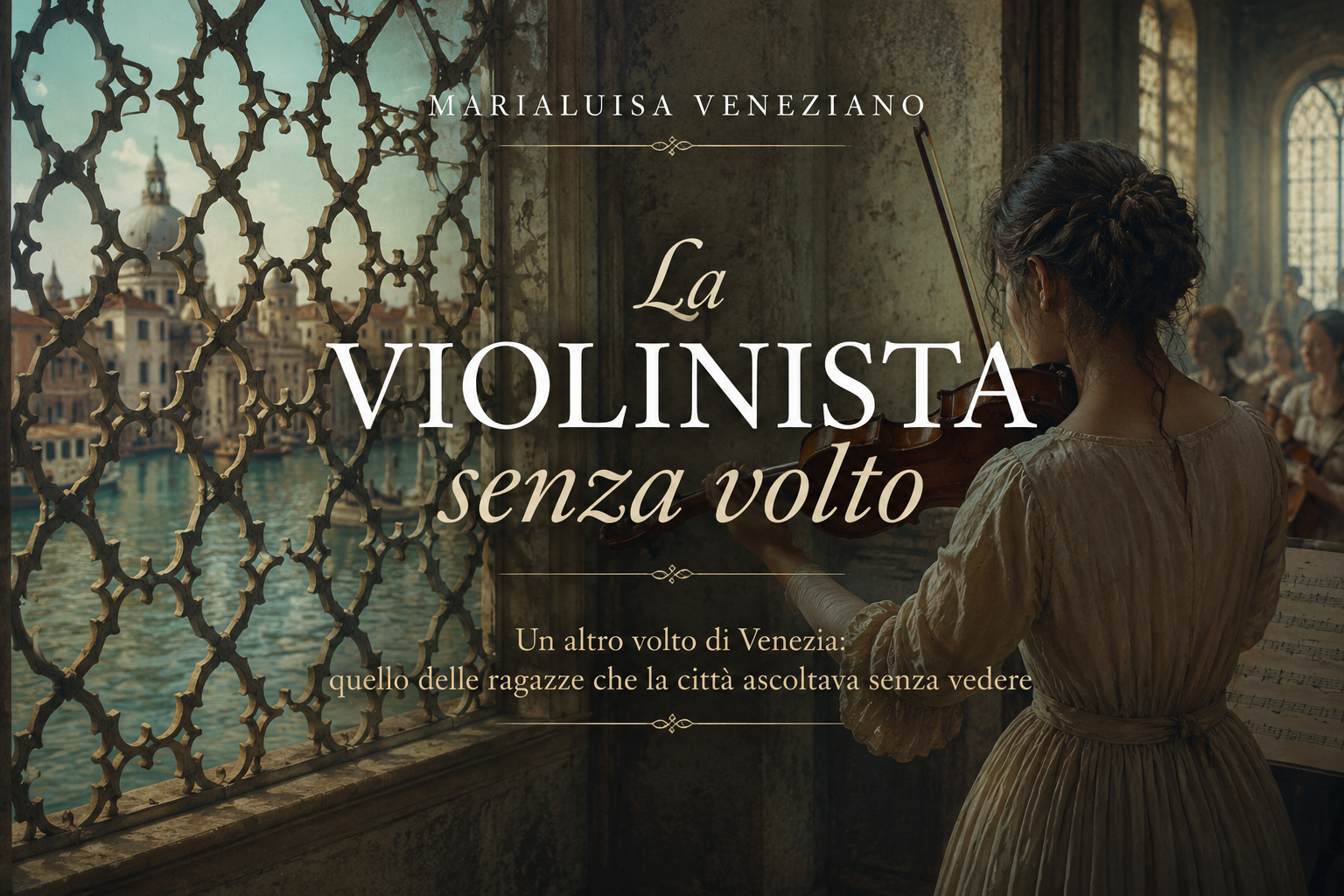
  • The faceless violinist

    The faceless violinist

    Another face of Venice: that of the girls the city listened without seeing

    by Marialuisa Veneziano

                     **********

    🎧 Music for reading
    To accompany The faceless violinist, we recommend listening to Concerto in minor for four violins and cello, RV 580by Antonio Vivaldi. Four violins look for each other, stand out and come back to join the orchestra: almost the musical image of the girls of Pietà, different in their voices and finally united in uttering their name. Click on the arrow of the logo "cuffie", press play and start reading.

    — Who's playing?

    The question of a child passed through the church of Pietà, while the violin climbed to such a subtle note to look like a gold thread stretched over silence.

    His father put a hand on his shoulder.

    — It doesn't matter who he is. Listen to the music.

    In the singing, hidden in the eyes of the public, Agata strinse the bow.

    She was 16 years old, an ash dress and no last name. At the Pietà Hospital they called her Agata del Violino, because when a girl didn't own a family that was important enough to leave her a name, she often ended up receiving that of her instrument.

    Agata had heard the answer of man.

    It doesn't matter who he is.

    He continued to play, but from that moment every note seemed to her a closed door.

    At Pietà they lived girls from different places and sometimes from nowhere. Some had been left still in bands; others had known too soon poverty, illness or that particular solitude that begins when adults decide that a child has become a burden.

    Music didn't erase their past. He offered him a language.

    Catherine was talking to the cello. Seraphine was breathing through the oboe. Martha gave violet everything she couldn't say without blushing.

    Agata chose the violin, or maybe it was the violin to choose her.

    When he played, the world lost its boundaries. Venice was no longer made of walls, water and closed windows, but of ropes capable of vibrating together. Even the pain seemed to possess a shade and, therefore, a possibility of solving.

    Master Vivaldi explained that, in a concert, the orchestra presented a theme intended to return. Between one return and the other, the soloist walked away, crossed unknown shades, faced difficult passages and finally found the group.

    — The soloist can go as far as you want — he said, — As long as he can come back.

    Agata thought it was easy only when someone noticed your absence.

    One morning Vivaldi gave her the part of a new concert.

    Agata quickly unleashed the pages. Towards the end he found some empty jokes.

    — Have you forgotten to write them?

    — No.

    — And what do I have to play?

    The master indicated the white space.

    — What I can't write for you.

    It was the cadence: the moment when the orchestra was silent and the soloist remained alone. The interpreter could show his skill, but also invent, transform, respond to the music received.

    For many nights Agata composed in secret.

    His cadence did not begin with a brilliant gesture. It was born from a single note, fragile and almost uncertain. That note was looking for another one, falling, climbing up and finally becoming an increasingly urgent question.

    When she played her teacher Prudenza, the old musician remained still.

    Prudenza had spent almost all his life at Pietà. He taught tens of girls, corrected hundreds of scores and learned to hide all emotion behind impeccable composure.

    — It's too personal. — he finally said.

    — Shouldn't it be?

    — The audience comes to listen to the master's concert.

    — Then why did the master leave those empty jokes?

    Prudence closed the score.

    — To give you freedom.

    Agata lowered the violin.

    — A nameless freedom resembles a secret.

    The teacher looked at her severely, but in her eyes she passed something that Agata could not recognize.

    Maybe a memory.

    Maybe a wound he learned to behave well.

    A few days before the concert came to Pietà the Marquis of Falken, a rich man who spoke of money with the tone of those who believed he invented it.

    He promised a generous donation: wood for winter, medicines, new strings and tools.

    But he had a condition.

    No musician would appear on the program.

    — The public loves the mystery — He explained. — Invisible girls, angels playing without showing... That's what makes your orchestra so fascinating.

    Agata fixed him.

    — What if we want to be considered people instead of angels?

    The Marquis smiled.

    — Angels are much more interesting.

    — Why can't they contradict you?

    In the room a sudden silence fell.

    The governors also accepted the proposal. Without that money, many girls would suffer cold.

    That night Prudenza reached Agata in the dorm.

    — You must play without claiming your name is announced.

    — Even the cadence?

    — That too.

    — But I wrote it.

    Prudenza looked at the window.

    — Sometimes we have to give up something of ours to help who we love.

    Agata watched the other sleeping girls. One of them flat toxin under a too thin blanket.

    — And how many times do you have to give up your name before you no longer remember having one?

    Prudence did not answer.

    For forty years the public praised his hands, the precision of his bow and the sweetness of his sound.

    No one ever asked her who she was.

    The evening of the concert, the church was filled.

    Nobles, merchants, artisans and travellers looked up to the house. There were only shadows, bows and glows of instruments.

    The concert began.

    The theme passed from the orchestra to the violin and from the violin returned to the orchestra. Agata played with precision, but within her the phrase of her father continued to repeat:

    It doesn't matter who he is.

    The time of cadence came.

    All water tools.

    Agata was alone.

    The first note was almost broken.

    Someone in the audience moved into the chair.

    The second note looked for the first. The third went up hard, like a girl trying to look over a wall too high.

    Then the music opened.

    The violin no longer asked for permission. He was running, falling and coming back up. Inside those jokes lived all the girls who had played without being nominated, all hands clamored without anyone wanting to shake them, all the voices that the world had found wonderful as long as they remained faceless.

    Agata reached the last note and left her suspended in the air.

    The audience expected the resumption of the orchestra.

    But Agata did not lower the bow.

    From the bottom of the church a voice asked:

    — Who wrote this music?

    The Marquis made an impatient gesture.

    — Keep going.

    Agata got up. His face remained hidden, but his voice crossed the wood and silence.

    — My name is Agata del Violino. This cadence is mine.

    A caterpillar filled the church.

    The Marquis jumped up.

    — If these are the conditions, my donation is withdrawn!

    Agata closed his eyes.

    He thought of the ropes consumed, the cold rooms, the medicines that would not have come. For a moment he fears that he has transformed his courage into a punishment for others.

    Then, next to her, Serafina stood up.

    — My name is Serafina dell’Oboe.

    Martha did the same.

    — Marta of Viola.

    — Caterina del Violoncello.

    — Elizabeth of the Horn.

    One after another, the girls gave their name.

    They didn't scream. They didn't need it.

    Forty names, pronounced slowly, became more powerful than any agreement.

    The Marquis came out of the church. The door closed behind him with a dry blow.

    For a few moments no one moves.

    Then the child who asked the first question approached the entrance. He looked in his pocket and laid a small coin on the floor.

    — It's for Agata — He said.

    His mother added another.

    A gondolier left the evening gain. A seller offered few copper coins. An old man put on the table what he had kept for dinner.

    Finally, the nobles also moved, who did not love to appear less generous than the gondoliers.

    Money did not come with the superb noise of wealth.

    It falls coin after coin, like a patient rain.

    In the end, it was enough to buy wood, medicine and ropes.

    Vivaldi lifted the bow.

    — From the top — He said.

    The orchestra resumed the theme.

    This time, when the cadence came, everyone knew who was playing it.

    And the music, while being the same, seemed different.

    Because a gift changes when we finally know the hand that makes it.

    The next morning, a few words appeared above the score:

    Concert by Antonio Vivaldi
    Cadenza di Agata del Violino
    Performed by Pietà musicists

    The audience continued to listen to them without being able to clearly distinguish their faces.

    But from that day, before each concert, their names were pronounced.

    And no one dared to say that no matter who was playing.

    It is not enough to admire what a person can do, if we are not willing to recognize who he is. True justice begins when, together with beauty, we finally learn to pronounce the name of those who gave it to us.

    Leave a comment

  • The girl behind the curtain

    The girl behind the curtain

    Favola della notte in which Venice became a theatre.

    By Marialuisa Veneziano

    ************

    🎧 Music for reading
    To accompany The girl behind the curtain, we recommend listening to the Prologue, "L'Armonia", from the work The Ormindo by Francesco Cavalli, represented at the Teatro San Cassiano in 1644.
    A voice from the first Venetian musical theatre to follow Lucia behind the curtain, when the work began to open its doors to the city.
    Click on the arrow of the paragraph, start the track and immediately begin to read: music and fable will end almost together.

    Venice, in the winter of 1637, looked like a city built to deceive the eyes.

    The buildings floated on the water, the streets ended in the canals and people wore masks to show more freedom what they really were. At night, the lights of the windows broke on the lagoon and every gondola seemed to bring with it a secret.

    In a small workshop near San Cassiano worked Lucia, the daughter of a mask manufacturer.

    His father shaped papier-mâché faces for nobles, actors and ladies. He built smiles for sad people, severe noses for ridiculous men and innocent cheeks for those who had a lot to hide.

    — A good mask — he said, — You don't need to be someone else. It serves to find the courage to be yourself without being recognized.

    Lucia cut out fabrics, glued feathers and painted very thin eyebrows. He was fifteen years old and a curiosity his father considered together a gift and a disgrace.

    As a child he had heard about the shows organized in the palaces. Music, painted scenes, gods coming down from the sky, monsters emerging from the sea.

    But those shows were reserved for princes and guests.

    — Why can music only enter the palaces? — asked Lucia.

    — Because the rich believe that something becomes more precious when others cannot have it.

    Lucia watched the sun reflect on the channel.

    — Then the sun must be very poor.

    One morning there came an extraordinary news.

    In the San Cassiano Theatre, an open work was not only to guests of a court, but to anyone who could buy a ticket.

    It would be called Andromeda.

    The whole city began to talk about it. The nobles feared they had to breathe the same air as the merchants. The merchants hoped to sit next to the nobles to tell them they saw them yawn. Gondoliers already learned the melodies whistled by musicians during the tests.

    Lucia was hired as a helper behind the scenes.

    The first time he entered the theatre, he remained still.

    The stage was an unfinished world. There were painted columns that seemed to be stunned, clouds hanging on the ropes and waves built with wooden boards. Papers, carbides everywhere: they used to lift deities, change backdrops and make marine creatures appear.

    Lucia immediately realized that the theatre was the place where the truth was said using almost only fake things.

    He was wearing costumes, lighting them up and helping his father prepare the masks. He knew singers convinced that the world just ended up out of scene and musicians fighting for a note while the roof lost water.

    The oldest of the engineers was Bortolo.

    He knew every rope and every trap door. He knew how to fly a god without losing his wig and bringing the sun up even during a storm. But since new mechanisms came, no one listened to his advice.

    — Modern machines do everything by themselves — They said.

    — Even fools do many things themselves — Bortolo answered. — That's not why they work better.

    Among the financiers of the show was Messer Alvise Dandolo, an elegant nobleman, passionate about music and deeply distrustful towards ordinary people.

    — Art is like a gem — He repeated. — If he passes through too many hands, he loses his splendor.

    Lucia, who was carrying some masks, stopped.

    — A gem maybe. A song, on the other hand, grows every time someone remembers it.

    Messer Alvise observed it.

    — Who asked you to talk?

    — No one, sir.

    — Then why did you do it?

    — Because not always those who have something to say receive the invitation.

    The noble did not answer. He was used to the people who gave him reason and found disturbing what they offered him a thought.

    On the evening of the first, the theatre filled.

    There came nobles covered with velvet, merchants, strangers, artisans and young people who had spent almost all their savings to attend the show. They did not sit in the same places and did not pay the same price, but waited for the same curtain.

    Behind the scenes, however, the disaster reigned.

    The mask of the protagonist was broken.

    The car that was supposed to bring out the sea monster was blocked.

    Half the lights had turned off.

    And, even more serious, some strings that supported the bottom had been cut.

    — We have to cancel! — shouted the director.

    — I knew it. — said Messer Alvise. — A show for everyone could only end like this.

    Lucia examined the mechanisms. The knots had been dissolved by an expert hand.

    He saw Bortolo walk away in the hallway.

    He followed him to the warehouse.

    — Was it you?

    The old man didn't deny.

    — They wanted to replace me with those cars.

    — And you decided to destroy everyone's work?

    — I wanted to prove that without me the theater can't work.

    Lucia watched him for a long time.

    — If you need to make others incapable, you are not necessary. You're just a very experienced obstacle.

    Bortolo lowered his eyes.

    The protests of the public came from beyond the door. The curtain did not rise and someone had already begun to ask back the money, voice that in theater travels more and more quickly than music.

    Lucia took a large white cloth.

    — You can still help us.

    — After what I did?

    — I'm not asking you to pretend it didn't happen. I ask you to decide what to do with it.

    Lucia set the cloth at the bottom of the scene. Behind it he wore some light. With fabrics, rods and cardboard cutouts he built the silhouette of a huge sea monster.

    Bortolo observed the work.

    — The legs are too short.

    — Get them.

    — Your head won't be afraid.

    — Let her live.

    The old man took the ropes. His hands remembered what his pride almost destroyed.

    When the curtain finally opened, the audience saw an almost empty scene.

    Messer Alvise paleed.

    Then the music began.

    The instruments suggested the movement of the sea. Behind the cloth appeared waves of shadow. The monster grew up on the wall until it became larger than any machine built to represent it.

    A child in the audience shouted:

    — Here it comes!

    The mother tried to silence him, but by now the adults saw the creature.

    It wasn't real.

    Yet it was enough.

    The protagonist entered without the mask that had broken. For the first time the public could see his naked face: fear, breath, eyes facing Perseus.

    Sing.

    No ornament could hide the human being living in the character.

    Lucia, behind the scenes, moved shadows along with Bortolo.

    The machines didn't work, but the theater did.

    When Perseus freed Andromeda, the spectators held their breath. Nobles, merchants, servants and strangers forgot for a few moments the price of their place.

    No one had become the same as others.

    But everyone was looking in the same direction.

    At the end the curtain fell.

    For a few seconds there was silence.

    Then the theater exploded in such a strong applause that the masks hanging in the lab of Lucia seemed to tremble.

    Messer Alvise reached the girl.

    — Do you think they really understood the work?

    Lucia looked at the audience coming out.

    A gondolier imitated Perseus' song. A vegetable seller dries his eyes. The boy who cried moved his arms pretending to fight the monster.

    — They didn't understand the same thing. — He answered.

    — And you don't mind that?

    — No. Beauty is not an order. You don't have to get the same answer from everyone.

    — Then what should you get?

    Lucia smiled.

    — An open door.

    The next day, Venice only spoke about the show.

    The arias heard in the theatre passed through the shops, inns and gondolas. Some sang them well. Others turned them mercilessly. The composers would have preferred that everyone respected every note, but the music, once entered the streets, had begun to belong to those who misrepresented it.

    Bortolo returned to work. He taught young engineers what he knew, no longer hiding his secrets.

    He understood that knowledge does not lose value when it makes others capable. Only vanity needs pupils who remain small.

    Lucia continued to work behind the curtain. He did not become a famous singer or noblewoman.

    It became something more rare: a person capable of bringing beauty to others without pretending to appear at the center of the scene.

    And every time the theater opened the doors, it remembered the phrase of messer Alvise on the gem.

    Perhaps he was right: a precious stone, passing by hand in hand, could lose splendor.

    But the music was not a stone.

    It was a flame.

    And a flame does not become poorer when another light is lit.

    The preserved beauty for a few can make a magnificent palace; shared beauty can illuminate an entire city. The true value of art is not in separating those who own it from those who are excluded, but in creating, at least for an instant, a place where many different lives can look together in the same direction.

    Leave a comment

  • The castle without eco

    The castle without eco

    A musical fairy tale about memory and the courage to listen.

    By Marialuisa Veneziano

    ************

    🎧 MUSIC FOR LETTURE
    To accompany The castle without eco, we recommend listening to Prélude à l’après-midi d’un faune by Claude Debussy. About ten minutes in which the sound seems to be born from afar, appear and dissolve, as if each sentence leaves behind a trace impossible to grasp. From the famous entry of the flute, Debussy's music proceeds through colors, suspensions and calls: it does not tell, suggests; it does not define, lets resound.
    It is the ideal listening to enter the Castle, where the true mystery is not only what you feel, but what should come back and silence. As in the fairy tale, Debussy also seems to ask how far a sound really disappears, when something he continues to live in the memory of those who listened to it.
    Click on the arrow of the logo "cuffie", press play and start reading.


    Once upon a time, on the top of a hill surrounded by beech woods, a castle so great that no one had ever been able to count all its windows.

    He had thin towers, slate roofs, paved courtyards and long corridors in which one hundred people could walk side by side without venting.

    Yet that castle had a very strange peculiarity.

    He had no echo.

    If someone beat their hands in the throne room, the sound died immediately.

    If a lady laughed under the vaults of stone, her laughter did not go back.

    Even the bells, which on serene days should have been heard to distant villages, produced short and opaque intones, as if they were wrapped in wool.

    The king, who was called Theodore the Risoluto, considered all this a fortune.

    — Educational people — he said, — They never repeat what they have already said. I don't see why the walls should.

    The courtiers nodded, as the courtiers often do when they did not understand anything but wish to keep their lunch.

    In the castle lived Princess Eliana, daughter of the king.

    Eliana was twelve years old, dark hair, careful eyes and the annoying habit of asking questions just when adults preferred not to answer.

    He loved music more than anything.

    He studied the flute with the old master Isidoro, who taught her that a sound was born from a vibration and travels in the air as a small invisible wave.

    — When he meets a wall — I'll explain. — can be absorbed or go back.

    — Like a person when it's not accepted?

    The master remained silent for a few moments.

    — More or less — he finally said. — But the walls are generally less complicated.

    Eliana also learned that echo was not exactly the same as resonance.

    The echo repeated a sound after a short interval. The resonance, however, welcomed it, amplified it and made it last longer.

    In a good concert hall, the notes should not vanish too soon or be confused with each other. They had to have time to be born, live and then turn off.

    In the castle, however, nothing happened.

    The sounds just fell out of the instruments.

    — It's like the castle was afraid to remember — once said Eliana.

    Master Isidoro lowered his eyes.

    — Castles are not afraid.

    — What about the men?

    — Men build castles just to hide their fears.

    After saying those words, Isidoro closed the score and declared the lesson 20 minutes in advance. It was the usual method of adults when they realized they had told the truth.

    One autumn night Eliana woke up suddenly.

    The wind was shaking the windows and the rain was beating on the windows. In the fireplace, the fire almost turned off.

    It was then that the princess heard three flute notes.

    They were subtle and distant notes.

    First saliva.

    The second one was suspended.

    The third seemed to look for something he couldn't find.

    Eliana rose from the bed.

    The notes came from the northern part of the castle, where a tower was closed for many years.

    Waiting.

    The melody did not continue.

    The next night, at the stroke of midnight, the three notes returned.

    This time it was five.

    The first were the same; the other two formed a small musical phrase, but they interrupted just when they seemed at the point of ending.

    Eliana knew that feeling well.

    Teacher Isidoro explained to her that an incomplete musical phrase generates tension. The ear awaits a note capable of bringing back balance, just as one expects the end of a question.

    But that answer never came.

    The princess went to her father.

    — In the northern tower someone plays the flute.

    King Theodore, who was signing a decree against the excessive growth of weeds, broke the pen.

    — It's the wind.

    — The wind does not always sound the same notes.

    — This is an ordered wind.

    — And why does he always stop at the same point?

    — Because it is also respectful of times.

    Eliana fixed it.

    — Can I get into the tower?

    — No.

    — Why?

    — Because it's closed.

    — And why is it closed?

    — Because nobody has to come in.

    — And why should no one come in?

    The king rose.

    — Because I am the king and I have exhausted the "because" available for today.

    That night the melody returned again.

    Seven notes.

    Then nine.

    Every night it became longer and more restless. Sometimes it seemed like a song; sometimes a prayer. But it always ended before the last note.

    Eliana began to ask questions to the inhabitants of the castle.

    The cook said he knew nothing and poured salt into the cake instead of in the soup.

    The ruler said that the tower was uninhabited, but the sign of the cross was made.

    The bellman claimed to be deaf for many years, although he heard very well when someone talked about his pay.

    Finally, Eliana interviewed the gardener, a very old man who knew the history of every tree.

    — What is in the northern tower?

    The gardener continued to prune a rose.

    — The dust.

    — And under the dust?

    — Other dust.

    — And under the other powder?

    Man sighed.

    — A memory the king tried to lock up.

    — What memory?

    — It's not up to me to tell.

    — Who's up to?

    — Who will have the courage to listen to him.

    The next day, as he walked out of the walls, Eliana met a blind beggar. The woman sat next to a fountain and held a small drum on her knees.

    — Princess — he said without raising his head.

    Eliana stopped.

    — How do you know who I am?

    — Important people walk as if the road belonged to them. You walk like you want to know where he leads.

    The child smiled.

    — Do you know the northern tower?

    The beggar beat a finger on the drum. The sound spread in the square and slightly returned from the houses.

    — In your castle the echo did not die — He said. — She was imprisoned.

    Eliana sat next to her.

    The woman told that many years before, when the queen was still alive, a young musician worked at court. His name was Lorian and he played the flute with so sweet that, when he played a melody, even the curtains seemed to move to listen to him.

    During the long illness of the queen, Lorian composed a song for her.

    It wasn't sad music. He was talking about the beloved things that continue to live in the memory of those who remain.

    The queen died before the song was finished.

    The shocked king ordered no one to play it again.

    He locked in the tower the flute, the incomplete partition and every object belonging to the queen. He saw the courtiers say their name and forbid the musicians to perform melodies that could remember it.

    — He thought, if no one talked about the pain, the pain would disappear. — said the beggar.

    — What about?

    — Pain is a very rude guest. If he doesn't open the door, get in the basement.

    From that day the castle had stopped returning the sounds.

    — Why?

    — Because the echo is memory. And a house to which it is forbidden to remember ends up not answering anyone anymore.

    Eliana returned to the castle.

    For three days he sought the key to the tower.

    It was made in the cases, in the cabinets and in the drawers of the royal wardrobe. He eliminated the pockets of his father's coats while he slept during the Council meetings, a habit that the king called "strategic meditation".

    He eventually found the key hidden in the old metronome of master Isidoro.

    The master surprised her when she opened it.

    — You shouldn't.

    — Did you know everything?

    Isidore sat slowly.

    — I played in the orchestra when the queen was alive.

    — Why didn't you tell me anything?

    — For fear.

    — My father?

    — Also. But above all to remember.

    Eliana took the key.

    — I will enter the tower.

    — The king will forbid you.

    — Then I'll go in before I have time to do it.

    That night a storm fell on the castle.

    Eliana crossed the corridors with a candle. His steps, as always, did not produce echoes.

    He reached the northern tower and placed the key in the lock.

    The door opened with a moan.

    The scale spiraled into the dark.

    At every step, Eliana had the impression of hearing something: a breath, a word, perhaps a cry. But as soon as he stopped, everything was silent.

    On top he found a round room.

    In the middle there was a lemur with a yellowed score. A silver flute rested on a table.

    The walls were covered by veiled portraits.

    Eliana lifted one of the cloths and saw the face of his mother.

    He never knew her. The king had shown her only a small official portrait, in which the queen appeared still and severe.

    In that of the tower, instead, he laughed.

    Eliana took the flute.

    The three notes of the melody sounded alone.

    Then three more.

    Finally, the whole sentence that was interrupted every night.

    The last line was missing on the score.

    Eliana brought the instrument to the lips and tried to continue.

    It sounded too high.

    The walls trembled.

    Somewhere in the castle a door was heard and, for the first time after many years, the noise returned.

    Eliana tried again.

    This time the note was too low.

    From the walls there were confused voices: names, laughter, words that someone had pronounced long before.

    The castle was returning what he held.

    The princess tried a third time.

    At that time the tower door opened.

    The king entered, followed by master Isidoro.

    — Stop! — shouted.

    His voice bounced on the walls.

    «Stop... stop... stop...»

    The king paleed.

    — If you complete that music, everything will come back.

    — What?

    — The pain.

    Eliana lowered the flute.

    — Pain never left.

    The king looked at the portrait of the queen.

    — I wanted to forget.

    — You only forced everyone to remember silently.

    — You don't understand.

    — Maybe not. But you haven't understood for many years.

    Eliana observed the score.

    Then he thought of the incomplete musical phrase. Every sound needed to find its place. Not always the right note was the most beautiful or the strongest: it was able to make sense to all the preceding.

    He brought the flute to his lips.

    The last note.

    Nothing happened for a moment.

    Then the note returned.

    First weak, like a whisper.

    Then clearer.

    Finally a hundred times, from every wall, from every staircase, from every room.

    The bells started ringing.

    The steps of the guards filled the corridors.

    From the kitchens came the titinnium of the pots and the voice of the cook, which for the emotion climbed again the cake.

    People pronounced the names of those who had lost. Somebody laugh. Someone cried.

    The king heard the melody for the queen.

    At first he remained still.

    Then a tear passed through his face.

    Of course, the next day he declared that there was a lot of dust in the tower. Kings can recognize pain, but admitting a mistake often requires a more robust constitution.

    The northern tower was no longer closed.

    The flute remained in the room, next to the portrait of the queen. Every year Eliana performed the complete melody.

    The castle regained its voice.

    The bells were heard to the villages. The laughs ran under the vaults. Even the smallest steps left behind a brief answer.

    Since then no one was more forced to forget what he loved.

    And when someone suffered, others didn't tell him to shut up or be strong.

    They sat next door.

    And they listened.

    What is not heard does not disappear. He remains within us until he finds a voice capable of freeing him.

    An answer to "The Castle Without Echo"

    1. Avatar saladclearly 9723
      saladclearly 9723

      The castle without eco is a fantastic musical fairytale!!

    Leave a comment

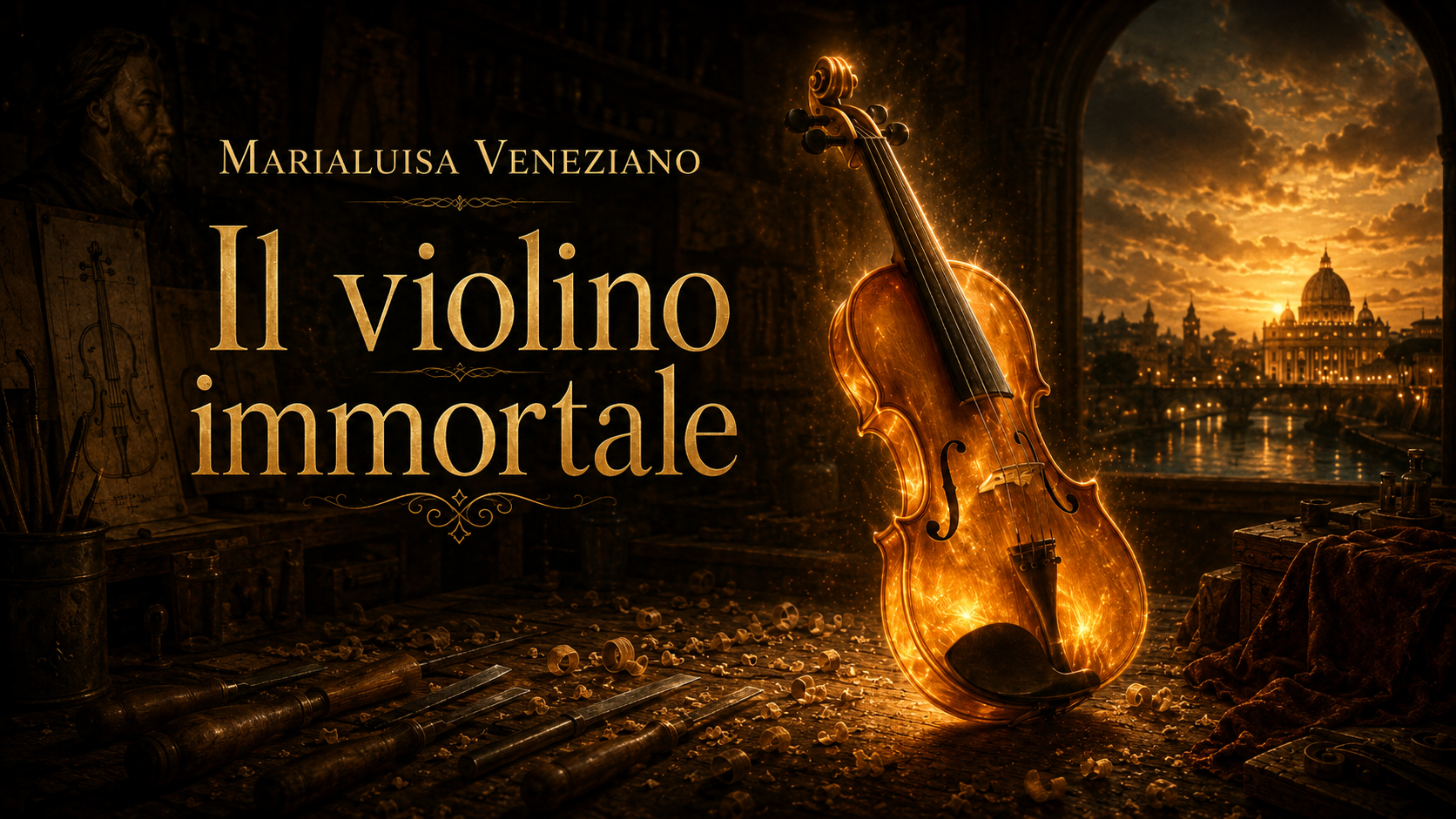
  • Legend of the immortal violin

    Legend of the immortal violin

    A fairy tale about time, memory and what makes us human.

    by Marialuisa Veneziano

    *********

    🎧 Music for reading
    Arvo Pärt, Spiegel im SpiegelFor violin and piano.
    A music suspended between the passing time and what mysteriously remains. Click on the arrow, start the music and start reading.


    Once upon a time, in the city of Valdombra, there was a violinmaker named Alvise, famous for the beauty of his violins and for the poor patience he showed towards those who played them.

    His workshop smelled fir, maple, resin and hot glue. On the walls there were harmonical crates still without strings; on the tables rested piroles, bridges and arches; in the cabinets, the wooden boards waited for years to make them suitable for music.

    Alvise knew every secret of his profession.

    He knew that the fir-tree, light and elastic, had to form the harmonic table, because it welcomed the vibration of the ropes. He knew that maple, harder, was suitable for bottom and bands. He knew how to cut the two effes with such precision that they looked like thin eyes open to the world.

    He even knew the soul of the violin: a small wooden cylinder hidden inside the instrument, invisible to the spectators but indispensable for the sound to vibrate with balance.

    — It's curious. — the young apprentice told him one day — that the part called soul is exactly what no one sees.

    — Important things often hide — answered Alvise.

    It was a very wise sentence; however, he immediately forgot it.

    The luthier wanted to build perfect tools. It did not tolerate an irregular vein, a drop of paint out of place or a scratch on the case.

    When a violinist brought him a repair tool, Alvise observed it with horror.

    — What did you do to him?

    — I played it — The musician answered.

    Alvise considered that very unconvincing explanation.

    One morning an old violinist entered the shop. He brought an instrument that Alvise had built many years before. The paint was consumed near the handle, the edge had some chipping and on the harmonic table appeared a small wax spot.

    — It's so bad! — exclaimed the luthier.

    — He played very much. — answered the old man.

    — I can remove the stain.

    The violinist squeezed the instrument to the chest.

    — That wax fell from a candle when my daughter was five. I played to make her fall asleep.

    — I can delete it without a trace.

    — That's why I won't trust you.

    Alvise looked at him out with disappointment.

    Men, he thought, spend their lives wanting perfect things and then, when they possess them, they become fond of their defects.

    A few days later, the luthier heard of an extraordinary fir tree growing beyond the mountains. He was told that he never lost a branch, that the snow could not bend it and that no insect had ever affected his bark.

    Alvise left immediately.

    After three days of walking he reached a dense and silent forest. The tree was raised in the middle of a clearing.

    It was very high, right and real. She didn't have a single dry leaf. No knots, cracks or scars appeared on the trunk.

    Next to the fir-tree, an old man sat.

    — Is this the tree that does not grow old? — asked Alvise.

    — So they say.

    — How long has she been growing here?

    — Before my grandfather learned to lie.

    — How old was your grandfather?

    — I don't know. He's lying about that too.

    Alvise caressed the bark of the tree.

    — With this wood I could build a violin that lasts forever.

    The guard pointed the branches.

    — No bird ever made you the nest.

    — They're too tall.

    — Birds, I think, can fly.

    — Maybe they're afraid to ruin them.

    The old smile.

    — Or they realized that certain branches cannot accommodate anything.

    Alvise didn't listen. Men are very happy to accept the advice, as long as I confirm what they have already decided.

    That night, without wind or storm, a great branch fell from the tree.

    Alvise considered it a gift.

    The guard considered it a warning.

    The next morning, the luthier loaded the branch on a wagon and returned to Valdombra.

    The wood was extraordinary. He did not deform with moisture, he did not sink with heat and showed no sign of time. However, it was difficult to work.

    When Alvise tried to bend him, he was right. When he tried to season him, he was identical.

    — It is stubborn — said the apprentice.

    — Perfect. — answered the liuthier. — Only imperfect things can be changed.

    Alvise spent seven years building the violin.

    He cast the harmonic table, modeled the bottom, cured the bands, carved the effes and necked the soul. He chose amber-colored paint and stretched it so carefully that on the surface not even the shadow of a brush remained.

    When the instrument was finished, it seemed made of light.

    The most famous violinist in the city, master Evaristo, came to prove it.

    He placed the violin on his shoulder, arranged the strings and swept the bow.

    The sound was pure. The sharps shone, the bass were full and each note was born clear, precise, perfectly equal to itself.

    — No resistance — Evaristo said.

    — Because it has no fault — answered Alvise.

    The musician acquired the violin for such a high sum that the violinmaker had to count the money three times, not for prudence but for pleasure.

    For years, Evaristo played in the courts and large theatres.

    The instrument was almost never forgotten, it did not suffer the heat, it did not fear the cold and did not preserve the sign of the hands.

    Critics were excited about it.

    One of them wrote:

    «In its sound there is no trace of human fatigue.»

    Alvise framed the review.

    Evaristo, instead, began to get restless.

    Each concert was impeccable, but identical to the previous one. The violin returned all the notes and did not seem to preserve any. It was not allowed to be transformed by the touch, tiredness, joy or pain of those who played it.

    One evening, leaving the theatre, an old viewer said:

    — The master didn't make a mistake.

    — That's true. — answered the friend. — But I didn't think he had something to tell.

    After some time, Evaristo sold the violin.

    He bought him a young officer and took him with him during a war.

    In the evening he played it for his companions in tents, hospitals and destroyed houses. His melodies reminded soldiers of mothers, brides, children and distant countries.

    When the war ended, the officer returned to Valdombra.

    The uniform was lace, the hair had become gray on the temples and a hand shook slightly.

    The violin, however, was unchanged.

    The soldier observed him for a long time.

    — You were with us — he said — And yet you haven't been anywhere.

    He sold it and bought a common tool, on whose bottom he engraved the names of the comrades who were not back.

    The immortal violin then passed into the hands of a mother, who gave it to his son.

    The boy wasn't a miracle. During the first lessons he produced so acute sounds that the cat moved spontaneously from the neighbors.

    He studied with impatience, often forgot to tend the bow and once he dropped the instrument.

    Her mother ran to pick him up.

    There wasn't even a scratch.

    — It's indestructible! — exclaimed the boy.

    From that moment he sounded without fear. Over the years he learned to draw ever deeper melodies. He put the chin at the same point every day, he shook the handle with the same hand and passed the bow on the ropes for hours.

    But the violin did not preserve any sign of him.

    The boy still died young.

    After the funeral, the mother took the instrument and sat next to the window. He sought on the paint the imprint of the fingers of his son, the sign left by the chin, a small abrasion, a stain, any trace of his passage.

    The violin was perfect.

    Looks like the kid never touched him.

    The woman brought him back to Alvise, who had become very old.

    — I don't want it anymore. — He said.

    — But it's still intact.

    — That's the problem.

    — Your son loved him.

    The mother caressed the wood smoothly.

    — I thought he wouldn't lose anything. I didn't realize he wouldn't remember anything.

    He left the violin on the counter and left.

    Alvise remained silent for a long time.

    That night a little girl went into the shop. He was wearing a poor, butchered violin. The bottom was smoothed, the tilted bridge and the paint almost completely consumed.

    — Can you fix it? — He asked.

    Alvise sighed.

    — It would be easier to build a new one.

    — But I want this.

    — It's full of flaws.

    The child indicated a small sign on the edge.

    — My father hit him against a chair.

    Then he showed a wax stain.

    — My mother did this one night when she missed the light.

    Finally he stroked the worn handle.

    — And that's me.

    Alvise took the immortal violin and gave it to him.

    — Try this.

    The girl put it on her shoulder and played a short melody.

    The workshop filled with a perfect, bright and clear sound.

    Then the child lowered the instrument.

    — Don't you like it? — asked Alvise.

    — It's beautiful.

    — It's the best violin ever built.

    The child returned it.

    — But when I play, he doesn't know who I am.

    — The violins know nothing.

    — Then why does mine know the weight of my hand?

    The luthier did not find an answer.

    — I give you this. — He said.

    The girl shook her head.

    — I prefer mine.

    — Your one day will break.

    — Then I'll have to take care of it.

    Alvise repaired the old violin without asking for money.

    When the child came out, he remained only with the immortal instrument.

    He took a knife and tried to hack a small line on the case. The sign disappears.

    There was a drop of wax on the harmonic table. He slipped away.

    He poisoned the violin to the fire. Wood didn't blacken.

    Finally he took the bow.

    Alvise knew every secret of the building, but he never really learned to play. His fingers embossed on the strings and produced some uncertain notes.

    Then he remembered a melody that his mother sang to him when he was a child.

    He played it slowly.

    For a moment, the violin seemed to tremble. The sound was neither clear nor perfect. He was fragile, hesitant and human.

    Alvise smiled.

    When he lowered the instrument, he sought the sign of his chin on the wood.

    There was nothing.

    After the death of the violinmaker, the violin was taken to the museum of Valdombra.

    Scholars tried to establish who built it and how old it was. But the wood did not have wear, the paint was intact and no owner had left an engraving or imprint.

    In the end, under the roof, a tag was placed:


    INCERTA
    DISCOUNTS

    Many years later, an old musician entered the museum, bringing a consunted violin and repaired countless times.

    She was the girl who visited Alvise's workshop.

    The edge still kept the sign of the chair, the harmonic table carried the wax stain and the handle was almost clear for the long passage of the fingers.

    A young keeper observed it.

    — Why not buy a better tool?

    The woman stroked her violin.

    — Because this knows all my music, even the one I don't remember anymore.

    Then he started playing.

    The melody wasn't perfect. Some notes trembled, others had the rough sound of aged wood. Yet, one after another, the visitors moved away from the skull of the immortal violin and gathered around the woman.

    When she finished, a long silence remained in the hall.

    The immortal violin still shone behind the glass. He had crossed loves, wars, departures and mourning without losing only one vein.

    But no hand could have left him a caress.

    No pain had given him a name.

    No life had been able to dwell in him.

    Living means letting yourself change. Those who claim to remain untouched can perhaps avoid wounds, but will also lose love, memory and everything that makes a life worthy of being remembered.

    Leave a comment

EnglishenEnglishEnglish