Category: Events

  • Turandot, a hundred years later: the masterpiece that Puccini left without reply

    Turandot, a hundred years later: the masterpiece that Puccini left without reply

    Torre del Lago, in the 72nd edition celebrates the hundred years of Turandot. But behind the gongs, puzzles and triumph the wound of Puccini’s last work remains open: how do you write musically the moment when fear becomes love?

    by Marialuisa Veneziano


    19 September 2026

    There are works that end with the last note. And works that, just when the orchestra is silent, begin to ask us the most difficult questions.

    Turandot belongs to the second.

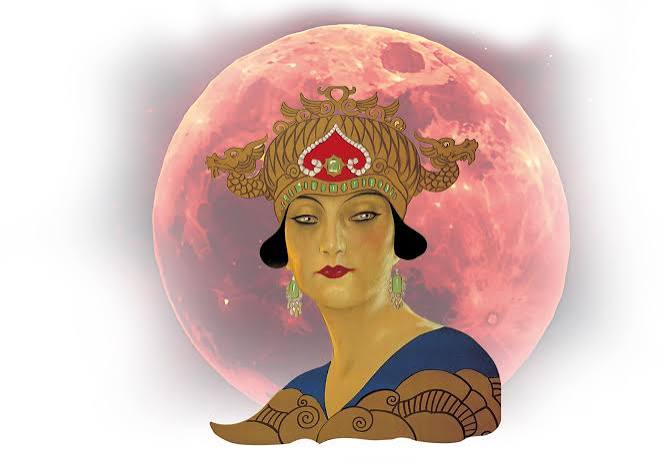
    In the summer of 2026, on the shores of Lake Massaciuccoli, the ice princess returned to live in the most intimately linked place to the memory of Giacomo Puccini. The 72° Puccini Festival dedicated her the inaugural evening of 17 July, in the centenary of the first representation of the Scala, entrusting the main roles to Anna Pirozzi, Roberto Alagna and Aleksandra Kurzak, with Marco Armiliato on the podium.

    An important celebration, of course. But above all the opportunity to return to a work that, after a hundred years, continues to resist any definitive interpretation.

    Because behind Beijing imaginary, gongs, puzzles and monumentality of his theatrical apparatus, Puccini hid a terribly close affair.

    A woman who learned not to trust. A man who confuses the strength of his desire with the certainty of being able to be reciprocated. Another woman who loves without getting anything in return.

    Three human beings who don't speak the same sentimental language.

    And a composer who, after giving them a voice, stops at the point where those three languages should have met.

    The real puzzle of Turandot has never been solved the three questions of the princess.

    It is to understand how you return able to love after having built your whole life not to have to do it.

    The woman who made fear a law

    Turandot is not incapable of loving. She is a woman who has learned to consider love a threat.

    The story of the ancestor Lou-Ling, kidnapped and killed by a foreigner, is not a simple fairy tale. It is the story through which the princess built her own identity: wanting a woman means wanting to conquer her; being desired means risking becoming property of someone.

    Turandot has not experienced that violence, but has transformed it into his own inner law.

    I won't be conquered. I won't be possessed. I won't be next.

    To prevent it, he built a monstrous defense: every suitor must face three puzzles and, if he fails, he is beheaded.

    Fear has become power. And power, exercised long enough, ended up looking like a form of security.

    The puzzles no longer serve to find the right man.

    They serve to make the meeting impossible.

    Until Calaf arrives. And the system, for the first time, doesn't work.

    Puccini had understood how difficult it was to make the princess's transformation credible. During the long gestation of the work, begun in 1920 with the librettists Giuseppe Adami and Renato Simoni, he returned several times on the concluding duet. It was not enough to announce that Turandot had fallen in love: it was necessary to find the music capable of making that change necessary.

    Because in music you can write a crescendo, transform a theme, modular towards a bright shade.

    But how does trust make up?

    How does the moment when a person, accustomed to protecting himself, decides to become vulnerable?

    Puccini knew how to build a final.

    This time he had to be able to deserve it.

    Torre del Lago: ice, voice, wound

    In the inaugural evening of the Festival, the conflict has rediscovered its spectacular dimension through the recovery of the 2008 exhibition, originally conceived by Maurizio Scaparro, with the scenes of Ezio Frigerio and the costumes of Franca Squarciapino. The production, restored for the centenary, was resumed by Pier Francesco Maestrini, with the choreography of Michele Cosentino and the lights of Valerio Alfieri.

    The monumental architectures, the richness of fabrics and the palace make up a declaredly imaginary China. It is a theatre that favours the splendour of the fairy tale and the visual impact, entrusting above all to the voices the task of restoring psychological complexity to the characters.

    A choice that makes comparison with the score even more interesting.

    Because Turandot is not Puccini's fold on his own way. His writing absorbs harmonic asperities, pentatonisms, esatonal sound, tonal overlaps and a completely nineteenth-century percussive wealth. Musical China, also built through authentic melodies known by the composer, becomes the subject of a very personal language.

    The orchestra can be transformed into a metal and percussion building, except to suddenly retreat before the fragility of a single voice.

    It is in this ability to move from the mass to the individual who resides an essential part of the puccinian greatness.

    Marco Armiliato has favoured the theatrical energy, the relief of the timbre impacts and the sharpness of dynamic contrasts. The concertation, according to the critical chronicles, has not always found the same compactness in the most relaxed moments, but has reached in the third act a more organic dramatic continuity.

    In a work like this, the balance is decisive: it is not enough to make the orchestra shine. You need to know when to remove it.

    Anna Pirozzi found in the relationship between power and nuance the center of his Turandot. The firmness of the issue, the homogeneity of the projection and the care of the phrasing allowed her to face the imperative weaving without turning the princess into a simple show of strength. In this palace, Lou-Ling’s painful memory progressively gave way to the aggressiveness of the proclamation; in the puzzles the character’s alternation emerged, while in Liù’s interrogation there was an ever more recognizable restlessness.

    This is the decisive question: Turandot must not only sing like an ice woman. It must make us feel how much it costs to continue to be.

    Pirozzi sought the woman under the symbol, finding especially in the dynamic modulations of the concluding duet the possibility to suggest a transformation that the musical writing continues to make problematic.

    Roberto Alagna offered a Calaf of strong heroic temperament, light vocality and generous emission, sometimes pushed to tension. The scene of the puzzles has recorded some inaccuracies and difficulties of coordination with the podium; No domain has constituted a moment of considerable communicative strength, although with some critical reserve on the concluding estate. The final duet benefited from the theatrical understanding with Pirozzi.

    This reading also reveals something of the character.

    Calaf sings as someone who imagines that the world can be convinced by the strength of their own will. His desire tends to expansion, conquest, affirmation of a destiny that does not easily contemplate defeat.

    But wanting someone doesn't necessarily mean meeting him.

    And winning a challenge does not mean being loved.

    Then Liù comes. And the monumentality of the work suddenly changes meaning.

    Aleksandra Kurzak faced the part with a technically supervised singing line and a careful dynamic modulation. If Lord, listen! He has aroused some reserve on the plane of emotional immediacy, in You that of gels you are citing the formal precision has combined with a more incisive dramatic participation, making Liù's death one of the most engaging moments of representation.

    The distinction between the two women is first and foremost musical.

    Princess Puccini entrusts a vowel called to emerge from a compact orchestra. In Liù he gives another kind of courage: that of a phrase that does not need to impose itself to be heard.

    The tied, the control of the breath, the very plane becomes instruments of psychological characterization. Liù must not win a sound battle: it must preserve the meaning of its word while sound seems to be consumed.

    Alongside the Kurzak, Andrea Vittorio De Campo returned with vocal solidity and intensity the farewell of Timur. Facing the trio of the ministers, formed by Simone Del Savio, Enrico Casari and Tiziano Barontini; the Choir prepared by Marco Faelli found greater effectiveness in the large pages of the whole, while the interventions of the white voices directed by Sonia Franzese were clearly revealed. At the end, warm consents welcomed the interpreters, with particular tributes to the three protagonists.

    But, beyond the applause, the evening of the centenary reproposed the conflict that crosses the entire work.

    Turandot defends himself from love.

    Calaf claims to reach him.

    Liù gives it without being able to hold it.

    Three different ways to inhabit the feeling, which the music leads to the collision.

    And when Liù dies, something happens that no scenography can represent instead of voice.

    The princess discovers a power that cannot govern.

    You can order the slave to be tortured. You can decide about your life. But he cannot force her to betray the man he loves.

    Liù possesses, in its apparent impotence, a freedom that Turandot does not know.

    His sacrifice must not be idealized: death is not a moral solution, nor should love require it. But in the dramatic puccinian construction it produces an irreversible fracture.

    Liù does not dissolve Turandot's ice. She reveals that ice is no longer enough to protect it from truth.

    And this is where the music performed by Puccini interrupts.

    The composer who could not write a birth

    There is something shocking about this coincidence.

    Puccini had been able to write death all his life.

    He had accompanied Mimì out of the world almost without letting us know. Tosca had dropped. He had transformed the last gesture of Butterfly into one of the most painful claims of dignity in the history of the work.

    Death knew her.

    Artistically, he could look her in the eye.

    In his last work, however, he remained to write a birth: the emotional one of Turandot.

    How can a woman who has built all her identity on the need not to surrender to love without her change seemingly a defeat?

    And how can the theater pass from the body of Liù to sentimental triumph without asking the public to forget what has just happened?

    Here the answer must be clear.

    Turandot should not love despite Liù. She should be able to love after understanding what Liù showed her.

    The slave destroyed the lie on which the princess had built her own existence: the idea that loving means necessarily being possessed.

    But even Calaf's kiss can be enough.

    Turandot doesn't need to be conquered. She needs a choice.

    The decisive moment should not consist in the fact that Calaf finally manages to reach her, but in what the princess decides to expose herself.

    It's not the kiss to make it human.

    It is the possibility of being wounded and not to escape.

    The true love passage should not be the defeat of the frost, but the discovery that the frost is no longer necessary.

    Perhaps this is one of the directions towards which he tended the search for Puccini. We cannot know the solution he would choose, but we know he continued to work on the final without completing it.

    In 1924 he left for Brussels to cure his throat tumor, bringing with him the sketches of the duet. He died on November 29, leaving the score to the Liù funeral scene and musical fragments for what should be followed.

    It is an image that preserves a difficult force to sustain.

    A seriously ill man starts to cure himself and brings with him the music that still fails to end.

    Like there's time.

    To come back. To get the job back. To finally find that woman's voice.

    The music needed to tell not a death, but a rebirth.

    The ending that another man had to write

    The task of completing Turandot was entrusted to Franco Alfano, called to transform the Puccinian sketches into an executable conclusion.

    An artistically ungrateful assignment.

    Too close to Puccini, he would have been an imitator.

    Too far away, a traitor.

    Alfano did not receive a score to finish, but fragmentary material that required authentic compositional decisions. Its first version was subjected to substantial cuts at the request of Toscanini; the shortened completion is what has been imposed in the executive custom.

    We should not consider it only the man who failed to be Puccini.

    His intervention poses a fundamental problem: to respect an author means to preserve what he wrote or to try to realize what he still wanted to write?

    They are two forms of fidelity.

    And they can come into conflict.

    On April 25, 1926, at La Scala, Toscanini transformed this difficulty into a theatrical gesture.

    The work proceeded until the death of Liù and the funeral procession. Then the director interrupted the execution: the Alfano final was not played that evening. The testimonies differ in the exact words spoken by the podium, but agree on the meaning of the interruption. There ended the music performed by Puccini.

    The curtain went down.

    Not on the triumph of love.

    On the absence of the composer.

    For one night, no one claimed to make that lack invisible.

    Since then others have tried to cross it. Luciano Berio proposed a different completion, more problematic in his sound landing than the traditional triumphal conclusion. Directors, directors and scholars continue to confront the final, without any solution having erased the original question.

    Perhaps because an unfinished work is not necessarily a faulty work.

    Sometimes incompleteness becomes an irreversible part of its history.

    We can study the sketches of Puccini, recognize its harmonic habits, reconstruct its motive processes, imagine a stylistically plausible conclusion.

    But plausible does not mean authentic.

    A composer is not the mechanical sum of his previous works. You can change your mind, surprise yourself, discover a solution that no analysis could have predicted.

    And no one can return a decision that Puccini had no time to make.

    Coda. The music that no one has ever heard

    Hundred years later, we continue to return to Turandot.

    Not because the scenery is magnificent.

    But because inside that huge theatrical machine there is a very small and universal question:

    how much courage it takes to let one love after having spent a life protecting oneself?

    Maybe the answer is simple.

    And terrible.

    Everything we have.

    Because loving really does not mean finding someone capable of melting our ice.

    It means deciding, one day, that ice saved us enough.

    And that now, to live, we have to take the risk of not needing it anymore.

    Every night Turandot arrives at the end.

    The orchestra plays the last chord.

    The voices rise.

    The public applauds.

    The princess finally pronounces the word that for the whole work had fought.

    Honey.

    Yet, between the body of Liù that disappears and that word, there is still a distance.

    A space Alfano filled.

    That others tried to reinvent.

    That directors and directors continue to question.

    But that Puccini never crossed permanently.

    That's where his last work continues to live.

    In that missing section.

    In that door locked.

    Behind it there is a music that no orchestra has ever played.

    Not because she was lost.

    Because it was never written.

    The music that he would tell how a woman returns to love.

    The music that Puccini was still looking for.

    And that, one hundred years later, we can only continue to imagine.

    photo credit Giorgio Andreuccetti

    Leave a comment

  • The Musical Book Built Together with You


    This time we don't choose the program.

    You choose it.

    With the column Sunday listening we want to transform listening into something shared: not only a column to read, but a living space where the public can suggest, remember, tell.

    This is why we invite you to propose the song you would like to find in one of the next Sundays.

    There's no such boundaries.

    Classical music, opera, jazz, rock, pop, songwriter, soundtracks, contemporary music, popular traditions: If a music has something to tell, it deserves to be heard.

    How to participate

    Write in the comments:

    • title of the track
    • author or interpreter
    • and, if you want, a phrase to tell us why that music

    Alternatively, you can send your proposal directly to the editorial staff The Apeiron Armonies, writing to the email address indicated on the Contacts page.

    The proposals received will progressively enter into the next steps of Sunday listening, following the order in which we will be sent, so that this column can become, Sunday after Sunday, also the reflection of your listening, your memories and your musical passions.

    Each track will be accompanied by a Marialuisa Veneziano listening guide: history, musical details to recognize, interpretative keys and a video to listen while you continue reading.

    Because we don't just want to know what you hear.

    We want to know what music he found you.

    Propose it.

    The next Sunday could start with yours!

    An answer to "The Musical Book Built Together with You"

    1. Avatar
      Anonymous

      2 antipod tracks:
      J. Ibert:Trois pièces brèves per quintet di fiati
      and
      F. Guccini: the locomotive

    Leave a comment

  • August in harmony: our wish to readers.

    Leave a comment

  • MACERERERA FESTIVAL 2026

    MACERERERA FESTIVAL 2026

    Oh, oh, oh, oh, oh.

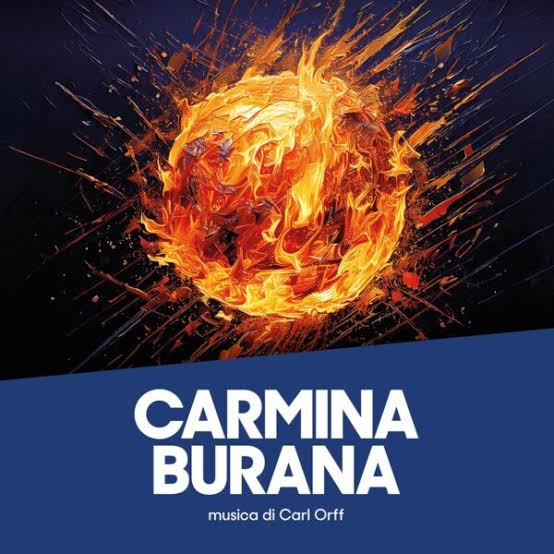
    I Carmine Burana to the Sferisterio: destiny, desire and that crowd that believes to dominate the world.

    by Marialuisa Veneziano


    Macerata 10 August 2026

    Before the orchestra attacks, ♪ is already in everyone's memory. It passed through cinema, advertising, stadiums, talent shows and even some motivational videos where humanity seems to be about to conquer the universe before lunch. Few pages of the twentieth century have been so much loved, used and abused. Yet, when the first agreement breaks into the Sferisterio and the chorus pronounces the name of the goddess, that music still manages to accomplish its own fate: it tears the song to the caricature of itself and gives it back to the fear from which it was born.

    Because Carl Orff's Fortune is not a benefactor. It is a wheel: lifts, overthrows, crowns and humiliates with the same indifference. In the great maceratese space, the Carmine Burana have become the mirror of a civilization that claims to control everything and then discovers that it cannot govern even its desire.

    On the podium of the FORM– Orchestra Filarmonica Marchigiana, Ramón Tebar led choirs and soloists in a vast organism, in which the difficulty is not producing power, but giving it shape. Making noise is easy; turning it into destiny requires a musician.

    A Middle Ages that never existed

    The title originates from the manuscript dating back to the Bavarian Abbey of Benediktbeuern. Orff chose, with the advice of the philosopher Michel Hofmann, texts in medieval Latin, middle German and ancient French: songs of spring, wine, game, eros and caducity. He did not put in music the historical Middle Ages. He invented a new one: archaic and modern, made of obstinate, firm harmonies, pearly syllables and coral masses.

    The score, composed in 1936 and represented in Frankfurt on 8 June 1937, proceeds by blocks. The repetition does not impoverish the speech: it makes it inexorable. Here the rhythm does not accompany the idea; it is the idea. Percussion and pianos do not dress the words: they sculpt them.

    Between the two apparitions ♪ flow spring, dance, drunkenness and desire. Life blooms, drinks, loves, brags; then the wheel returns to the beginning. Man calls progress what Fortuna just considers a turn.

    Tebar: the gesture and the need

    Ramón Tebar faced the score without exchanging the monumentality for heaviness. He looked for the rhythmic nerbo and safely ruled the imposing apparatus: net attacks, supervised transitions, tight tension even where writing risks to be reduced to a magnificent mechanism.

    The greatest merit was not to let ♪ He divorced everything. I Carmine Burana I am not a famous refrain with an hour of anteroom, but a theater of the human condition, also made of irony and fragility.

    Sometime would benefit from a longer shadow before the explosion. If every climax is definitive, fate takes on the manners of a television presenter: it always enters with the lights to the maximum. However, Tebar has kept course and clean. In Orff precision is not good orchestral education; it is dramaturgy.

    FORM and sound body

    The FORM responded with compactness, readiness and discipline. The percussions gave the evening the ritual skeleton without turning into a demolition department; brass and wood have engraved color, the arches have preserved mobility and pianos acted by authentic rhythmic engines.

    In the open space of the Sferisterio, which amplifies the gesture but can disperse the detail, the FORM supported the vastness without losing cohesion. Not a soundtrack under the choir, but the ground on which word, body and rhythm met.

    True protagonist was the Choir Lirico Marchigiano "Vincenzo Bellini", prepared by Christian Starinieri: compact in the backgrounds, precise in the scans, able to pass from the invective to the dance. In Carmine the Latin must not smell of incense; it must know of land, wine and sweat. The coral mass understood it.

    The Pueri Cantores "D. Zamberletti", directed by Gian Luca Paolucci and prepared by Annarosa Agostini, introduced a different light. White voices do not soften the picture: they remember that each wheel of Fortune ends up being inherited by someone.

    • Video
    Moments of the execution of Carmina Burana Credits: Macerata Opera Festival

    Three soloists against the wheel

    Karen Gardeazabal brought in the part of the soprano brightness, line control and sensuality devoid of pleasure. In the most suspended passages, the voice was removed from the mass without opposing, until that Dulcissima where technical dizziness and abandon coincide. Not an acute to perform, but the point where desire remains alone.

    Ruzil Gatin faced Olim lacus colueram, the lament of the roasted swan, with theatrical courage and incisiveness. In this short and ruthless part singing "good" is not enough: it is necessary to accept the grotesque. Gatin returned the sarcasm of a creature that remembers being beautiful while serving at the table. The Middle Ages had not yet invented good manners, but he already knew metaphysics.

    Grisha Martirosyan showed a baritone firm, stamped and communicative. From Omnia Sol temperat to Estuans interius and Ego sum Abbas, has differentiated accent and temperature. The baritone of Orff must be singer, actor, drinker and tavern philosopher — category often more sincere than many academic conferences.

    Luca Agnani's videos have expanded magic images provided by the subtitle of the work. In the best moments they have spread the space; elsewhere they have touched the illustration, because such a physical music does not need to explain how to be grandiose. With the wall of the Sferisterio it is necessary to dialogue: to decorate it would be almost an impertinence.

    The masterpiece, success and our alibi

    ♪ has become a global sound commodity: a few seconds is enough to promise catastrophes, cars or toothpastes from the unsuspected epic. But it's not about music. Depressing Carmine Burana because they like many is snobbish; to love them only because they shake the steps is consumption. Either way you avoid listening to them.

    The birth of the work in Germany in 1937 also imposes seriousness. Separating it from one's own time would be naive; transforming its rhythmic force into an ideological, rapid test. The relationship of Orff with the regime remains a problematic page, to be studied without assumptions or sum processes.

    The evening returned the work to its ambiguity: party and threat, eros and caducity, discipline and fever. All exhausted shows that the public will come in front of a strong experience. But conquering it with what it already recognizes must be the beginning, not the goal. Culture must prepare listening also for masterpieces that we still do not know how to love.

    At the end ♪ He returns identical, and yet he is no longer. After spring, wine, meat and love, he speaks of us: of success hunger, the illusion of meriting every ascent and inability to imagine the fall.

    The wheel turns. The sound turns out against the wall. For an instant the public remains still, as if he had recognized in destiny not a medieval goddess, but his face. This is what a great execution has to do: not only overwhelm us. Give us the responsibility of silence after the straw.


    Macerata Opera Festival 2026 – Carmine Burana. Music by Carl Orff. Director Ramón Tebar; soprano Karen Gardeazabal; tenor Ruzil Gatin; baritone Grisha Martirosyan; FORM– Orchestra Filarmonica Marchigiana; Choir Lirico Marchigiano "Vincenzo Bellini", master of the choir Christian Starinieri; Pueri Cantores "D. Zamberletti", master of the choir of white voices Gian Luca Paolucci; vocal trainer of Pueri Cantores Annarosa Agostini; video Luca Agnani. Arena Sferisterio, Macerata, 7 August 2026.

    Leave a comment

  • MACERATA OPERA FESTIVAL 2027 – Preview

    Three loves under the same sky

    From 17 July to 8 August 2027, the Sferisterio arrives Tosca, The Elixir of Love and the legendary Traviata of mirrors

    by Marialuisa Veneziano


    Macerata, 9 August 2027

    The curtain on the 2026 edition had not yet collected the latest stage dust when the Sferisterio decided to look further. Moreover, the theatre lives like this: while the audience applauds what ends, behind the scenes someone is already imagining what must begin.

    The Macerata Opera Festival announced the poster of its 63rd edition, in program at the Sferisterio Arena from 17 July to 8 August 2027. Three selected titles: Tosca by Giacomo Puccini, The Elixir of Love by Gaetano Donizetti and La traviata by Giuseppe Verdi, in the famous staging now delivered to history as the "Transport of mirrors".

    Three very popular works, of course. But popular does not mean simple and, above all, does not mean harmless. To unite it is love subjected to three different courts: power in Tosca, insecurity in The Elixir of Love, social morality in Traviata. The centuries, customs and conventions change; the ancient habit of humanity remains to complicate what the heart had understood very well.

    Tosca: the new exhibition opening the Festival

    To open the 2027 edition will be Tosca, opera in three acts by Giacomo Puccini on libretto by Giuseppe Giacosa and Luigi Illica. The title will be presented in a new equipment, made in coproduction by the Macerata Opera Festival and the Pergolesi Spontini Foundation.

    The direction is entrusted to Tomer Zvulun, general and artistic director of the Atlanta Opera and artist regularly present in major US theatres, including the New York Metropolitan. On the podium of FORM– Marchigiana Philharmonic Orchestra I'll go Ramón Tebar, after the debut at the Sferisterio with Carmine Burana and expected in September 2026 at the Metropolitan for The bohème.

    The return Tosca brings with it an important memory. The puccinian masterpiece first appeared at the Sferisterio in 1968, with Tito Gobbi — one of the most authoritative Discards in the history of operatic interpretation — and since then there has been represented fifty times. In 2027, however, it will not return as a relic to be polished, but as a matter to be questioned again.

    Why Tosca It is not only a melodrama of extreme passions. It is a work on how power invades intimacy, transforms faith into blackmail, art into suspicion and love into a place to guard. In an absurd space like the Sferisterio, the real challenge will be to make visible not only Rome, but the invisible cage that Scarpia builds around others.

    The Elixir of Love: the lightness that can tell the truth

    The second title will be The Elixir of Love, playful melodrama in two acts by Gaetano Donizetti on a libretto by Felice Romani. To return the acclaimed production signed in 2018 by Damiano Michieletto, born in co-production with the Palau de les Arts Reina Sofía in Valencia and the Real Theatre in Madrid and subsequently adapted also to the outdoor dimension of the Sferisterio.

    The musical direction will be entrusted to Corrado Rovaris, since 2005 musical director of Opera Philadelphia and habitual presence in the major international seasons.

    Colorful, summer and theatrical, this Elixir possesses all the qualities to dialogue with the Arena without being crushed by its proportions. But under the bright surface cleans a truth far from frivolous: Nemorino does not acquire a potion, acquires the hope of being worthy of love. Dulcamara sells a bottle; the company, for centuries, sells far more expensive versions of the same illusion.

    Donizetti laughs, but doesn't laugh. His music keeps for the characters a tenderness that prevents the comedy from turning into caricature. And this is precisely the most difficult measure: to make the public smile without subtracting humanity to whom, to be loved, he thinks he has to become someone else.

    The return of Traviata of mirrors

    The conclusion of the Festival will be entrusted to one of the shows symbol of the Sferisterio: the "Transport of mirrors", created in 1992 by the German director Henning Brockhaus with the scenes of the great Josef Svoboda.

    Since then the exhibition has crossed the world, overcoming the one hundred performances and the fifty reorganizations. His scenic device — a gigantic inclined mirror surface, able to reflect and deform actions, lights and public — does not constitute a simple glance. It is the very idea of the work: a society that looks at Violetta, judges her and in the meantime carefully avoids looking at herself.

    On the podium will rise the Chinese director Lü Jiaat the Macerata Opera Festival. Artistic director of the National Centre for the Performing Arts in Beijing and music director of the China NCPA Orchestra, will be called to confront a legendary staging, in which memory represents a resource and, inevitably, also a test.

    Bringing back to the scene a historical spectacle is in fact more delicate operation than it seems. The masterpiece should not be kept under glass: it must continue to breathe. Otherwise the mirror remains, but the image fades.

    A popular billboard: landing or starting point?

    The 2027 program chooses three titles among the most beloved of the repertoire. It is a highly attractive proposal and, together, prudent. The real question is not whether it is lawful to rely on the masterpieces that the public desires — of course it is — but what use they make of their popularity.

    If Tosca, Elixir and Traviata They will become opportunities to renew the languages of the scene, form new spectators and accompany them towards less frequented repertoires, then recognisability will be a door. If it only serves to avoid taking risks, it will become a very beautiful room from which, sooner or later, it will be necessary to leave.

    The happy 2026 edition, marked by many exhausted and an increase in spectators and recesses, has shown that the audience does not escape in front of the great music. The Festival now looks at 2027 claiming its role as cultural infrastructure of the territory: not only a summer calendar, therefore, but a place where entertainment, tourism, training and collective identity can still meet.

    It is also a possible dance proposal, but at the moment it has not been officially inserted in the billboard: the event will depend on the definition of the tour of the companies.

    The information already confirmed

    • Period: from 17 July to 8 August 2027
    • Location: Arena Sferisterio, Macerata
    • Edition: 63a
    • Opening: Tosca by Giacomo Puccini — new preparation in coproduction with Fondazione Pergolesi Spontini; directed by Tomer Zvulun; direction Ramón Tebar
    • Second title: The Elixir of Love by Gaetano Donizetti — direction Damiano Michieletto; direction Corrado Rovaris
    • Closure: La traviata by Giuseppe Verdi, "Traviata degli specchi" — direction Henning Brockhaus; scenes Josef Svoboda; direction Lü Jia
    • Ticket: planned opening in autumn 2026
    • Cast: will be announced by the end of 2026
    • Calendar of individual performances: not yet communicated
    • Dance: hypothesis to the study, not yet confirmed

    On 17 July 2027 the Sferisterio will resume breathing. You will start with the jump of Tosca, you will pass through the naive bottle of Nemorino and end up in front of the mirror of Violetta. Three ways of loving, three ways of being wounded, three ways with which the theatre continues to tell us the same thing: we can change clothes, epochs and sceneries, but in front of desire we remain stubbornly without proof.

    And maybe that's why we go back to work. Not to know the final — that, often, we already know — but to find out if, this time, we will be able to look at ourselves as it happens.


    Data updated on 9 August 2026 on the basis of official communications of the Macerata Opera Festival.

    Leave a comment

  • The world takes place in the audience

    The world takes place in the audience

    The condominium theatres of central Italy enter the UNESCO World Heritage Site. Eight of the ten recognized rooms are Marches: the "region of theatres" rises on the stage of history.

    by Marialuisa Veneziano


    History has the defect, or perhaps the courtesy, not to always warn when it comes in. Don't knock, I don't ask for lights to light up. Sometimes it comes with the sober language of a deliberation, through a few lines destined to the archives; and yet, behind those lines, an entire land discovers that its name has just become a little larger.

    It happened on 26 July 2026.

    While the summer stretched out on the hills of Marche with its quiet air, almost convinced that nothing was too fast, in Busan, South Korea, the 48th session of the UNESCO World Heritage Committee enrolled in the World Heritage List "The system of Italian condominium theatres of the 18th and 19th century in central Italy".

    A compound phrase, almost austere. But inside there is an applause over two centuries.

    The UNESCO-recognized serial site includes ten theatres distributed between Marche, Emilia-Romagna and Umbria. Eight are the Marches: the Teatro Gentile da Fabriano, the Pergolesi di Jesi, the Ventidio Basso di Ascoli Piceno, the Serpente Aureo di Offida, the Teatro dell’Aquila di Fermo, the Lauro Rossi di Macerata, the Feronia di San Severino Marche and the Bramante di Urbania. The Teatro Angelo Mariani of Sant’Agata Feltria and the New Gian Carlo Menotti of Spoleto join them.

    The inscription, deliberated according to the UNESCO III criterion, recognizes in these buildings an exceptional testimony of the transformation of the theatre from aristocratic space to cultural and civil institution. With this result rise to sixty-two Italian sites listed in the World Heritage List.

    For one evening, therefore, the proverbial sobriety of Marche can afford the luxury to applaud standing.

    That building where civilization was built

    The word condo, it must be admitted, it does not today enjoy a particularly lyric reputation. Evoca administrators, thousandths, grondaies in discussion and assemblies in which humanity sometimes offers less noble evidence than those contemplated by UNESCO.

    Yet, between the eighteenth and nineteenth centuries, that term could designate a much more ambitious pact.

    Municipalities and private citizens — nobles, professionals, traders, representatives of the emerging bourgeoisie — They participated together in the construction of the theatre, supported its costs, owned its stakes and shared its management. Thus the theatre was born not only by the will of a ruler or by the magnificence of a court, but through a collective investment of the community.

    It was not yet cultural democracy as we would like to see it today. The poles kept social distinctions, the hierarchies settled on different orders and, in addition to the show, everyone willingly contemplated himself. The story, moreover, never proceeds with the nectity of the manuals: it advances for compromises, contradictions and closed doors.

    But one of those doors really opened.

    The theatre came out of the exclusive aristocratic domain and became a city institution, a meeting place, a representation and even a formation of public opinion. UNESCO has recognized precisely this passage: not only the beauty of the rooms, but the social idea that had created them. The condominium model, founded on the collaboration between public institutions and citizens, made possible the diffusion of theatres even in small and medium cities, transforming them into centres of cultural, economic and political life.

    Those buildings, therefore, were not simply containers of shows. It was citizenship laboratories.

    On the stage there were passions, crimes, loves and revolutions; in the audience, in the meantime, a new society learned hard to look at, to recognize itself, sometimes even to discuss itself. And it is not a small thing that the public consciousness has found one of its first dwellings right there where men pretended to be others: often the theatre says the truth by using a mask, while daily life is very good at lying without even bothering to wear one.

    An architecture that can hear

    The Italian theatre is not a building in which, fortunately, music is produced. It is itself a musical instrument.

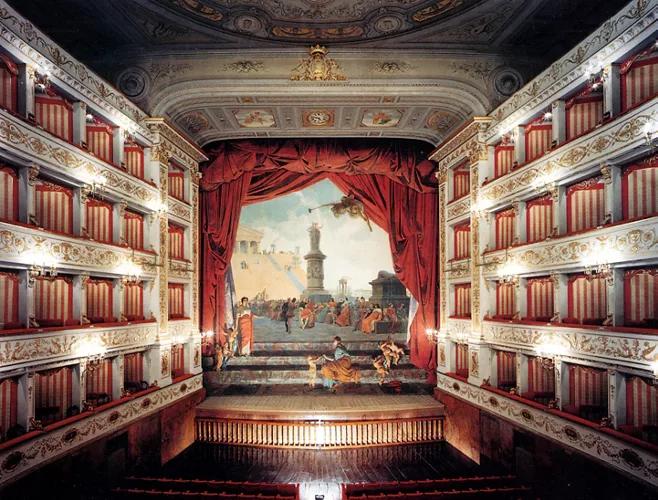
    The plant, the superimposed orders of the poles, the curvature of the room, the relationship between scene and plate, the reduced, the foyer and the ancient scenic apparatuses make up a true architecture of listening. Each element organizes vision, governs distance, collects and distributes sound. UNESCO emphasizes the attention reserved to acoustics and visibility, together with the presence of common architectural features, mainly linked to Neoclassicism, but still crossed by late Baroque influences.

    Before the orchestra agrees, the room has already chosen its stamp.

    The stakes placed vertically seem the voices of an agreement; the audience is the foundation; the stage opens the unstable area in which the order can turn into drama. The viewer looks at the scene, but also sees other spectators: he listens to music and, at the same time, takes part in a community gathered by listening.

    In these theatres opera found a capillary network through which to reach cities and villages. The crescendo of Rossinian, the long bellinian melody, the theatrical nerve of Donizetti, Verdi's word lit were able to circulate far beyond the great centers, penetrating the living fabric of the provinces. Before Italy became fully a political nation, the melodrama had already taught her a common vocabulary of passions, conflicts, sacrifices and freedom.

    The province, in this system, was not suburbs. It was blood circulation.

    Le Marche, a region built in the form of theatre

    Recognition would be important for any territory. For the Marches, however, has a particular force, almost the precision of an agreement finally resolved.

    This land is not organized around a single dominant city. It lives of large, small and very small centres; of villages lying on the heights; of communities that for centuries have defended their identity with tenacity. In this plural geography, the theatre became the place where each city could publicly pronounce its name.

    Alongside churches and civic palaces, ornate halls, stages, waiters, foyers rose. Not for decorative whims, but because a community that built a theater declared it wanted to be something more than a set of houses. He said he had a memory, imagination and a future.

    The Marches preserve a network of sixty-two historical theatres and a theatrical density, related to the population and the number of Municipalities, which has no equal in the Italian territory. Not all are formally part of the UNESCO serial site: the award covers ten theatres, eight of which are Marches. But the light that is now on those eight rooms inevitably illuminates the entire regional constellation.

    The Pergolesi, the Lower Wind, the Aureo snake, the Eagle, the Lauro Rossi, the Feronia, the Gentile and Bramante are not eight isolated monuments. They are the usual voices of a much larger choir.

    And this is perhaps the most beautiful victory: UNESCO has not rewarded the greatness of a capital, but the cultural tenacity of communities. He acknowledged that beauty can also become public in the centers away from the metropolis; that culture does not belong only to the places where power is concentrated, but also to those in which men decide to build together a space for listening.

    UNESCO is not a funeral crown

    It is at this point, just as the applause grows, that it is necessary to ask him to stop for the time of a breath.

    For every authentic feast bears with it a responsibility; and such a solemn recognition would risk taking a bitter irony if it celebrated as a living heritage what, in daily life, is left slowly to die.

    Alongside the large theatres with regular seasons, too many historic Marche theatres remain closed, inactive or entrusted to an occasional opening. Others are only on for a few appointments a year, devoid of continuous programming, stable staff, adequate resources and an artistic project able to really return them to the communities.

    We saved the stucco, but we risk losing our voice. We have restored the stakes, but we don't always let you back the public. We defended the facades from time, while silence, much more patient than moisture, continued to work inside.

    It must be said without celebratory attenuation: a restored theater is not necessarily a live theater. Open it once a year for a guided tour is not equivalent to living it; lighting the lights for a ceremony does not mean giving it back to the city; hosting some summer events does not replace a season thought, recognizable, capable of forming an audience.

    A theatre lives when the curtain rises regularly. When it offers work to artists and technicians. When he welcomes orchestras, companies, schools, conservatories, associations and young interpreters. When a child enters for the first time and understands, perhaps without knowing yet, that beauty is not a luxury reserved for adults or big cities.

    It is precisely the continuity of the theatrical function to constitute one of the essential elements recognized by UNESCO. The decision also recalls the need to involve local communities in the daily heritage management. This is not an accessory recommendation: these theatres were born through the participation of citizens and only through a new participation will survive.

    The recognition of 26 July must therefore become a reprimand for the institutions. It is not enough to finance the restorations: management, maintenance, personnel and especially programming must be supported. It is not enough to promote cinemas photographically: you have to fill them with shows. It is not enough to call them "cultural requirements" in the official speeches, if then, after the speeches, turn off the lights and close the door.

    The same regional cultural programming indicates among the objectives the support for fruition, integrated management, residential activities and the relationship between small theatres, conservatories and subjects of live show. This is where it is necessary to share: transforming the intent into calendars, projects into openings, resources into continuous cultural work.

    Municipalities must also be put in the conditions of collaborating, overcoming fragmentation and building a real regional network: shared productions, artists' circuiting, musical and theatrical residences, school projects, common ticketing, cultural itineraries. Sixty-two isolated theatres are likely to be sixty-two fragility; linked together they can become one of the most extraordinary cultural infrastructures in Europe.

    And a responsibility also belongs to the public. The theatres are not only saved by funding, but they cannot be abandoned by a few volunteers. They need citizens who frequent them, schools who know them, young people who feel their own. Culture is a right; but, like all the rights they want to remain alive, also ask for participation.

    UNESCO does not become a golden plate on a closed door. It is not the prestigious certification of a greatness spent, neither — worse — a funeral crown laid on beauty while it is still breathing.

    An extinguished theater is not a monument to rest. It's a betrayal promise.

    For this reason the recognition must mark the beginning of a new season: not only more visitors, but more shows; not only tourism, but cultural production; not only memory, but work, study, education and future.

    Otherwise we will have got the privilege of being admired from the world just as we stop listening to ourselves.

    An applause for the future

    On 26 July there was not simply an institutional path promoted by the Marche Region together with the Ministry of Culture, with the participation of Emilia-Romagna, Umbria and the Municipalities involved. It opened a new time.

    It's fair to celebrate. It is right to light the chandeliers, open the doors, tell this story to the boys, invite the audience to enter. It is right to thank those who have built the candidacy, scholars, administrators, restorers, technicians, artists and all the people who, often far from the spotlight, continued to believe that a provincial theatre was not a luxury of the past, but a necessity of the present.

    Above all, it is right to recognize the merits of the communities that have preserved these places over the centuries. The stones are not preserved by themselves. Velvets do not resist spontaneous devotion. Every heritage that has come to us is the result of someone who, at a time often difficult, decided not to abandon it.

    This time recognition not only celebrates what the Marches possess. It celebrates what the Marches are: a plural, laborious, discreet land; a region that has scattered theatres among hills, squares and villages because it has never considered beauty a privilege reserved to capital.

    But on July 26 it will really be a historical date only if, after the applause, someone will return to open all those doors.

    The world took place in the audience.

    He looked towards these small and great cities of central Italy and recognized in them a universal history: that of men and women who, putting together resources, ambitions and hopes, decided to build not only a building, but a space in which a community could imagine itself better.

    Now the lights go down. The caterpillar is silent.

    The curtain does not fall: it rises.

    And for the Marche region of the theatres, the story begins right from here.

    Leave a comment

  • When Verdi burns time

    When Verdi burns time

    The Finder at the Sferisterio of Macerata (MC) between the orchestral color of FORM and the ghosts of memory

    by Marialuisa Veneziano

    In the refurbishment of Francisco Negrin, taken up by Angela Saroglou, the Verdian masterpiece becomes a tragedy of time. Dmitri Jurowski and the FORM-Orchestra Filarmonica Marchigiana preserve its current obscurity, while voices attempt in vain to escape a past that has already taken possession of the future.


    The night at the Sferisterio seems to begin before the sky. It gathers against the large wall, follows its immense surface, penetrates into the corners of the stage and remains motionless, as if it waited not the beginning of a show, but the return of something that for a long time has no peace. When the first figures flow from the dark, one does not have the impression that they are entering the scene: they seem rather returned, for a few hours, to a story that has not yet finished using them.

    The first character of the FinderIt's not Ferrando, it's not Leonora, it's not the Count of Luna. It's the past. He does not have his own voice, yet he speaks through all voices; he does not hold arms, yet he prepares every crime; he does not appear in the inn, but governs the work with the silent authority of those rulers who do not need to show themselves why no one dares disobey.

    On the stage, two long black structures cross the space. At first glance they might look like tables, walks, boundaries; maybe they are all these things together. They run parallel, without ever joining, and force the characters to advance and reverse along an already established direction. They seek, pursue, promise one tomorrow; but every step of them seems to lead them back to what they would want to escape. In this geometry created by Francisco Negrin and resumed by Angela Saroglou, fate does not fall from above, as in ancient tragedies: it was built by men and then left in inheritance to their children. Who had come to the Sferisterio waiting for medieval Spain, with its towers, encampments, armours and all that dignified system of ironwork to which the romantic work has generously accustomed us, could on the first to believe that something is missing. But it would be a short impression. The walls did not disappear: they entered the characters. The war does not occupy the scene: it crosses its consciences. As for the fire, when it finally turns on, it immediately appears clear that it was not called to warm the eye.

    In the Finder the future does not come: damp. It has already been delivered to the flames before someone can live it.

    The story, as it is known, brings with it an almost bulky reputation as its music. For more than a century and a half it is accused of being obscure, inverosimile, intricate to the point that, to tell it without losing a child, to confuse a mother or unintentionally resurrect a dead person, a family register would seem necessary, the acts of two trials and the patience of a notary immune from dizziness. There are two brothers who do not know that they are, a kidnapped child, another thrown into the fire by a frightening mistake, a mother burned alive and a guarded revenge for so long that she had finished, as often happens to the very devout sellers herself, to assume the most respectable name of justice.

    It would be easy to liquidate all this with a smile; and it is precisely therefore that many have done so. Indeed, when it belongs to the misfortunes of others, it is increasingly easier to recognize. Green, however, does not ask the viewer to believe the probability of the facts: the question of recognizing the truth of their effects. Because an event can be exceptional, even absurd, and yet generate terribly common feelings: hate transmitted as an inheritance, love confused with possession, pain that, not finding consolation, seeks a guilty; and finally the children called to weld debts contracted before their birth.

    Almost everything that decides the fate of the protagonists happened before the music begins. The work opens when the catastrophe has already taken place, but no one fully knows its shape. Ferrando sends a story received from others; Azucena tells what he saw and what trauma forces her to review; Manrico seeks himself in the words of a mother who loves him and, at the same time, binds him to his obsession; the Count of Moon fights against an enemy without knowing that in him the same blood flows. Leonora, alone among all, attempts to stop that long administration of hatred. But the truth comes to her when she can no longer save: she can only illuminate the ruin.

    Nobody, in this work, is entirely where he thinks he is. No one knows enough of his past; no one receives the future he had imagined. Everyone comes a moment after the revelation that could change their lives. The real protagonist of Finder, therefore, is not the finder. It is a memory that ceased to guard and became command; an ancient creditor who perhaps lost the documents, but not the address of the descendants.

    And it's so late. — before even from weapons, from flames and blood — that the green tragedy receives its most terrible light.

    THE ANTICA FORMA AND THE NEW URGENCE

    When The Founder On 19 January 1853, Giuseppe Verdi had already recorded many of the certainties on which the Italian melodrama had built its fortunes. Rigoletto had appeared less than two years before; La traviata She would have been on stage a few weeks later. The posterity would bring together the three titles under the formula, comfortable and now inevitable, of "popular trilogy"; but in the three works there is not a single mold, but a common impatience towards everything that in the theatre had become habit without being needed.

    Just the Finder, between the three, it was sometimes judged the most tied to the past. There are the great two-part arias, choirs, caballets, concerted, that succession of moments that musicology defines "usual form" and that some criticism, eager to find progress only where the scaffolds are demolished, exchanged for a retreat. He's a curious misunderstanding. Verdi does not preserve those forms so that he can not get rid of it; he keeps them because he understood that in this history the form itself can become destiny.

    The cantabile gives the characters the illusion that time can stop; the cabal breaks that grace and reopens the wound of events. "Ah yes, well mine" shows the man that Manrico would like to be, "of that apira" brings him back to war; "Tacea la notte placida" makes the memory a refuge, "Di così amor che dire" converts it into decision. "The balen of his smile" even gives a soul to the Count, without fulfilling it.

    The score therefore lives on oppositions: immobility and race, explained chant and hammering rhythm, intimacy and collective violence. Its famous energy is not only the amount of memorable melodies, but the way they are placed against each other. Verdi lights up the vocal line on sometimes essential accompaniments, even dismissals; it puts on music a pulsation that does not give the characters the time necessary to understand. The debated figures, military calls, the ribbing of the brass and percussions are not limited to coloring the war: they introduce the law into human relations.

    The highest point of this dramaturgy is Mixing. On the one hand the choir of religious, severe and impersonal; on the other Leonora, alone with his own terror; far, almost removed from the visible space, the voice of Manrico. Three sound planes coexist without confusing: rite, individual pain, announced death. We are no longer in front of an air, nor a set in the usual sense, but to an authentic theater of simultaneity. What happens, what is feared and what is already lost sound at the same time. Long before the 20th century, Verdi had already understood that the theatrical time can be divided without stopping being one.

    The exhibition conceived by Francisco Negrin for the Macerata Opera Festival in 2013, redesigned in 2016 and today entrusted to Angela Saroglou, meets this musical structure without attempting to illustrate it. It does not show us what the booklet appoints; it makes visible what music hides. The scenes and costumes of Louis Désiré give up the picturesque and concentrate the entire universe of the work in a few elements: two tables, a tower, a catwalk, seven lamps, the dark and the fire. Few, he will say; but also a sentence is made of few words, and not for this it weighs less. The two black tables run the stage for about seventy meters. One runs on the right side and in the front; the other, placed on the left side, retracts from the first. The center is parallel. Their outer sides are now illuminated by white, red time, as if the time itself had a secret circulation, capable of cooling in light or lighting in blood. The right table represents the future: not an open place, but a line already outlined. On the opposite side, close to the large bottom wall, rises a black square tower. It is accessed through a lateral opening; it is the point in which past and present come together, and therefore the place from which no one really comes out. The ghost of Azucena's mother lives there, the gypsy led to the stake. Along the wall there is also a walkway that crosses the entrance of the tower: on it the protagonists advance and reverse, as creatures persuaded to walk towards tomorrow while

    Black, white and red are almost the whole palette. Black belongs to mourning and to a night that seems to have no morning; white to ghost faces, to death become presence; red to ties, veils, flames and to all that characters believe passion when it is already condemnation. The lights of Bruno Poet, filmed by Marc Heimendinger, do not just make the bodies visible: they establish at which time they belong. The large wall of the Sferisterio, left naked, thus stops being a backdrop and becomes the surface on which the memory projects its debts. Saroglou preserves the severity of the project without embalming it and reasserts it to the new interpreters. Leonora is not a disputed award, but the only creature able to choose in the present against the law of ghosts. The direction mainly includes that Leonora is not a disputed prize between two men, nor the luminous ornament of a story dominated by warriors and sold. It is the only creature that understands the possibility of subtracting from the law received. He loves in the present, chooses in the present, attempts to save a man not for what he represents, but for what he is. If it fails, it is not because his love is weak: it is because it comes to a world in which all others have already promised obedience to their ghosts.

    Such an essential scene gives the music a greater responsibility. When the eye is not distracted by abundance, the ear no longer has alibi; and in Finder, that a bad habit can easily reduce to an anthology of famous arias connected by some opportune misfortune, the quality of the concertation decides whether the drama should advance or simply follow.

    Dmitri Jurowski addresses the score with control, clarity and evident attention to the overall hold. Its direction avoids both the military emphasis, which makes rough what should be incalciating, and the lyrical satisfaction, which risks transforming the cantables into decorative supports. It holds together stage, choir and hole in the vastness of the Sferisterio, where distances also test the best intentions and precision, before even becoming aesthetic virtue, is a material necessity.

    The FORM- Orchestra Filarmonica Marchigiana responds with discipline, compactness and theatrical sensitivity. It would be unfair to consider it a simple presence in the inn: it is the connective fabric of the show, which allows the different temperatures of the score to belong to the same night. The attacks keep clear; the overall pages find cohesion; the accompaniment supports the voices without covering the word. Above all, the orchestra can change function: it is step in the marches, blade in the rhythmic shots, brace under the confessions of Azucena, breath when Leonora's singing demands space. This aspect deserves attention, because the green orchestra is not yet, in Finder, the great symphonic-dramatic organism of the works tarde; yet it is not at all a helpful accompanying machine. He comments less than he does. Prepare the shocks, put a direction in time, reveals in rhythm what the characters try to hide in words. The FORM makes it perceptible to function without inflating sound, keeping that transparency that allows the vocal line to remain the main place of truth.

    Precious Choir Relic Marchigiano "Vincenzo Bellini", prepared by Christian Starinieri: the Gypsies avoid folklore and become a multitude of spectra, while hammers and incudins forge destiny and condemnation. Sauce compactness, precision and projection. The AMS–Helvia Recina Ensemble builds the spatial depth that in Mixing becomes dramaturgy.

    THE VOCI, WHERE THE DRAM DECEMES THE TRUE

    It is handed down to The Founder the four best singers in the world. The statement, attributed with the usual generosity to at least a few great tenors, contains an exaggeration and a truth. The exaggeration is evident: the world is vast and rarely its four best singers have the courtesy of being free in the same evening. The truth is that Verdi entrusts to the four protagonists very different and equally demanding scriptures, in which the technique cannot be separated from the character without the entire construction losing credibility.

    Marta Torbidoni offers a Leonora accomplished: brightness, mobility, tied and musical thought weld belcanto and green weight. "Tacea la notte placida" comes from a silence really listened; in "D'amor sull'ali rosee" the sound becomes thin without losing substance, as a prayer now uncertain of being accepted. Agility becomes will, making Leonora the morally more free character.

    Sofija Petrović puts Azucena in the dark centre: a broad and brunito stamp, severe sustained and richness of light remove it to the left effect. In "Stride la vampa" does not tell the trauma: it falls inside. With Manrico, a motherhood contaminated by revenge. Petrović makes audible the crack between mother, daughter and involuntary murderer of his child.

    Haiyang Guo faces Manrico with frank stamp, focused emission and musicality. In "Ah yes, well mine" find vulnerabilities; The "of that apira" is governed with prudence more than hurled like an ordigno. The famous acute do, popular court son of tradition more than the page, does not sum up the character. You want a more engraved word, but the evidence grows.

    Vito Priante gives the Count softness and authority, without reducing it to the necessary bad. "The balen" discovers the wounded man under pride: evil, in Verdi, is not a mask, but often a pain ruled badly. The line acquires nobility; some acute tension does not compromise a coherent and human figure.

    Dongho Kim, round Ferrando, homogeneous and well projected, returns to the initial account the weight of the horror portal. Alessia Camarin gives freshness to Ines; Simone Fenotti is a Ruiz participant; Mauro Sagripanti successfully completes the company as put.

    This Finder convinces because it does not claim to make Verdi present by overlapping the topicality. You do not need to add chronicles, occasional symbols or preventive explanations. It liberates, rather, the contemporary force already contained in the work: the guilt that passes through generations, the memory transformed into identity, the pain that prefers revenge instead of knowing oneself. The nineteenth century forms, with their returns, symmetries and repetitions, become the very model of obsession. Extreme vocality is not an athletic performance, but the measure of passions incapable of tone means.

    When the last flame is lowered and the big wall returns to be stone and night, the question remains. It is no longer just about Azucena, Manrico or the Count of Luna. It concerns every pain which, not knowing how to burial, we continue to offer descendants; every memory we say to guard while, in secret, it is she who guards us.

    The theater, when it is big, does not deliver a moral ready. It does something less comfortable: it takes away an alibi.

    And it is then that the fire of Negrin, Saroglou and Désiré stops being scene. It illuminates the public for an instant; and, with that light, it begins to concern us.

    Macerata Opera Festival 19 July 2026 – The Founder

    Four parts. Libretto by Salvadore Cammarano, completed by Leone Emanuele Bardare. Music by Giuseppe Verdi.

    Photo credits: Macerata Opera Festival

    Leave a comment

EnglishenEnglishEnglish