Tags: FORM

  • MACERERERA FESTIVAL 2026

    MACERERERA FESTIVAL 2026

    Oh, oh, oh, oh, oh.

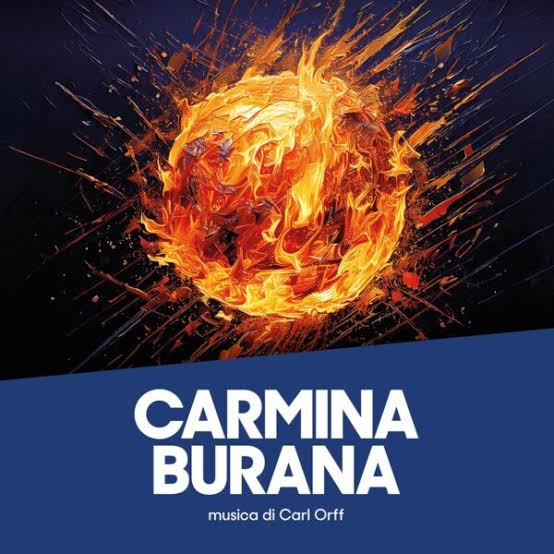
    I Carmine Burana to the Sferisterio: destiny, desire and that crowd that believes to dominate the world.

    by Marialuisa Veneziano


    Macerata 10 August 2026

    Before the orchestra attacks, ♪ is already in everyone's memory. It passed through cinema, advertising, stadiums, talent shows and even some motivational videos where humanity seems to be about to conquer the universe before lunch. Few pages of the twentieth century have been so much loved, used and abused. Yet, when the first agreement breaks into the Sferisterio and the chorus pronounces the name of the goddess, that music still manages to accomplish its own fate: it tears the song to the caricature of itself and gives it back to the fear from which it was born.

    Because Carl Orff's Fortune is not a benefactor. It is a wheel: lifts, overthrows, crowns and humiliates with the same indifference. In the great maceratese space, the Carmine Burana have become the mirror of a civilization that claims to control everything and then discovers that it cannot govern even its desire.

    On the podium of the FORM– Orchestra Filarmonica Marchigiana, Ramón Tebar led choirs and soloists in a vast organism, in which the difficulty is not producing power, but giving it shape. Making noise is easy; turning it into destiny requires a musician.

    A Middle Ages that never existed

    The title originates from the manuscript dating back to the Bavarian Abbey of Benediktbeuern. Orff chose, with the advice of the philosopher Michel Hofmann, texts in medieval Latin, middle German and ancient French: songs of spring, wine, game, eros and caducity. He did not put in music the historical Middle Ages. He invented a new one: archaic and modern, made of obstinate, firm harmonies, pearly syllables and coral masses.

    The score, composed in 1936 and represented in Frankfurt on 8 June 1937, proceeds by blocks. The repetition does not impoverish the speech: it makes it inexorable. Here the rhythm does not accompany the idea; it is the idea. Percussion and pianos do not dress the words: they sculpt them.

    Between the two apparitions ♪ flow spring, dance, drunkenness and desire. Life blooms, drinks, loves, brags; then the wheel returns to the beginning. Man calls progress what Fortuna just considers a turn.

    Tebar: the gesture and the need

    Ramón Tebar faced the score without exchanging the monumentality for heaviness. He looked for the rhythmic nerbo and safely ruled the imposing apparatus: net attacks, supervised transitions, tight tension even where writing risks to be reduced to a magnificent mechanism.

    The greatest merit was not to let ♪ He divorced everything. I Carmine Burana I am not a famous refrain with an hour of anteroom, but a theater of the human condition, also made of irony and fragility.

    Sometime would benefit from a longer shadow before the explosion. If every climax is definitive, fate takes on the manners of a television presenter: it always enters with the lights to the maximum. However, Tebar has kept course and clean. In Orff precision is not good orchestral education; it is dramaturgy.

    FORM and sound body

    The FORM responded with compactness, readiness and discipline. The percussions gave the evening the ritual skeleton without turning into a demolition department; brass and wood have engraved color, the arches have preserved mobility and pianos acted by authentic rhythmic engines.

    In the open space of the Sferisterio, which amplifies the gesture but can disperse the detail, the FORM supported the vastness without losing cohesion. Not a soundtrack under the choir, but the ground on which word, body and rhythm met.

    True protagonist was the Choir Lirico Marchigiano "Vincenzo Bellini", prepared by Christian Starinieri: compact in the backgrounds, precise in the scans, able to pass from the invective to the dance. In Carmine the Latin must not smell of incense; it must know of land, wine and sweat. The coral mass understood it.

    The Pueri Cantores "D. Zamberletti", directed by Gian Luca Paolucci and prepared by Annarosa Agostini, introduced a different light. White voices do not soften the picture: they remember that each wheel of Fortune ends up being inherited by someone.

    • Video
    Moments of the execution of Carmina Burana Credits: Macerata Opera Festival

    Three soloists against the wheel

    Karen Gardeazabal brought in the part of the soprano brightness, line control and sensuality devoid of pleasure. In the most suspended passages, the voice was removed from the mass without opposing, until that Dulcissima where technical dizziness and abandon coincide. Not an acute to perform, but the point where desire remains alone.

    Ruzil Gatin faced Olim lacus colueram, the lament of the roasted swan, with theatrical courage and incisiveness. In this short and ruthless part singing "good" is not enough: it is necessary to accept the grotesque. Gatin returned the sarcasm of a creature that remembers being beautiful while serving at the table. The Middle Ages had not yet invented good manners, but he already knew metaphysics.

    Grisha Martirosyan showed a baritone firm, stamped and communicative. From Omnia Sol temperat to Estuans interius and Ego sum Abbas, has differentiated accent and temperature. The baritone of Orff must be singer, actor, drinker and tavern philosopher — category often more sincere than many academic conferences.

    Luca Agnani's videos have expanded magic images provided by the subtitle of the work. In the best moments they have spread the space; elsewhere they have touched the illustration, because such a physical music does not need to explain how to be grandiose. With the wall of the Sferisterio it is necessary to dialogue: to decorate it would be almost an impertinence.

    The masterpiece, success and our alibi

    ♪ has become a global sound commodity: a few seconds is enough to promise catastrophes, cars or toothpastes from the unsuspected epic. But it's not about music. Depressing Carmine Burana because they like many is snobbish; to love them only because they shake the steps is consumption. Either way you avoid listening to them.

    The birth of the work in Germany in 1937 also imposes seriousness. Separating it from one's own time would be naive; transforming its rhythmic force into an ideological, rapid test. The relationship of Orff with the regime remains a problematic page, to be studied without assumptions or sum processes.

    The evening returned the work to its ambiguity: party and threat, eros and caducity, discipline and fever. All exhausted shows that the public will come in front of a strong experience. But conquering it with what it already recognizes must be the beginning, not the goal. Culture must prepare listening also for masterpieces that we still do not know how to love.

    At the end ♪ He returns identical, and yet he is no longer. After spring, wine, meat and love, he speaks of us: of success hunger, the illusion of meriting every ascent and inability to imagine the fall.

    The wheel turns. The sound turns out against the wall. For an instant the public remains still, as if he had recognized in destiny not a medieval goddess, but his face. This is what a great execution has to do: not only overwhelm us. Give us the responsibility of silence after the straw.


    Macerata Opera Festival 2026 – Carmine Burana. Music by Carl Orff. Director Ramón Tebar; soprano Karen Gardeazabal; tenor Ruzil Gatin; baritone Grisha Martirosyan; FORM– Orchestra Filarmonica Marchigiana; Choir Lirico Marchigiano "Vincenzo Bellini", master of the choir Christian Starinieri; Pueri Cantores "D. Zamberletti", master of the choir of white voices Gian Luca Paolucci; vocal trainer of Pueri Cantores Annarosa Agostini; video Luca Agnani. Arena Sferisterio, Macerata, 7 August 2026.

    Leave a comment

  • MACERATA OPERA FESTIVAL 2027 – Preview

    Three loves under the same sky

    From 17 July to 8 August 2027, the Sferisterio arrives Tosca, The Elixir of Love and the legendary Traviata of mirrors

    by Marialuisa Veneziano


    Macerata, 9 August 2027

    The curtain on the 2026 edition had not yet collected the latest stage dust when the Sferisterio decided to look further. Moreover, the theatre lives like this: while the audience applauds what ends, behind the scenes someone is already imagining what must begin.

    The Macerata Opera Festival announced the poster of its 63rd edition, in program at the Sferisterio Arena from 17 July to 8 August 2027. Three selected titles: Tosca by Giacomo Puccini, The Elixir of Love by Gaetano Donizetti and La traviata by Giuseppe Verdi, in the famous staging now delivered to history as the "Transport of mirrors".

    Three very popular works, of course. But popular does not mean simple and, above all, does not mean harmless. To unite it is love subjected to three different courts: power in Tosca, insecurity in The Elixir of Love, social morality in Traviata. The centuries, customs and conventions change; the ancient habit of humanity remains to complicate what the heart had understood very well.

    Tosca: the new exhibition opening the Festival

    To open the 2027 edition will be Tosca, opera in three acts by Giacomo Puccini on libretto by Giuseppe Giacosa and Luigi Illica. The title will be presented in a new equipment, made in coproduction by the Macerata Opera Festival and the Pergolesi Spontini Foundation.

    The direction is entrusted to Tomer Zvulun, general and artistic director of the Atlanta Opera and artist regularly present in major US theatres, including the New York Metropolitan. On the podium of FORM– Marchigiana Philharmonic Orchestra I'll go Ramón Tebar, after the debut at the Sferisterio with Carmine Burana and expected in September 2026 at the Metropolitan for The bohème.

    The return Tosca brings with it an important memory. The puccinian masterpiece first appeared at the Sferisterio in 1968, with Tito Gobbi — one of the most authoritative Discards in the history of operatic interpretation — and since then there has been represented fifty times. In 2027, however, it will not return as a relic to be polished, but as a matter to be questioned again.

    Why Tosca It is not only a melodrama of extreme passions. It is a work on how power invades intimacy, transforms faith into blackmail, art into suspicion and love into a place to guard. In an absurd space like the Sferisterio, the real challenge will be to make visible not only Rome, but the invisible cage that Scarpia builds around others.

    The Elixir of Love: the lightness that can tell the truth

    The second title will be The Elixir of Love, playful melodrama in two acts by Gaetano Donizetti on a libretto by Felice Romani. To return the acclaimed production signed in 2018 by Damiano Michieletto, born in co-production with the Palau de les Arts Reina Sofía in Valencia and the Real Theatre in Madrid and subsequently adapted also to the outdoor dimension of the Sferisterio.

    The musical direction will be entrusted to Corrado Rovaris, since 2005 musical director of Opera Philadelphia and habitual presence in the major international seasons.

    Colorful, summer and theatrical, this Elixir possesses all the qualities to dialogue with the Arena without being crushed by its proportions. But under the bright surface cleans a truth far from frivolous: Nemorino does not acquire a potion, acquires the hope of being worthy of love. Dulcamara sells a bottle; the company, for centuries, sells far more expensive versions of the same illusion.

    Donizetti laughs, but doesn't laugh. His music keeps for the characters a tenderness that prevents the comedy from turning into caricature. And this is precisely the most difficult measure: to make the public smile without subtracting humanity to whom, to be loved, he thinks he has to become someone else.

    The return of Traviata of mirrors

    The conclusion of the Festival will be entrusted to one of the shows symbol of the Sferisterio: the "Transport of mirrors", created in 1992 by the German director Henning Brockhaus with the scenes of the great Josef Svoboda.

    Since then the exhibition has crossed the world, overcoming the one hundred performances and the fifty reorganizations. His scenic device — a gigantic inclined mirror surface, able to reflect and deform actions, lights and public — does not constitute a simple glance. It is the very idea of the work: a society that looks at Violetta, judges her and in the meantime carefully avoids looking at herself.

    On the podium will rise the Chinese director Lü Jiaat the Macerata Opera Festival. Artistic director of the National Centre for the Performing Arts in Beijing and music director of the China NCPA Orchestra, will be called to confront a legendary staging, in which memory represents a resource and, inevitably, also a test.

    Bringing back to the scene a historical spectacle is in fact more delicate operation than it seems. The masterpiece should not be kept under glass: it must continue to breathe. Otherwise the mirror remains, but the image fades.

    A popular billboard: landing or starting point?

    The 2027 program chooses three titles among the most beloved of the repertoire. It is a highly attractive proposal and, together, prudent. The real question is not whether it is lawful to rely on the masterpieces that the public desires — of course it is — but what use they make of their popularity.

    If Tosca, Elixir and Traviata They will become opportunities to renew the languages of the scene, form new spectators and accompany them towards less frequented repertoires, then recognisability will be a door. If it only serves to avoid taking risks, it will become a very beautiful room from which, sooner or later, it will be necessary to leave.

    The happy 2026 edition, marked by many exhausted and an increase in spectators and recesses, has shown that the audience does not escape in front of the great music. The Festival now looks at 2027 claiming its role as cultural infrastructure of the territory: not only a summer calendar, therefore, but a place where entertainment, tourism, training and collective identity can still meet.

    It is also a possible dance proposal, but at the moment it has not been officially inserted in the billboard: the event will depend on the definition of the tour of the companies.

    The information already confirmed

    • Period: from 17 July to 8 August 2027
    • Location: Arena Sferisterio, Macerata
    • Edition: 63a
    • Opening: Tosca by Giacomo Puccini — new preparation in coproduction with Fondazione Pergolesi Spontini; directed by Tomer Zvulun; direction Ramón Tebar
    • Second title: The Elixir of Love by Gaetano Donizetti — direction Damiano Michieletto; direction Corrado Rovaris
    • Closure: La traviata by Giuseppe Verdi, "Traviata degli specchi" — direction Henning Brockhaus; scenes Josef Svoboda; direction Lü Jia
    • Ticket: planned opening in autumn 2026
    • Cast: will be announced by the end of 2026
    • Calendar of individual performances: not yet communicated
    • Dance: hypothesis to the study, not yet confirmed

    On 17 July 2027 the Sferisterio will resume breathing. You will start with the jump of Tosca, you will pass through the naive bottle of Nemorino and end up in front of the mirror of Violetta. Three ways of loving, three ways of being wounded, three ways with which the theatre continues to tell us the same thing: we can change clothes, epochs and sceneries, but in front of desire we remain stubbornly without proof.

    And maybe that's why we go back to work. Not to know the final — that, often, we already know — but to find out if, this time, we will be able to look at ourselves as it happens.


    Data updated on 9 August 2026 on the basis of official communications of the Macerata Opera Festival.

    Leave a comment

EnglishenEnglishEnglish