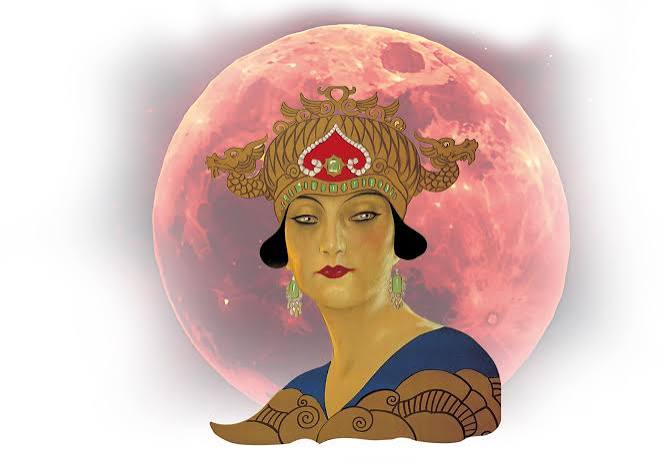
Torre del Lago, in the 72nd edition celebrates the hundred years of Turandot. But behind the gongs, puzzles and triumph the wound of Puccini’s last work remains open: how do you write musically the moment when fear becomes love?
by Marialuisa Veneziano
19 September 2026
There are works that end with the last note. And works that, just when the orchestra is silent, begin to ask us the most difficult questions.
Turandot belongs to the second.
In the summer of 2026, on the shores of Lake Massaciuccoli, the ice princess returned to live in the most intimately linked place to the memory of Giacomo Puccini. The 72° Puccini Festival dedicated her the inaugural evening of 17 July, in the centenary of the first representation of the Scala, entrusting the main roles to Anna Pirozzi, Roberto Alagna and Aleksandra Kurzak, with Marco Armiliato on the podium.
An important celebration, of course. But above all the opportunity to return to a work that, after a hundred years, continues to resist any definitive interpretation.
Because behind Beijing imaginary, gongs, puzzles and monumentality of his theatrical apparatus, Puccini hid a terribly close affair.
A woman who learned not to trust. A man who confuses the strength of his desire with the certainty of being able to be reciprocated. Another woman who loves without getting anything in return.
Three human beings who don't speak the same sentimental language.
And a composer who, after giving them a voice, stops at the point where those three languages should have met.
The real puzzle of Turandot has never been solved the three questions of the princess.
It is to understand how you return able to love after having built your whole life not to have to do it.
The woman who made fear a law
Turandot is not incapable of loving. She is a woman who has learned to consider love a threat.
The story of the ancestor Lou-Ling, kidnapped and killed by a foreigner, is not a simple fairy tale. It is the story through which the princess built her own identity: wanting a woman means wanting to conquer her; being desired means risking becoming property of someone.
Turandot has not experienced that violence, but has transformed it into his own inner law.
I won't be conquered. I won't be possessed. I won't be next.
To prevent it, he built a monstrous defense: every suitor must face three puzzles and, if he fails, he is beheaded.
Fear has become power. And power, exercised long enough, ended up looking like a form of security.
The puzzles no longer serve to find the right man.
They serve to make the meeting impossible.
Until Calaf arrives. And the system, for the first time, doesn't work.
Puccini had understood how difficult it was to make the princess's transformation credible. During the long gestation of the work, begun in 1920 with the librettists Giuseppe Adami and Renato Simoni, he returned several times on the concluding duet. It was not enough to announce that Turandot had fallen in love: it was necessary to find the music capable of making that change necessary.
Because in music you can write a crescendo, transform a theme, modular towards a bright shade.
But how does trust make up?
How does the moment when a person, accustomed to protecting himself, decides to become vulnerable?
Puccini knew how to build a final.
This time he had to be able to deserve it.
Torre del Lago: ice, voice, wound
In the inaugural evening of the Festival, the conflict has rediscovered its spectacular dimension through the recovery of the 2008 exhibition, originally conceived by Maurizio Scaparro, with the scenes of Ezio Frigerio and the costumes of Franca Squarciapino. The production, restored for the centenary, was resumed by Pier Francesco Maestrini, with the choreography of Michele Cosentino and the lights of Valerio Alfieri.
The monumental architectures, the richness of fabrics and the palace make up a declaredly imaginary China. It is a theatre that favours the splendour of the fairy tale and the visual impact, entrusting above all to the voices the task of restoring psychological complexity to the characters.
A choice that makes comparison with the score even more interesting.
Because Turandot is not Puccini's fold on his own way. His writing absorbs harmonic asperities, pentatonisms, esatonal sound, tonal overlaps and a completely nineteenth-century percussive wealth. Musical China, also built through authentic melodies known by the composer, becomes the subject of a very personal language.
The orchestra can be transformed into a metal and percussion building, except to suddenly retreat before the fragility of a single voice.
It is in this ability to move from the mass to the individual who resides an essential part of the puccinian greatness.
Marco Armiliato has favoured the theatrical energy, the relief of the timbre impacts and the sharpness of dynamic contrasts. The concertation, according to the critical chronicles, has not always found the same compactness in the most relaxed moments, but has reached in the third act a more organic dramatic continuity.
In a work like this, the balance is decisive: it is not enough to make the orchestra shine. You need to know when to remove it.
Anna Pirozzi found in the relationship between power and nuance the center of his Turandot. The firmness of the issue, the homogeneity of the projection and the care of the phrasing allowed her to face the imperative weaving without turning the princess into a simple show of strength. In this palace, Lou-Ling’s painful memory progressively gave way to the aggressiveness of the proclamation; in the puzzles the character’s alternation emerged, while in Liù’s interrogation there was an ever more recognizable restlessness.
This is the decisive question: Turandot must not only sing like an ice woman. It must make us feel how much it costs to continue to be.
Pirozzi sought the woman under the symbol, finding especially in the dynamic modulations of the concluding duet the possibility to suggest a transformation that the musical writing continues to make problematic.
Roberto Alagna offered a Calaf of strong heroic temperament, light vocality and generous emission, sometimes pushed to tension. The scene of the puzzles has recorded some inaccuracies and difficulties of coordination with the podium; No domain has constituted a moment of considerable communicative strength, although with some critical reserve on the concluding estate. The final duet benefited from the theatrical understanding with Pirozzi.
This reading also reveals something of the character.
Calaf sings as someone who imagines that the world can be convinced by the strength of their own will. His desire tends to expansion, conquest, affirmation of a destiny that does not easily contemplate defeat.
But wanting someone doesn't necessarily mean meeting him.
And winning a challenge does not mean being loved.
Then Liù comes. And the monumentality of the work suddenly changes meaning.
Aleksandra Kurzak faced the part with a technically supervised singing line and a careful dynamic modulation. If Lord, listen! He has aroused some reserve on the plane of emotional immediacy, in You that of gels you are citing the formal precision has combined with a more incisive dramatic participation, making Liù's death one of the most engaging moments of representation.
The distinction between the two women is first and foremost musical.
Princess Puccini entrusts a vowel called to emerge from a compact orchestra. In Liù he gives another kind of courage: that of a phrase that does not need to impose itself to be heard.
The tied, the control of the breath, the very plane becomes instruments of psychological characterization. Liù must not win a sound battle: it must preserve the meaning of its word while sound seems to be consumed.
Alongside the Kurzak, Andrea Vittorio De Campo returned with vocal solidity and intensity the farewell of Timur. Facing the trio of the ministers, formed by Simone Del Savio, Enrico Casari and Tiziano Barontini; the Choir prepared by Marco Faelli found greater effectiveness in the large pages of the whole, while the interventions of the white voices directed by Sonia Franzese were clearly revealed. At the end, warm consents welcomed the interpreters, with particular tributes to the three protagonists.
But, beyond the applause, the evening of the centenary reproposed the conflict that crosses the entire work.
Turandot defends himself from love.
Calaf claims to reach him.
Liù gives it without being able to hold it.
Three different ways to inhabit the feeling, which the music leads to the collision.
And when Liù dies, something happens that no scenography can represent instead of voice.
The princess discovers a power that cannot govern.
You can order the slave to be tortured. You can decide about your life. But he cannot force her to betray the man he loves.
Liù possesses, in its apparent impotence, a freedom that Turandot does not know.
His sacrifice must not be idealized: death is not a moral solution, nor should love require it. But in the dramatic puccinian construction it produces an irreversible fracture.
Liù does not dissolve Turandot's ice. She reveals that ice is no longer enough to protect it from truth.
And this is where the music performed by Puccini interrupts.
The composer who could not write a birth
There is something shocking about this coincidence.
Puccini had been able to write death all his life.
He had accompanied Mimì out of the world almost without letting us know. Tosca had dropped. He had transformed the last gesture of Butterfly into one of the most painful claims of dignity in the history of the work.
Death knew her.
Artistically, he could look her in the eye.
In his last work, however, he remained to write a birth: the emotional one of Turandot.
How can a woman who has built all her identity on the need not to surrender to love without her change seemingly a defeat?
And how can the theater pass from the body of Liù to sentimental triumph without asking the public to forget what has just happened?
Here the answer must be clear.
Turandot should not love despite Liù. She should be able to love after understanding what Liù showed her.
The slave destroyed the lie on which the princess had built her own existence: the idea that loving means necessarily being possessed.
But even Calaf's kiss can be enough.
Turandot doesn't need to be conquered. She needs a choice.
The decisive moment should not consist in the fact that Calaf finally manages to reach her, but in what the princess decides to expose herself.
It's not the kiss to make it human.
It is the possibility of being wounded and not to escape.
The true love passage should not be the defeat of the frost, but the discovery that the frost is no longer necessary.
Perhaps this is one of the directions towards which he tended the search for Puccini. We cannot know the solution he would choose, but we know he continued to work on the final without completing it.
In 1924 he left for Brussels to cure his throat tumor, bringing with him the sketches of the duet. He died on November 29, leaving the score to the Liù funeral scene and musical fragments for what should be followed.
It is an image that preserves a difficult force to sustain.
A seriously ill man starts to cure himself and brings with him the music that still fails to end.
Like there's time.
To come back. To get the job back. To finally find that woman's voice.
The music needed to tell not a death, but a rebirth.
The ending that another man had to write
The task of completing Turandot was entrusted to Franco Alfano, called to transform the Puccinian sketches into an executable conclusion.
An artistically ungrateful assignment.
Too close to Puccini, he would have been an imitator.
Too far away, a traitor.
Alfano did not receive a score to finish, but fragmentary material that required authentic compositional decisions. Its first version was subjected to substantial cuts at the request of Toscanini; the shortened completion is what has been imposed in the executive custom.
We should not consider it only the man who failed to be Puccini.
His intervention poses a fundamental problem: to respect an author means to preserve what he wrote or to try to realize what he still wanted to write?
They are two forms of fidelity.
And they can come into conflict.
On April 25, 1926, at La Scala, Toscanini transformed this difficulty into a theatrical gesture.
The work proceeded until the death of Liù and the funeral procession. Then the director interrupted the execution: the Alfano final was not played that evening. The testimonies differ in the exact words spoken by the podium, but agree on the meaning of the interruption. There ended the music performed by Puccini.
The curtain went down.
Not on the triumph of love.
On the absence of the composer.
For one night, no one claimed to make that lack invisible.
Since then others have tried to cross it. Luciano Berio proposed a different completion, more problematic in his sound landing than the traditional triumphal conclusion. Directors, directors and scholars continue to confront the final, without any solution having erased the original question.
Perhaps because an unfinished work is not necessarily a faulty work.
Sometimes incompleteness becomes an irreversible part of its history.
We can study the sketches of Puccini, recognize its harmonic habits, reconstruct its motive processes, imagine a stylistically plausible conclusion.
But plausible does not mean authentic.
A composer is not the mechanical sum of his previous works. You can change your mind, surprise yourself, discover a solution that no analysis could have predicted.
And no one can return a decision that Puccini had no time to make.
Coda. The music that no one has ever heard
Hundred years later, we continue to return to Turandot.
Not because the scenery is magnificent.
But because inside that huge theatrical machine there is a very small and universal question:
how much courage it takes to let one love after having spent a life protecting oneself?
Maybe the answer is simple.
And terrible.
Everything we have.
Because loving really does not mean finding someone capable of melting our ice.
It means deciding, one day, that ice saved us enough.
And that now, to live, we have to take the risk of not needing it anymore.
Every night Turandot arrives at the end.
The orchestra plays the last chord.
The voices rise.
The public applauds.
The princess finally pronounces the word that for the whole work had fought.
Honey.
Yet, between the body of Liù that disappears and that word, there is still a distance.
A space Alfano filled.
That others tried to reinvent.
That directors and directors continue to question.
But that Puccini never crossed permanently.
That's where his last work continues to live.
In that missing section.
In that door locked.
Behind it there is a music that no orchestra has ever played.
Not because she was lost.
Because it was never written.
The music that he would tell how a woman returns to love.
The music that Puccini was still looking for.
And that, one hundred years later, we can only continue to imagine.


photo credit Giorgio Andreuccetti


Leave a comment