Tonight Music before Spotify cross the ocean and arrive in the ancient Americas: between pre-Columbian civilizations, ritual instruments, ceremonial songs, percussions, flutes, dances and traditions born much before the arrival of Europe.
A journey into a fascinating sound world, where music was not simple decoration of life, but sacred language, collective rite, tale of gods, memory of peoples.
From the great Mesoamerican cultures to the musical roots of Latin America, we will discover how the sound has accompanied ceremonies, parties, battles, myths and identity.
Because before the playlists, before the posts, before the radio... Even the New World had its voices.
📅 Monday 4 May 2026 🕘 21:15 📺 On the official YouTube channel 🎙️ A cura di Marialuisa Veneziano
Prepare for a bright, old, mysterious journey. Tonight we listen to the Americas before they become America.
From the hypnotic breath of Glass to the restless light of Beethoven, Piovano, FORM and Scolastra give form to an experience in which time does not pass: interrogates us, hurts us, returns us.
By Marialuisa Veneziano
Ravenna, 30 April 2026
I don't know if the music really starts when the first sound comes out of silence. Sometimes, I think, it begins first, much earlier: in a question that accompanies us without which we know to give her name, in a restlessness that seems not to have object, in that dark and sweet present so, entering a concert hall, we not only go to listen to something, but to seek — perhaps without confessing to ourselves — a higher form of presence. You go to a concert bringing with you the noise of the day, tiredness, some thought left in half, a small penalty that you do not see, and then it happens that, gradually, all this is called to collect from a different order, more severe and more merciful. It is then that music does not console in the easy sense of the word; rather, it returns us to ourselves with an intensity that almost moves.
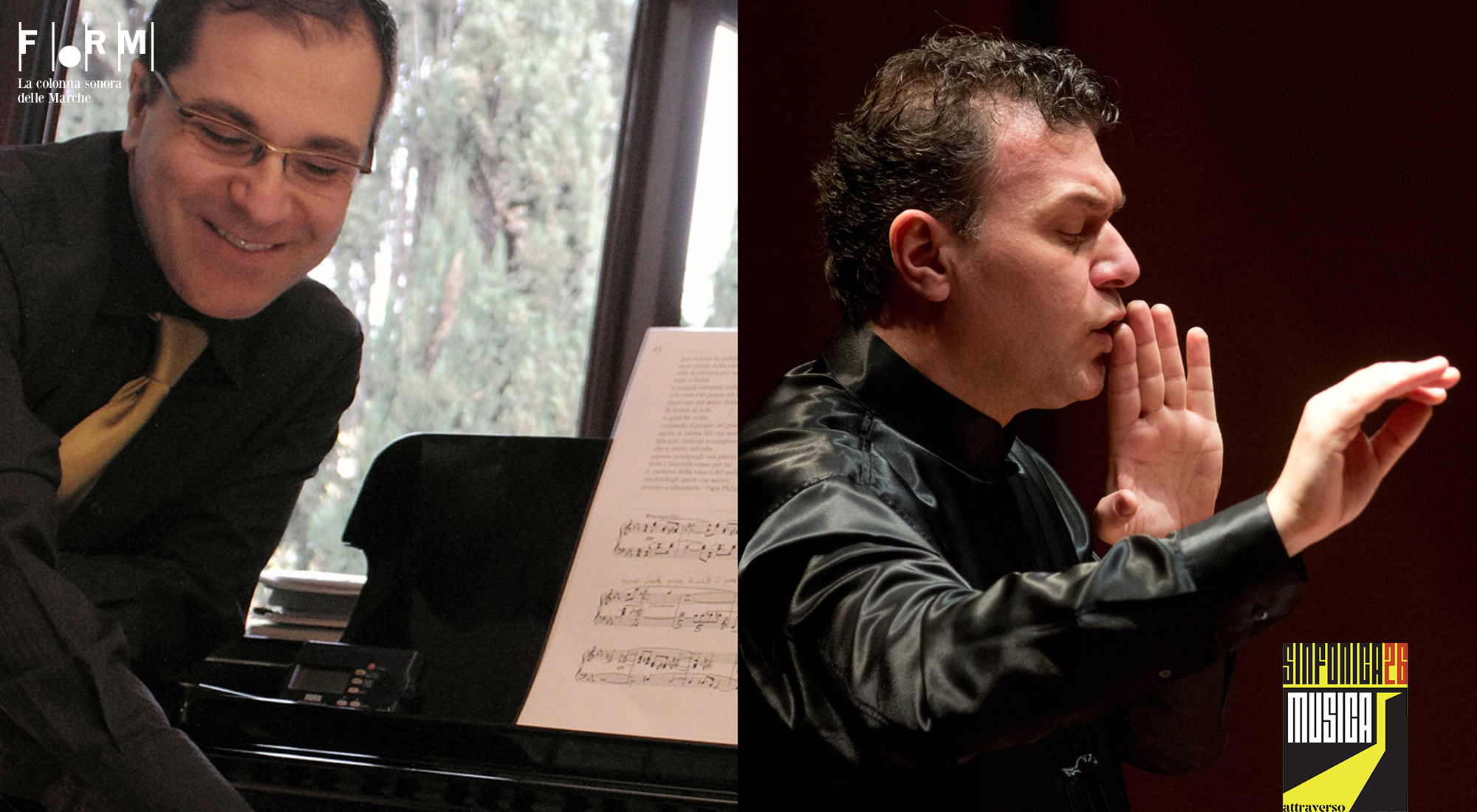
It is with this provision that I have reconsidered the dialogue with Luigi Piovano. Not an interview in the usual sense, not that ordered sequence of questions and answers that often serves more to those who write than to those who read, but a progressive approach to the center of a thought. Piovano does not speak of music as an object to be illustrated. Music, in his words, is never out of him; it passes through you. And this is perhaps what strikes before the content: the naturalness with which technical experience, interpretative intelligence and a rare form of humility gather in one voice. Violoncellist and conductor, for over twenty years the first soloist cello of the Orchestra of the National Academy of Santa Cecilia, an artist who has crossed the symphonic, cameristic and solo repertoire with a familiarity conquered in the body before even that in the study, Piovano brings on the podium an uncommon quality: he does not direct "over" the orchestra, but seems to listen from within, as who knows the physical difficulty of the sound
Luigi Piovano
When I proposed to him to read the combination between Philip Glass and Ludwig van Beethoven not as a simple alternation of styles, but as a comparison between two forms of time — on the one hand the cyclical, contemplative time, on the other the dramatic time of becoming — Piovano did not try to reduce, explain, correct. He welcomed that intuition with a phrase that had the value of an open door: «You couldn't express it better». And yet, as he said, he felt that the point was not to find a happy formula. The point was to enter that place where time is no longer chronology, it is no longer measure, it is no longer the indifferent succession of instants, but it becomes substance of experience, living matter of listening. Glass and Beethoven, so far away in history, meet right there: not in the appearance of language, but in a radical question. What happens to man when time stops being something that passes and becomes something that passes through it?
From this question comes the deep meaning of the program. Because a great concert program is never only a choice of songs; it is a form of thought, and sometimes a form of destiny. It could be said that Glass and Beethoven belong to two unconcilable worlds: one to minimalist modernity, to reiterate structures, to hypnotic geometries of the second twentieth century; the other to the heart of the great symphonic tradition, to dialectic tension, to the dramaturgy of form. But it would be too comfortable and therefore insufficient. The history of music is not a museum ordered for separate rooms: it is rather a plot of calls, anticipations, returns, wounds that reopen under other light. And Piovano, with great clarity, lets it be understood when he observes that in Beethoven himself, even where less we would expect it, already lives a force of reiteration, a ability to build worlds through minimal, insistent, necessary cells. Even four hits can become architecture, thought, destiny.
In the Tyrol Concert of Glass, time does not impose itself as a story, but as an environment. He does not lead the listener from one point to another, he does not take it by hand according to the traditional logic of exposure, development, resolution. Instead it surrounds him, wraps him up, tests him. The piano beginning, in the words of Piovano, seems almost to bring with it a Schubertian perfume, as if for a moment a nineteenth-century memory faces the threshold of a modern building. It is a precious suggestion, because it does not serve to "romanticize" Glass, but to recognize how music, even when it seems new, often carries in itself ancient ghosts, remote fingerprints, voices that have not finished talking. Then, however, that initial promise is immediately transformed: the icing logic enters, that sort of oblique smile of repetition, that serious game in which what returns is never really equal to before.
The word "repetition", applied to Glass, is as inevitable as dangerous. Inevitable, because his writing lives of cells that return, of pulsations that insist, of figures that seem to rewrite themselves. Dangerous, because it risks to reduce to mechanism what is instead a transformation of perceptive consciousness. Repetition, in great music, is not poverty of invention: it is spiritual proof. He asks us if we can stay, if we can hear what changes in the minimum, if we know that even what seems identical is altered by the fact of returning. A pain that returns is never the same pain; a memory that returns is never the same memory; a note that returns is never the same note, because we, meanwhile, have changed.
Piovano accurately identifies the most difficult point: the risk that reiteration becomes obsession, and that obsession becomes boring. It is a real risk, and precisely for this artistically fruitful. Glass’s music walks on a margin: on the one hand the trance, on the other the automatism; on the one hand the suspension of time, on the other its mechanical cancellation. The interpreter’s task is to prevent the machine from winning on life. It is not enough to keep time, it is not enough rhythmic cleansing, it is not enough an exact discipline, as indispensable. We need a breath. It is necessary to ensure that precision has blood, that the design has temperature, that the order does not become jealous. Piovano speaks of dynamics, of micro-adjustments, of balances, of those "baptets" that break the regularity and make the listening sober as a heart that for a moment stumbles and then finds its own rhythm.
In this perspective, the FORM — Orchestra Filarmonica Marchigiana — has had the rare merit of not turning Glass into a device, but to return it flesh, breath, human temperature. It is easy, in a writing based on reiteration, to exchange accuracy for truth; but precision alone is not enough. He can become jealous. It can become surface. Here, instead, a more noble tension has been felt: that of an orchestra capable of keeping together the exactness of the design and the fragility of the living. Each section seemed to listen to the other; each entrance seemed to be born not from automatism, but from a shared need. In this sense, the FORM has not simply accompanied an interpretative path: it has inhabited it, offering to Piovano that living matter without which even the highest idea remains only intention.
Inside this organism, Marco Scolastra's piano did not stand as a separate voice, nor as a narcissistic center of speech. It was rather an internal, thinking, mobile presence: a sound consciousness that crossed the orchestra and was in turn transformed. In the interview, they spoke of a cameristic approach, of a harmony built in proof and sharing; and it is precisely this word — sharing — to remain as a moral key before musical. Because where soloist, orchestra and conductor cease to contend with space and instead begin to breathe it together, music stops being execution and becomes community.
When Beethoven takes the word, it is not a feeling of abandoning Glass, but of seeing the puzzle reflected in a more ancient and dramatic mirror. The Fourth Symphony is often referred to as a luminous bracket between two colossi, the Third and the Fifth; however, this definition, although convenient, is unfair. The Fourth is not minor: it is secret. He does not shout his own greatness, does not raise monuments, does not appear with the flagrant face of the Titanic Beethoven that the tradition, sometimes lazy, has given us. She smiles, says Piovano; but her smile comes from a shadow. And this phrase, in its simplicity, captures the essence of the whole symphony.
The slow introduction, with those dark arches, is not a simple prelude. It's a moral threshold. Music seems to hold its breath, as if before showing it should cross an area of uncertainty. Beethoven, here, does not immediately give us a truth; he educates us to wait. And waiting, in music as in life, is one of the deepest forms of knowledge. Only those who really wait can receive what comes. When the Allegro opens, the light does not erase the shadow: the door with it, transfigures it. And then that smile is not naivety, but conquer; it is not carefree, but grace survives complexity.
In the second movement, the wire with Glass becomes almost palpable. Piovano speaks of a rhythmic reiteration "worthy of minimalism", a pulsation that follows the entire movement and constitutes not an ornament, but a deep structure. Here Beethoven seems to remind us that the return does not only belong to minimalist modernity: it belongs to music itself, and first to life. The heart repeats. The pass repeats. The breath repeats. Seasons repeat. But nothing, in this repetition, is never simply identical. Everything comes back with a difference. Beethoven's greatness lies in transforming this elementary truth into spiritual architecture: what returns does not imprison us, but leads us deeper.
The third movement opens another landscape. Piovano tells it with images of land, almost with affection: a rustic and elegant farmer, a peasant who enters "all arranged", a rural world that is not picturesque, but deeply human. In that description, which may seem mild, there is an important reading. Beethoven is not only the poet of necessity, of struggle, of destiny knocking at the door; he is also the one who knows how to listen to the mint life, the dance, the popular step, the imperfect grace of the daily. His greatness is not in being always sublime, but in knowing that even simplicity can become sublime, if accepted in form.
This is when the Fourth Symphony becomes a lesson against every simplification. Beethoven is not only titanism; it is not only storm. It is also smile, elegance, lightness, restrained irony, smell of tenderness. They rained, speaking of the Beethoven man, recalls the sweetness that appears in the letters, the complexity of a character that cannot be reduced to the cliché of the irascible genius. It is an important step, because the truest musicology does not consist in freezing composers in formulas, but in giving them back the contradiction, that is, life. Beethoven is great not because it is marble, but because in marble it continues to beat a heart.
The final of the Fourth brings this vitality to a dizzying threshold. Writing runs, sparks, asks the bows and breaths an extreme lucidity, and yet it must not become pure virtuosity. Piovano speaks of a sort of oxymoron between the agonistic indication and the metronome, between the "not too much" and a speed that appears as a fucilage; and in this interpretative tension lies one of the most fascinating problems of music: the score is never a corpse to be respected, but a body to be brought back to life. We need fidelity and freedom, humility and decision, respect and risk. Those who direct must be in the midst of these forces without betraying any.
Perhaps this is where the human path of Piovano becomes decisive. His gesture was born from a long custom with sound. He himself, in the interview, leads his direct view to life as an instrumentalist, to the years spent inside the orchestra, to the encounter with masters like Chung and Pappano, to the understanding that music is never an act of command, but an act of shared responsibility. It says a beautiful thing: experience does not prevent mistakes, but it helps to understand that sharing is fundamental. It is a thought that should be written at the entrance of every rehearsal room. Because overall music is not an indistinct democracy, but not even a tyranny of the gesture: it is a strong idea that is offered to others to become common.
And here the artist meets the philosopher, even when he does not claim to be. Piovano speaks of humility and awareness. Humility in front of pages he defines perfect; awareness of having to do everything possible to make them live. It cites the teaching of the Greeks, the necessary imperfection so that the human eye can accept perfection, and recalls a sentence of Giulini: the best can become an enemy of good. In these words there is an ancient wisdom that goes beyond music. Every human work lives in this tension: to seek the maximum knowing that the maximum, if it becomes idolatry, can destroy what we were looking for. Perfection is not sterility; it is measured by the human.
From this point of view, the concert is not entertainment. It is one of the last places where a community accepts to live together time without accelerating it. Piovano says it with words that they have nothing ornamental: after Covid we realized that it is not the same thing to put in front of a screen, even with the best audio apparatus. It is not the same perfume, it is not the same wait, it is not the same after. There is coffee, there is the spritz, there is comment, criticism, even gossip, says with a concreteness that makes smile because it returns to the rite its daily flesh; then the lights lower, enters the orchestra, enters the conductor, and "please there".
This word, prayer, may seem excessive only to those who have never really listened. It is not necessarily religion, but recollection. Of a suspension of the ego. From that moment when a multitude of people, each with their own secret life, agrees to breathe in the same silence. In a world that multiplies sounds and impoverishes listening, the concert is a form of spiritual resistance. It does not distract us from life: it returns us to its depth. It teaches us that being present is still possible; that sharing a non-functional, non-productive time, not immediately spendable, is an almost revolutionary act.
And then Glass and Beethoven, through Piovano, become more than one program: they become a meditation on existence. Glass teaches us that not all that comes back is prison; sometimes the return is the way to go deeper. Beethoven teaches us that becoming is not simple progress; it is a struggle between shadow and light, between weight and grace, between necessity and smile. One expands the time until we lose the measure; the other tends it to make it destiny. But both ask us the same thing: listening not only with the ear, but with that vulnerable area of being in which thought becomes emotion and emotion becomes knowledge.
When the concert ends, the music doesn't really end. Piovano knows. When asked what is left after, he does not offer a rhetorical answer. It says that two elements remain: the pleasure of giving sound to a symphony, and then the other voice, more severe, the one that asks if you could have done better. It is a confession that moves because it is true. Every authentic artist lives in this slit: on the one hand gratitude, on the other the restless. On the one hand the applause, on the other the night in which one rethinks an attack, to an agreement, to a point where everything could be more just, more clear, more necessary.
But perhaps this wound prevents music from becoming a profession only. Who no longer doubts, has already stopped looking. Who, after giving everything, still feels the call of a possible better, keeps his fidelity to beauty intact. And if this tension comes to the public, if someone comes out of the room with more quiet or glossy eyes, if someone can say "this evening I needed it", then the music service turned out. Not because he erased the pain, but because he gave him a form. Not because he solved life, but because for a little while he made it habitable.
In the end, perhaps, the true center of this experience is right here: in listening as an act of humanity. Piovano tells of two girls, an Israeli and an Iranian, sitting close in his row, and imagines that that image should turn the world, because in music certain differences, for a moment, cease to be boundaries. It's not naive. Music does not stop wars, does not erase history, does not absolve man from his faults. But it shows a chance. And sometimes, in the night of the world, a possibility is already a light.
So, thinking about Glass and Beethoven, Scolastra and Filarmonica Marchigiana, the voice of Piovano and that word — Time — that continued to come back as an obstinate theme, it seemed to me that the concert had fulfilled its most discreet miracle: not to amaze, but to deepen. There are music that passes and music that remain; but the most necessary do not simply remain in memory. They stay the way we look after the world. For for an hour, perhaps for a little more, time was not the enemy that consumes us, nor the river that takes us away. It was a house. And inside that house, fragile and bright, we found something we believed lost: the possibility of listening, and therefore of being alive with more truth.
VI Puntata – This Monday starts for an overwhelming journey to the roots of rhythm, in the heart of a continent that taught the world the beat, dance and strength of sound. 🥁 THE CONTINENT OF RIGHT: THE AFRICA ANTICA 🥁 Between ancestral drums, ritual songs, fires in the night and millennial traditions, we will discover a music born to unite men, spirits and nature.
📅 Monday 27 April 2026 🕘 ♪ 21:15 📺 On the official YouTube channel with Marialuisa Veneziano ✨ An intense, magnetic evening full of energy and wonder. Prepare to hear the heartbeat.
V episode – Tonight you travel far... far away. The "Music before Spotify" column opens the doors to an extraordinary civilization, where sound was not simple entertainment... but power, harmony and philosophy. A fascinating journey between emperors, temples, millenary instruments and melodies capable of placing the soul and the world in order. From the guqin ropes to the thoughts of Confucius, we will discover together an ancient music that still knows how to speak to the heart.
IV episode: a fascinating journey between Mesopotamia, Egypt and the first musical instruments of history, when music was rite, tale and memory. A little journey through time to listen to music before the "play" button existed.
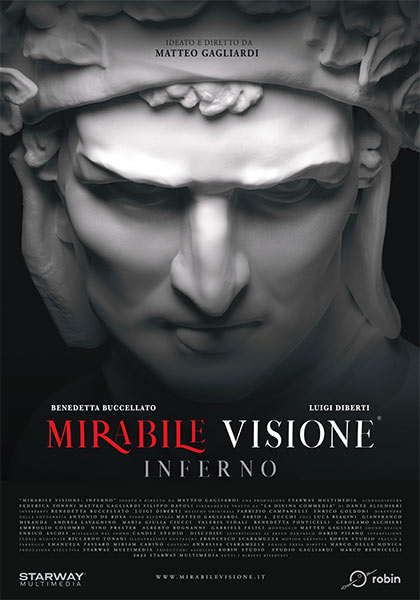
A cinematic reading of Hell that returns the philosophical depth and moral modernity of the Comedy.
by Marialuisa Veneziano
Ancona 25 March 2026, DanteDí
On March 25, the date that tradition recognizes as the beginning of the journey of Divine Comedy, Italy celebrates Dante, a national day dedicated to the Supreme Poet. It is not a purely commemorative occasion: it is rather an invitation to return to Dante as a source still alive of our thought and language. In this symbolic and cultural context, the vision of the film by Matteo Gagliardi is inserted with particular strength, a work that attempts — with awareness and respect — to return to the contemporary public the intellectual and poetic energy of Dante’s Hell.
Approaching Dante's Hell means measuring one of the most vertiginous moral and poetic architectures of Western civilization. It is not simply a poem, nor an allegorical narrative: Hell is a philosophical construction of human responsibility, a topography of the soul in which every penalty is the necessary consequence of a choice. Transposing this universe into cinematic language inevitably entails a risk: to reduce symbolic complexity to pure visual representation. The film by Matteo Gagliardi shows a rare awareness of this challenge. His Dante is not treated as a monument to be illustrated, but as a living text to be questioned. The director seems to understand that Hell is not as much a place as a structure of thought: the place where Dante testes man’s freedom and his tragic ability to self-determinate in evil.
It is known that Dante’s Hell does not work as a simple catalog of sins. Each damned man represents a tension of the human brought to the extreme consequences. Francesca da Rimini is not only the adultererer transformed by passion: it is the tragedy of love that confuses its justification with fatality. Ulysses is not only the hero of knowledge: it is the symbol of intellectual hybris that claims to exceed the limits of the human condition. Ugolino is not only the figure of revenge: it is the terrible image of despair that devours itself. In this sense, the greatness of Hell does not reside in punishment, but in the psychological clarity with which Dante looks at his characters. It does not reduce them to moral examples; it lets them speak. And while they speak, they reveal the drama of human freedom.
Gagliardi's film shows that he understands this deep dimension of the poem. He does not try to spectacularize Hell, but to return the character of universal human drama. The direction maintains a delicate balance: on the one hand the philological respect for the Dantesque word, on the other the awareness that cinema must translate that word into sensitive experience.
It emerges a Dante who preserves his original strength: that of a poet able to look at evil without stopping questioning man. Moreover, the same structure of Hell reveals the modernity of Dante’s thought. The infernal circles are not only levels of punishment: they are a progressive descent into the deformation of reason. We start from the uncontrolled passion, we go through violence, we finally reach fraud and betrayal. The more human intelligence is used to deceive and dominate, the more guilt becomes serious. It is an ethical concept of extraordinary modernity, which focuses on the responsibility of the individual.
In this context, Dante's journey is not only an ultra-terrestrial itinerary. It's a cognitive path. Hell becomes the place where the poet learns to recognize the truth of human passions. Only through evil can one understand the need for salvation.
Gagliardi's film is able to return this pedagogical and philosophical dimension of the poem, showing how Dante continues to speak to contemporary sensibility. In an age that often perceives classics as distant objects, cinema can become a tool capable of reopening dialogue with that tradition.
This is where the cultural value of the work is grasped. It is not simply about telling Dante, but to return the urgency. Because Dante, in the end, does not write only for his contemporaries. He writes for every age that he wants to question the fate of man. Hell is the place where humanity contemplates its possibility of falling, but also its ability to understand itself.
It is no coincidence that one of the highest moments of the poem is in the voice of Ulysses, when the desire for knowledge turns into a challenge to the human limit:
"You did not live like brutes, but to follow virtute and canoscence. "
It is the verse that perhaps best summarizes the intellectual tension of the entire Commedia: the dignity of man lies in the search for knowledge, but that research must remain aware of its boundaries.
In this sense, the cinematographic Dante of Matteo Gagliardi succeeds in an uncomplicated task: to bring the viewer back into the great moral question that crosses the poem. Not so much what Hell is, but what man becomes when the sense of responsibility is lost.
And it is precisely this question to make Dante still necessary.
Because, as the poet writes at the beginning of his journey, every human existence knows sooner or later the moment of dismay:
Dante Alighieri
"In the middle of the cammin of our lives I found myself for a dark forest. "
The merit of works like that of Gagliardi lies in reminding us that the wild does not belong to the Middle Ages. It still belongs to our conscience.
A journey between sound, matter and history led by young people: culture as a daily exercise, not as a simple event, on the occasion of FAI Days, 21 and 22 March 2026.
By Marialuisa Veneziano
Montemarciano, 21 March 2026
There are afternoons that do not happen: they turn out.
They do not come as events, but as slow, almost shy revelations, in which everything seems to wait for their moment to say something essential. And when it happens, you notice — with a bit of wonder — that what you are experiencing is not only a set of activities, but a form of beauty that takes body.
At the Alfieri Theatre in Montemarciano, culture had an unexpected face.
The guys.
The children, pupils of the I.C. Montemarciano – Monte San Vito: small ciceroni in the afternoon FAI
They weren't there to learn. They were there to return.
There was, in their gestures and in their words, something extremely rare: an awareness still young, but already able to voice. The students of the second and third classes of the Montemarciano-Monte San Vito Institute welcomed the public not as simple guides, but as temporary guardians of a heritage that, for an afternoon, passed through them.
And in this passage something profoundly beautiful happened.
Because when culture is alive, it is not transmitted: it entrusts itself.
A full, sincere praise, almost necessary at a school that has managed to make the most difficult gesture: to leave space. Believe that boys are not only recipients, but possible source of sense. It is a choice that not only produces learning, but forms looks, and looks — when they learn to see — change the world.
Next to this vision, the Municipality of Montemarciano moved with that elegant discretion that belongs to those who really understand the value of things. He did not simply organize: he created conditions so that something could happen. And in this gesture, silent but decisive, we recognize a high form of cultural responsibility.
The route opened without declaring itself.
A voice — that of a boy, and then another — and immediately the music.
But not the music you listen to. The one you see.
The collection of historical clarinets by Andrea Greganti appeared as a constellation of suspended forms, objects that did not ask to be admired, but included. The clarinet, a young instrument in history and yet already loaded with nobility, was shown in its original restlessness: a continuous search for balance, perfection and identity.
Some historical clarinets exhibited in the foyer of the Alfieri Theatre
He was not born accomplished.
It was built over time, through errors, attempts, corrections. And in this evolution something profoundly human is seen: the stubborn desire to find a voice that is, finally, proper through the technical improvement of materials and mechanics.
Among the instruments, one — almost with smell — the so-called thermosiphon clarinet. A mild, domestic name, yet capable of enclosing a surprising intuition. An air chamber inside a metal stem, designed to heat the instrument in a short time through the insufflation of the musician, to make it immediately ready to sound.
And in that technical detail there was a wider truth.
That nothing that vibrates is born without being prepared. That sound, before it exists, needs care.
This is where culture stops being surface and becomes thought.
And once again, we understand how precious the gesture of the Municipality of Montemarciano has been: to make accessible what is normally kept, to allow a community to enter into a rare intimacy. It is not only openness: it is trust.
Then, seamlessly, something even subtler happens.
The matter is allowed to cross.
Thanks to the collaboration with the Polytechnic University of Marche, clarinets are observed through micro-TAC: a technology capable of penetrating the interior of objects without violating them, revealing its hidden structure. It is as if the look learned a new form of depth.
Computerized demonstration of the internal study of the instrument
You can see cavities, thicknesses, invisible lines that make the sound possible.
And then it is understood that beauty is never only what appears. It is always what it supports.
And the boys — still they — to guide this gaze inside the invisible, with a simplicity that does not impoverish, but illuminates.
Then the passage becomes more intimate.
In the Little Theatre, light changes, time slows down, and history enters.
But he doesn't come in as a story.
Enter as a presence.
Alfonso Piccolomini takes shape through an essential sketch, almost restrained, and precisely for this powerful. Duke of Montemarciano, figure marked by the complexity of his time, by the tensions, by the choices that are not simplified.
There is no celebration.
There is return.
And in this return something rare is done: history is not softened, but respected. The boys walk through it without fear, they live there, they make it alive. And at that moment we understand that educating does not mean protecting from complexity, but offering tools to support it.
Once again, the school is revealed for what can be when it is authentic: a place where knowledge turns into consciousness. A full, deep praise to an institution that is not limited to teaching, but chooses to form.
And next door, always, the Municipality. Consistent presence, able to support a vision that does not divide, but unites. Because what has been seen is not the sum of three activities, but a single gesture: to relate.
And yet, just when everything appears harmonious, a question emerges — not as critical, but as desire.
That all this does not remain an island.
That does not run out in the short time of a successful afternoon. Because culture, if it really wants to be such, cannot live with apparitions. It must become practice, habit, daily breath.
And here the school returns, again, to the center. Not only as a place that participates, but as a place that prepares. Prepare to see before I even know. Prepare to recognize the value of what is near before looking for it elsewhere. Prepare to connect, in a time that divides.
Music, history, science — not as compartments, but as dialogue.
In an age that too often educates to survival and forgets the sense of beauty, teaching to see becomes a necessary act. Almost an act of resistance.
And here, for an instant, this possibility has become visible.
In the end, leaving, there was a subtle feeling.
Not to have seen anything. But they were crossed.
As if culture, for an afternoon, had chosen to pass by hand.
And her hands were young.
That's exactly why, perfectly ready.
Andrea Greganti next to his clarinets: not a collection, but a continuous dialogue between ingenuity, history and music.Not images of an event, but traces of a passage: the knowledge you entrust, the future you listen.The small cicerons guide the audience between music, history and discovery: when the school becomes a living experience.



Leave a comment