Chronicles of the Apeiron


  • Classical music is alive. We keep dressing her as a funeral.

    Classical music is alive. We keep dressing her as a funeral.

    Young people, rites and the curious vice of telling Beethoven as if he needed to be saved.

    by Marialuisa Veneziano


    25 August 2026

    For at least a century we announce the death of classical music with a punctuality that Beethoven would probably appreciate more than the metronome.

    He dies because young people don't listen to her. He dies because Spotify exists. He dies for TikTok, for smartphones, for video games, for jeans at the theatre and perhaps also for the unfortunate that, taken from enthusiasm, applauds between the first and the second movement.

    There is only one drawback.

    As we prepare the funeral, the deceased continues stubbornly to breathe.

    And he does not only breathe in the rooms frequented by the habitué. A report by the Royal Philharmonic Orchestra has seen an increase in interest in orchestral experience and, above all, an audience less and less attributable to the single core of traditional melody: new listeners and "discoverers" are now a decisive part of the audience observed. In 2025, the Association of British Orchestras recorded almost triple events for children and young people compared to 2019. They are British data, therefore not automatically transferable to each country, but they tell a trend that deserves at least to make us pose the crown of flowers.

    Maybe the question, then, is wrong.

    Not: How can we save classical music?

    But: what should we save her?

    And above all, will it not be that, sometimes, should we save it from us?


    BEFORE CONTINUING (click the arrow): Four notes. That's it? No. In Beethoven, those four notes become generative matter, conflict, return, formal destiny. Listen to the Fifth Attack without thinking about the monument. Think of an organism that begins to move.

    The problem is not Beethoven. It's like we present Beethoven

    Imagine a 14-year-old boy.

    Let's tell him today he'll listen to Beethoven.

    That's all right.

    Then we start: "Ludwig van Beethoven, born in Bonn in 1770, exponent of passage between Classicism and Romanticism..."

    At this point Beethoven has already died a second time.

    And this is not about cirrhosis.

    Because Beethoven is not interesting as "important composer born in Bonn". Beethoven is interesting because it takes a form that his time knew perfectly and begins to twist it from within. Because it transforms tiny cells into giant organisms. Because it creates expectations, denies them, exasperates them. Because his silence can have more violence than a very strong one.

    The initial cell celeberrima of the Fifth should not be presented as four notes to be recognized at the television quiz.

    It wasn't a monument. It was a problem.

    IS a structural germ.

    Four sounds that penetrate the movement, return, change, contaminate the speech. The reasoning principle becomes formal destiny.

    This should be a boy.

    Not the tag under the bust.

    The same goes for Mozart. We turned it into a child with the wig that he composed while others played with trottolas, forgetting to tell us how dizzying the way in which, in his music, light and restless people often live the same line.

    What about Bach? The terrible mistress of the escapes, what in school generally appears when the joy of the class begins to become suspect.

    Yet one escape is one of the most exciting intellectual games that can be heard: one voice affirms an idea, another resumes it, another still contradicts it or flips it; everything changes and everything continues to remember the origin.

    More than old music.

    It's moving architecture.

    Maybe young people don't reject classical music. They refuse the boredom with which, sometimes, we tell them.

    And they'd even be right.


    BOX IRONIC

    Quick Manual to Kill Beethoven at School

    Step 1.
    Pronunciation with irreprensibly serious tone: "Ludwig van Beethoven, born in Bonn in 1770..."

    Step 2.
    Add now: "Composer of transition between Classicism and Romanticism. "
    The boy, meanwhile, has already stopped breathing emotionally.

    Step 3.
    Reduce the Fifth Symphony to ta-ta-ta-taaa, as if one of the most shocking musical organisms in history was a jingle ante litteram.

    Step 4.
    Avoid saying that Beethoven burns the form from within, transforms four notes into destiny and succeeds in vibrating the conflict before even melody.

    Final result.
    Congratulations: you have not presented a revolutionary.
    You've compiled his own cadastral card.


    The museum we built around the sound

    Then there is the rite.

    Composite input. Lights down. Quiet.

    Program on your knees.

    Don't clap here.

    Don't cough there.

    Don't come in now.

    Don't move.

    Do not breathe too firmly during Mahler.

    The new listener sometimes enters the room with the same serenity with which he faces a customs control: he knows he has done nothing, but he still fears that someone discovers something.

    Yet our current concert galaxy does not descend unchanged from Olympus. The story of the performance recounts much more reactive audiences than today; in the Vienna of the early nineteenth century, for example, the listeners of chamber music could applaud among the movements and openly show their appreciation. Many behaviors we perceive today as "natural" are the result of a long historical process of formalization of listening.

    This does not mean transforming Ninth in a country party with calls during the Adagio.

    Silence is precious. Concentration is even more.

    But we must distinguish respect from sorrow.

    If a person entering the room for the first time applauds at the end of a movement because it has been overwhelmed, perhaps the most urgent problem is not to inform her that she has violated the Geneva Protocol of the philharmonic.

    Maybe we could be happy that she was overwhelmed.

    Then he'll learn.

    Culture should teach its codes without using them as a barbed wire.


    TikTok did not kill Mozart

    There is another heresy that we have to give.

    A young man can meet Chopin on TikTok.

    He can meet Rachmaninov in the soundtrack of a video.

    He can get to Mahler through a film, in Strauss through a television series, to a symphonic orchestra through the music of a video game.

    So?

    Do we have to seize his phone and immediately deliver him a 12 CD box with a critical booklet?

    The Royal Philharmonic Orchestra noted that streaming and new media were radically changing the ways through which the audience meets orchestral music; at the same time, interest in traditional repertoire continued to live with soundtracks, crossovers and other formats.

    Here's the point.

    The entrance door must not necessarily resemble the room we enter.

    If thirty seconds of Rachmaninov push someone to look for the whole concert, those thirty seconds did not desecrate Rachmaninov.

    They opened a door.

    The problem begins if we decide that there is nothing behind that door.


    Candles, effects, location: poor Mozart, in the dark

    And we get to immersive concerts.

    A thousand candles. Churches, palaces, suggestive spaces. Atmosfera accurately photographable.

    We could ask ourselves, with a certain perfidy:

    did we really have to turn off the light to see that Mozart was still alive?

    Maybe.

    And it wouldn't necessarily be a tragedy.

    If a different atmosphere leads to the room someone who would never come in, well come.

    If a candle leads to a quartet, let it light.

    As long as, at some point, one realizes that among all those candles there was also a quartet.

    Because disclosure works when it leads to the work, not when it replaces it.

    Accessibility does not mean impoverishment.

    We don't have to make Beethoven easier.

    We must make its complexity desirable.

    This is a huge difference.


    Classical music does not need well-educated young people

    He needs curious young people.

    Which is very different.

    Maybe we should stop asking the new generations to become culturally old before we can enter a hall.

    They must not immediately love the ritual.

    They must be able to meet the music.

    A boy may not know what a recapitulation is and feel physically the return of a theme.

    Can ignore the meaning of support and feel the tension.

    Can not know the word Agreed and realize that an interpreter held time right there, at that point, suddenly becoming a different phrase.

    Knowledge will come.

    In fact: it will come more easily if before the desire to know will be born.

    We musicians sometimes make the mistake of reverse the order.

    First we provide instructions.

    Then, if time remains, the wonder.

    We should do exactly the opposite.


    Let him be hit

    Let's still imagine that boy.

    He first entered a theater.

    Maybe he doesn't know when to applaud.

    Maybe until ten minutes before he was watching the phone.

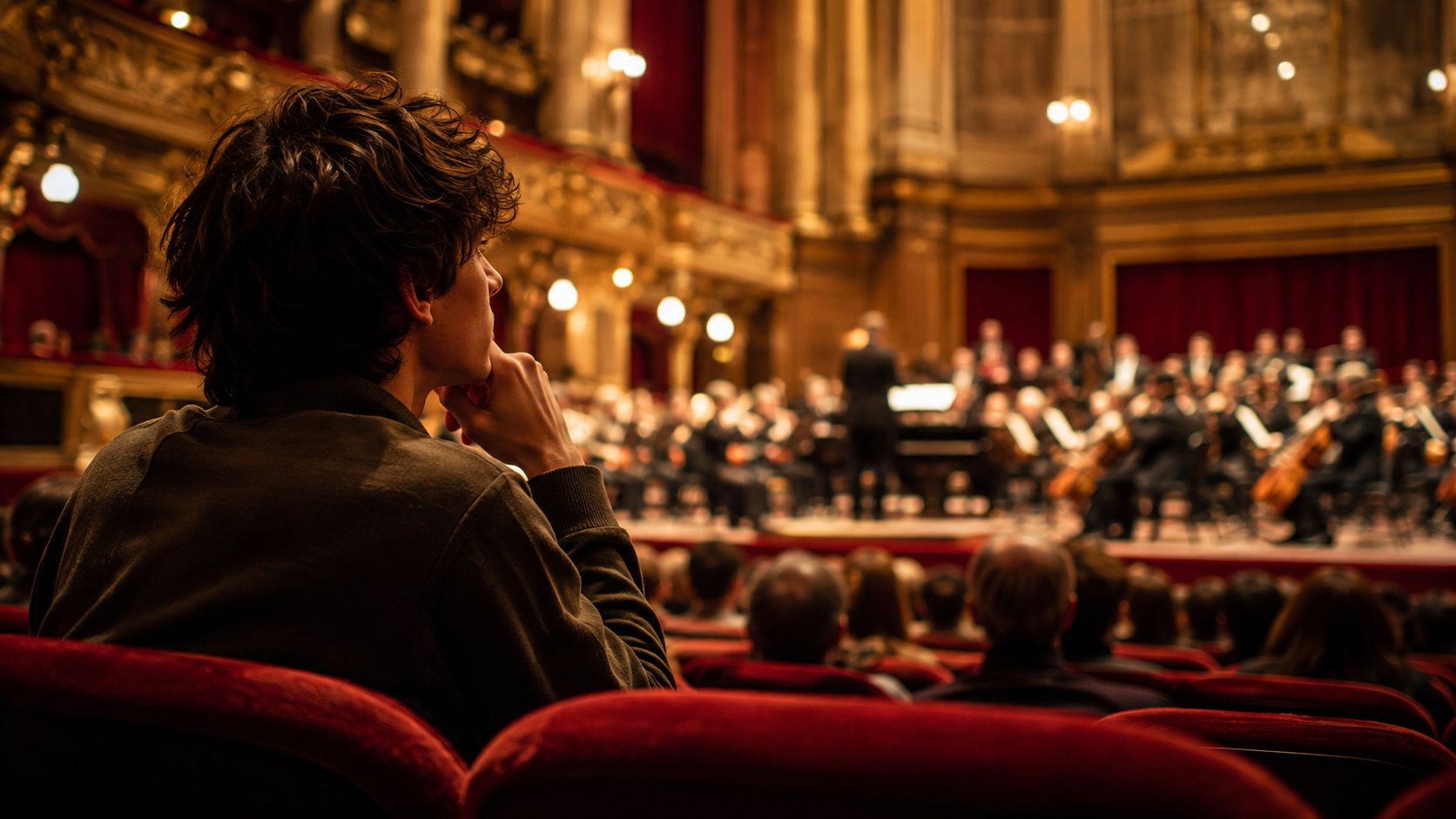
    Perhaps Beethoven only knows him because someone made him listen to the beginning of the Fifth.

    Then the orchestra accords.

    The buzz slowly disappears.

    The warden raises his arms.

    And something very ancient happens.

    Fifty, seventy, one hundred human beings breathe together and produce a sound that a moment earlier did not exist.

    No algorithm can fully anticipate what will happen in that room: the weight of that first agreement, the tension of a silence, the tiny error, the risk, the vibration of the air.

    And maybe that guy, for a few seconds, even forgets to check his phone.

    Don't ask him right away if he knows the dish-shaped.

    Let's not ask him if he understood thematic development.

    Let us not correct it if at the end of the first movement he escapes an applause.

    Let's at least give him time to get hit.

    If he comes back, he'll learn everything.

    Classical music is not a dead butterfly to be found in the teca of Western culture. He does not need our piety, nor to be embalmed, simplified or defended as an endangered species.

    He went through revolutions, wars, social changes, gramophones, radio, cinema, television, rock, streaming and now algorithms.

    He'll probably survive TikTok.

    The question is whether we will be smart enough to allow the new generations to meet her without constantly putting ourselves in the middle.

    Perhaps, out there, there is no generation unable to listen.

    There is a generation waiting to understand why it should.

    And when the answer comes from an orchestra, from a voice, from Beethoven's four jokes or from a very piano that will suddenly silence everything else, there will be no need to convince her.

    He's already got it.

    Classical music is not dying.

    Please.

    Let's remove only the black dress.

    Classical music is not inherited: it meets. Tell us about your first meeting!

    2 answers to "Classical music is alive. We keep dressing her as a funeral. "

    1. Avatar
      Anonymous

      Jesi Pergolesi Theatre. Russian orchestra on tour in Italy. 13 years so much desire to listen to a live orchestra, I only used to the band. Accompanied by my father we sat on a 2nd order bullet. Started the concert, I don't remember the program, beautiful... I fell asleep!! !

    2. Avatar
      Anonymous

      Well said! We save classical music even from record companies, intent only to pursue easy profits.

    Leave a comment

  • A front wall, a universe inside

    Sound, light, architecture and provocation: so the Pink Floyd taught rock that even a stage can have a thought.

    by Marialuisa Veneziano


    17 August 2026

    Prologue. The sound came back

    London, 1967.

    The audience is seated in the geometric composure of Queen Elizabeth Hall. The stage is ahead, the armchairs are directed in its direction, the spectators wait for the music to begin from the place from which, for education and custom, the music should begin.

    Then a sound comes behind them.

    It's not a mistake. It's not a bad speaker. The sound moves, crosses the room, passes from one side to another and seems to look for each viewer individually, as if the music had suddenly learned to walk.

    For the first time many understand, perhaps without yet knowing, that a concert should not necessarily happen front to those who listen.

    It can happen around.

    It can happen inside.

    In 1967 the concert stopped proceeding straight: the sound began to turn around the audience

    The leaders of this small perceptive earthquake are four young Englishmen called Pink Floyd. Use a device called Azimuth Coordinator, a kind of joystick capable of distributing sound in space. The music adds projections, lights, flowers and soap bubbles.

    The bubbles spot the carpet and the group is banned from the hall.

    The future of the concert was just born; the upholstery, less visionary, had already asked for compensation.

    But what had happened could no longer be erased.

    Rock stopped standing still.


    The room became a tool

    The real Pink Floyd revolution was not to have more speakers.

    It consisted of having understood that space could also be composed.

    Of a sound we are accustomed to considering height, duration, stamp, intensity. But a sound also has a origin. A voice coming from afar does not mean what would mean pronounced near the ear. A step heard behind it contains a threat that the same step, seen in front, would lose.

    Placement becomes meaning.

    Western music had already known spatiality: just think of the opposite choirs of the basilica of San Marco, where the voices were called by different chanters and architecture entered the composition. Pink Floyd transported that awareness into the electric heart of the twentieth century.

    They didn't just play in a hall.

    They sounded the room.

    From frontality to immersion: when the origin of the sound became compositional material.

    The audience no longer received music as a message sent from the stage. It became the unstable center. The noises reached it from unexpected points, the lights altered its perception, the images extended what the sound could not say alone.

    It was already a form of total theatre.

    Only that, instead of the velvet and mythological gods, there were cables, amplifiers and a number of electrical sockets enough to worry any insurer.


    Pompeii: the concert entrusted to the stones

    In 1971 Pink Floyd made an even more radical gesture. They play in the Roman amphitheatre of Pompeii without public.

    The steps are empty. No one applauds. No one shouts the name of the group. No one lifts the phone, even because the phone, with admirable sense of the measure, was still tied to a wall.

    The musicians, the instruments, the sky and the stone remain.

    GUARDA – When the silence of Pompeii entered the music

    A concert without spectators, destined to be listened to for generations not yet arrived.

    That absence transforms everything.

    An amphitheater born to welcome thousands of bodies becomes the harmonic case of a solitary sound. Music crosses the ruins as if it was questioning what remains after the disappearance of men.

    In Echoes, long progression, remote sounds, rarefactions and crescendos seem to be born from the bowels of the place. The stone is not a picturesque background: it is a presence. Look, hold it back.

    That concert without spectators says something that our time struggles to understand: an event is not great because many people claim to have been there.

    It is great when it changes the meaning of the place where it happens.

    In Pompeii the music does not look for the crowd.

    Look for time.

    And time, for once, answers.


    When even a cash register entered the orchestra

    With The Dark Side of the Moon, Pink Floyd transform the album and concert into a single great form.

    No more a succession of songs, but an organism: heartbeats, voices, watches, breaths, noises and transitions combine songs as connecting rooms of the same mind.

    The watches of Time do not decorate the music: they attack her. Time is not poetically told; it bursts with awakes, bells and mechanisms, as it does in life when we realize we have wasted too much.

    In Money, even money becomes rhythm.

    Cash registers, coins, torn paper and metallic sounds are mounted in a regular sequence. The famous riff proceeds mainly in seven quarters, an asymmetric measure, slightly lame, which seems to advance with the safety of those who own everything and the balance of those who no longer know why they want it.

    Money promises order.

    Music gives it back irregularity.

    ASCOLTA – When coins and cash registers learned to count up to seven

    In "Money" the sound does not accompany the song: it generates its rhythm and anticipates its criticism

    This is the musicological greatness of Pink Floyd: the effects are not supported on the track as lustrini on an already finished dress. They enter the structure, determine its breath, become part of thought.

    Today we would say "sound design".

    Then he really cut the tape with scissors.

    Capitalism, at least for a few jokes, had yet to be assembled by hand.


    The circle that looked at the audience

    In the 1970s, the large circular screen appears on stage to become one of the symbols of Pink Floyd concerts.

    Not a rectangle, not a simple backdrop.

    A circle.

    Eye, planet, porthole: "Mr Screen" did not show the concert, opened a second mind in the concert.
    (click on the arrow and discover the background!)

    Eye, planet, moon, oblue, pupil dilated on the spectator's consciousness.

    The images are not limited to illustrating the texts. Sometimes they amplify them, sometimes contradict them, sometimes they open a second narrative line. It's a real visual counterpoint.

    Music says something.

    The image suggests another.

    The viewer is forced to live in tension between the two.

    This is where the concert becomes a sensitive philosophy. It does not only offer something to listen and see: it modifies the way in which listening and viewing are questioned each other.

    Pink Floyd, moreover, often tend to subtract the face of musicians to absolute centrality. They don't seem to say: «Look at us.».

    They seem to say: «Look what music is thinking».

    An almost ascetic choice for a group that would soon fly a giant pig over the audience.

    But even that pig, of course, was not just a pig.


    The pig who escaped from the symbol

    For the cover of Animals, a huge inflatable pig is suspended over the Battersea Power Station.

    He gets rid of the cables and flies away.

    The previous day was a chosen shooter, in charge of knocking him down in case of escape. The next one, evidently confident in the maturity reached by the pig, did not call him back.

    The pig crossed the British sky and interfered with air traffic.

    Algie above Battersea: when a record cover became political satire, aviation accident and legend.

    The vanguard flies. The authorization form, obviously, comes after...

    Political satire had finally conquered civil aviation.

    But behind the irresistible anecdote there is a serious principle: in Pink Floyd the scenic object is never only decoration.

    The pig represents power, greed, social deformation. Inflatable figures occupy the air because collective obsessions also occupy the space of our lives.

    A special exclaim effect: «Look how good we are.».

    A question symbol: «Look what we've become».

    It's a huge difference.

    And it is not measured in meters, watts or budget.


    The wall really grew

    With The Wall, metaphor becomes matter.

    During the show, large bricks are gradually placed in front of musicians. The wall grows to hide them almost entirely.

    The public does not simply listen to a story about isolation.

    It's isolated.

    The metaphor became matter: the wall did not tell the alienation, made it happen.

    The scenography does not represent incommunity: it produces it physically. Viewers attend the progressive disappearance of the group for which they bought the ticket.

    It is theatre, installation, concert, cinema.

    But above all it is an idea made inevitable.

    Music must even adapt to the times of construction. An instrumental section allows workers to complete the wall if they are late. Technical necessity enters the form: teachers and musicians share the same dramaturgy.

    Here the concert reaches the size of thetotal art work.

    Sound, light, architecture, animation, gesture and story are not separate elements. There are only mutual relations.

    The wall does not accompany the music.

    It's music made stone.

    And that is exactly what many contemporary shows have inherited only in part.

    We have preserved greatness.

    Not always the need.

    GUARDA ANCHE – The animation that transformed the school into a factory of identical individuals


    From the wall to the Sphere

    Today the concert has tools that Pink Floyd of the Sixties would probably judge magnificent, provided accompanied by a manual and an extinguisher.

    Immense screens, spatial audio, drones, augmented reality, vibrating seats, synchronized light bracelets. The Sphere of Las Vegas can almost completely envelop the field of view and direct sound with an unthinkable precision at the time of the Azimuth Coordinator.

    We entered the future imagined by Pink Floyd.

    Today the concert has become a place without visible walls.

    From Azimuth Coordinator to Sphere: sixty years of technology to bring the audience into the sound.

    Yet the problem remains ancient.

    Technology always amplifies something.

    Sometimes an idea.

    Sometimes his absence.

    In Pink Floyd, the sound space expressed disorientation; the circle opened a mental dimension; the pig embodied a political criticism; the wall made alienation physical.

    Today the opposite can happen: first the effect comes, then desperately seeks a song that justifies it.

    First the digital dragon is 30 meters high.

    Then the chorus, intimidated, attempts to be noticed.

    This is not about condemning progress. A technologically grandiose show can be authentic art, if every medium comes from vision.

    But a huge stage doesn't make what happens to you great.

    Sometimes it is limited to offering the vacuum an excellent lighting.


    The public behind their wall

    Finally, there is a wall that Pink Floyd did not foresee.

    It is small, bright and stands in the palm of the hand.

    Today many spectators spend the concert filming what they are experiencing. They don't look at the stage, but the screen on which the stage is reduced.

    Thousands of people record a giant screen through a tiny screen.

    The artist tries to immerse them in a universe; they prepare a vertical version of fifteen seconds.

    IS The Wall, but pocket.

    We knocked down the wall between stage and plate. Then we lit one in the palm of the hand.

    Of course, recording also means wanting to preserve. It is a human gesture: we want to retain what we know is meant to end.

    But live music is precious because it cannot be held entirely.

    The sound is born, it passes through the air and disappears.

    Its fragility is not a defect.

    It's his destiny.

    When we try to keep every second, we risk not really living any of them.

    Pompeii was empty, yet he seemed to listen.

    Today the stadiums are full, but we're not always sure that someone is still really listening.


    Final. The oldest in technology

    Pink Floyd did not just make more spectacular concerts.

    I gave the concert a conscience.

    I understood that the sound could possess a geography, that a light could become a musical form, that an image could open a wound, that a wall could tell what the words could no longer say.

    They did not add effects to the songs.

    They extended songs in the world.

    This is their deepest legacy and the most difficult to imitate. It is easy to buy a bigger screen. It is easy to fly drones, multiply lasers, wrap the audience in images and vibrations.

    It is much harder to know why to do it.

    Technology can surround the viewer.

    Only art can reach it.

    Technology occupies space.

    Art changes interior time.

    Perhaps the concert of the future will be perfectly immersive. The sound will react to our movements, the images will change according to the emotions of the crowd, the floor will vibrate, the artificial intelligence will decide which color to associate with our nostalgia.

    Maybe we'll even get a notification to know when to move.

    But nothing will be enough without a vision.

    Pink Floyd built walls to show us what we brought in. They flew pigs because power appeared grotesque as it really is. They played among the ruins so that the silence of the centuries would enter the music.

    They understood that a concert is not the place where music is simply performed.

    It is the place where, for an instant, a crowd of strangers breathes into the same imagination.

    Then the lights turn out.

    Sound dies.

    The screen turns black.

    But something remains.

    The concert ends when the stage turns off. Art begins with what keeps moving within us.

    Not in phones.

    Not in the photographs.

    It remains at that secret point where music, passing, has moved just the wall that each of us had built within itself.

    Because the future of the concert will not depend on the number of pixels, drones or speakers.

    It will still depend on the oldest, fragile and rare technologies:

    have something to say — and find someone really willing to listen.

    **********************************************************

    VISIVO ARCHIVE – Enter the gallery (click on the arrow)

    Leave a comment

  • MACERERERA FESTIVAL 2026

    MACERERERA FESTIVAL 2026

    Oh, oh, oh, oh, oh.

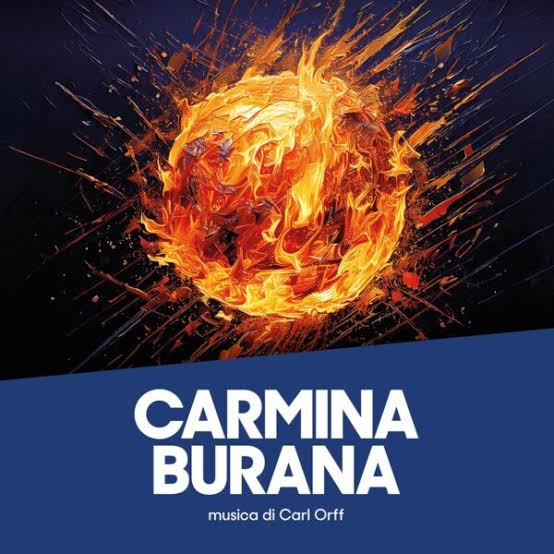
    I Carmine Burana to the Sferisterio: destiny, desire and that crowd that believes to dominate the world.

    by Marialuisa Veneziano


    Macerata 10 August 2026

    Before the orchestra attacks, ♪ is already in everyone's memory. It passed through cinema, advertising, stadiums, talent shows and even some motivational videos where humanity seems to be about to conquer the universe before lunch. Few pages of the twentieth century have been so much loved, used and abused. Yet, when the first agreement breaks into the Sferisterio and the chorus pronounces the name of the goddess, that music still manages to accomplish its own fate: it tears the song to the caricature of itself and gives it back to the fear from which it was born.

    Because Carl Orff's Fortune is not a benefactor. It is a wheel: lifts, overthrows, crowns and humiliates with the same indifference. In the great maceratese space, the Carmine Burana have become the mirror of a civilization that claims to control everything and then discovers that it cannot govern even its desire.

    On the podium of the FORM– Orchestra Filarmonica Marchigiana, Ramón Tebar led choirs and soloists in a vast organism, in which the difficulty is not producing power, but giving it shape. Making noise is easy; turning it into destiny requires a musician.

    A Middle Ages that never existed

    The title originates from the manuscript dating back to the Bavarian Abbey of Benediktbeuern. Orff chose, with the advice of the philosopher Michel Hofmann, texts in medieval Latin, middle German and ancient French: songs of spring, wine, game, eros and caducity. He did not put in music the historical Middle Ages. He invented a new one: archaic and modern, made of obstinate, firm harmonies, pearly syllables and coral masses.

    The score, composed in 1936 and represented in Frankfurt on 8 June 1937, proceeds by blocks. The repetition does not impoverish the speech: it makes it inexorable. Here the rhythm does not accompany the idea; it is the idea. Percussion and pianos do not dress the words: they sculpt them.

    Between the two apparitions ♪ flow spring, dance, drunkenness and desire. Life blooms, drinks, loves, brags; then the wheel returns to the beginning. Man calls progress what Fortuna just considers a turn.

    Tebar: the gesture and the need

    Ramón Tebar faced the score without exchanging the monumentality for heaviness. He looked for the rhythmic nerbo and safely ruled the imposing apparatus: net attacks, supervised transitions, tight tension even where writing risks to be reduced to a magnificent mechanism.

    The greatest merit was not to let ♪ He divorced everything. I Carmine Burana I am not a famous refrain with an hour of anteroom, but a theater of the human condition, also made of irony and fragility.

    Sometime would benefit from a longer shadow before the explosion. If every climax is definitive, fate takes on the manners of a television presenter: it always enters with the lights to the maximum. However, Tebar has kept course and clean. In Orff precision is not good orchestral education; it is dramaturgy.

    FORM and sound body

    The FORM responded with compactness, readiness and discipline. The percussions gave the evening the ritual skeleton without turning into a demolition department; brass and wood have engraved color, the arches have preserved mobility and pianos acted by authentic rhythmic engines.

    In the open space of the Sferisterio, which amplifies the gesture but can disperse the detail, the FORM supported the vastness without losing cohesion. Not a soundtrack under the choir, but the ground on which word, body and rhythm met.

    True protagonist was the Choir Lirico Marchigiano "Vincenzo Bellini", prepared by Christian Starinieri: compact in the backgrounds, precise in the scans, able to pass from the invective to the dance. In Carmine the Latin must not smell of incense; it must know of land, wine and sweat. The coral mass understood it.

    The Pueri Cantores "D. Zamberletti", directed by Gian Luca Paolucci and prepared by Annarosa Agostini, introduced a different light. White voices do not soften the picture: they remember that each wheel of Fortune ends up being inherited by someone.

    • Video
    Moments of the execution of Carmina Burana Credits: Macerata Opera Festival

    Three soloists against the wheel

    Karen Gardeazabal brought in the part of the soprano brightness, line control and sensuality devoid of pleasure. In the most suspended passages, the voice was removed from the mass without opposing, until that Dulcissima where technical dizziness and abandon coincide. Not an acute to perform, but the point where desire remains alone.

    Ruzil Gatin faced Olim lacus colueram, the lament of the roasted swan, with theatrical courage and incisiveness. In this short and ruthless part singing "good" is not enough: it is necessary to accept the grotesque. Gatin returned the sarcasm of a creature that remembers being beautiful while serving at the table. The Middle Ages had not yet invented good manners, but he already knew metaphysics.

    Grisha Martirosyan showed a baritone firm, stamped and communicative. From Omnia Sol temperat to Estuans interius and Ego sum Abbas, has differentiated accent and temperature. The baritone of Orff must be singer, actor, drinker and tavern philosopher — category often more sincere than many academic conferences.

    Luca Agnani's videos have expanded magic images provided by the subtitle of the work. In the best moments they have spread the space; elsewhere they have touched the illustration, because such a physical music does not need to explain how to be grandiose. With the wall of the Sferisterio it is necessary to dialogue: to decorate it would be almost an impertinence.

    The masterpiece, success and our alibi

    ♪ has become a global sound commodity: a few seconds is enough to promise catastrophes, cars or toothpastes from the unsuspected epic. But it's not about music. Depressing Carmine Burana because they like many is snobbish; to love them only because they shake the steps is consumption. Either way you avoid listening to them.

    The birth of the work in Germany in 1937 also imposes seriousness. Separating it from one's own time would be naive; transforming its rhythmic force into an ideological, rapid test. The relationship of Orff with the regime remains a problematic page, to be studied without assumptions or sum processes.

    The evening returned the work to its ambiguity: party and threat, eros and caducity, discipline and fever. All exhausted shows that the public will come in front of a strong experience. But conquering it with what it already recognizes must be the beginning, not the goal. Culture must prepare listening also for masterpieces that we still do not know how to love.

    At the end ♪ He returns identical, and yet he is no longer. After spring, wine, meat and love, he speaks of us: of success hunger, the illusion of meriting every ascent and inability to imagine the fall.

    The wheel turns. The sound turns out against the wall. For an instant the public remains still, as if he had recognized in destiny not a medieval goddess, but his face. This is what a great execution has to do: not only overwhelm us. Give us the responsibility of silence after the straw.


    Macerata Opera Festival 2026 – Carmine Burana. Music by Carl Orff. Director Ramón Tebar; soprano Karen Gardeazabal; tenor Ruzil Gatin; baritone Grisha Martirosyan; FORM– Orchestra Filarmonica Marchigiana; Choir Lirico Marchigiano "Vincenzo Bellini", master of the choir Christian Starinieri; Pueri Cantores "D. Zamberletti", master of the choir of white voices Gian Luca Paolucci; vocal trainer of Pueri Cantores Annarosa Agostini; video Luca Agnani. Arena Sferisterio, Macerata, 7 August 2026.

    Leave a comment

  • A reflection on the meaning of the work, on authority and on what no machine can ever know: death, loss, expectation, risk, imperfection. In one word: life.

    by Marialuisa Veneziano


    4 August 2026

    Prelude. Four jokes against ninety thousand songs

    In any room, a boy repeats four Bach jokes for the fiftieth time.

    The right hand proceeds with a certain safety; the left, however, continues to swallow an internal voice. The master stops him. He tells him to listen to the tenor, not to treat it as a service corridor between the bass and the soprano. The boy starts again. She's still begging. It irritates, breathes, erases a fingering, tries another. The four jokes are always there, intact and inflexible, with that strict courtesy that Bach reserves to those who believe he understood it too soon.

    At the same time, without getting tired, without discouraging and above all without having to pay the lesson, an artificial intelligence system can generate a complete song: text, melody, voice, accompaniment, arrangement, production. A few seconds, some well-formed indication and the track is ready. Perhaps it will not be memorable; but, moreover, not all that is made up of human beings has the obligation to be. Humanity has also produced many songs that would have been merciful to entrust to oblivion, and we cannot accuse the algorithm as well as those.

    The problem, therefore, is not that the machine can generate music.

    He can.

    And it begins to do so in quantity that no compositional workshop, no monastery, no conservatory and no multinational record could have imagined. In June 2026, Deezer recorded about ninety thousand pieces of artificial intelligence each day at the platform: more than half of all new daily uploads. It is a data relating to a specific service, not to the entire musical universe; but just describe the size of the phenomenon.

    Ninety thousand songs.

    Every day.

    While the boy is still standing at his four bars.

    Disproportion is almost comic. On the one hand, human time, with its slowness, nerves, imperfections and the blessed inner voice that does not want to come out. On the other hand an uninterrupted sound production, capable of filling in a few hours what a composer could not write in many lives.

    Yet the decisive question is not how much music a machine can produce.

    The demand is older, more uncomfortable and much less technological:

    when a succession of sounds becomes a work?


    Exhibition. Everything that the algorithm knows

    The algorithm can know a lot about Bach.

    It can recognize an escape, identify the subject, follow the answers, distinguish a fun from a tight, observe the opposite motion, calculate the counterpoint density, compare thousands of cadences, catalog progressions, imitate figurations, intervals and conducts of the parts.

    You can learn that in a polyphonic writing each voice must possess its own direction. It may associate certain harmonic procedures with specific perceptive effects. It can generate a page that has the sound appearance of a coral, a prelude, perhaps even a plausible escape.

    It's not very small.

    It would be intellectually dishonest to deny it only because it disturbs us. The history of music, moreover, is full of instruments initially looked with suspicion: the piano seemed to someone less noble than the harpsichord; the metronome promised to turn time into a notary practice; the recording seemed destined to embalm the execution; the synthesizer was welcomed as if he had personally intended to fire the orchestra.

    The orchestra, fortunately, survived. Even though she keeps paying as if she didn't.

    Every technology changes the relationship between man and sound. Sometimes it impoverishes it, sometimes it expands it; almost always it does both, because history does not have the good taste to present itself divided in good and bad with the labels already applied.

    Artificial intelligence can help a composer explore timbre combinations, organize materials, transcribe, restore recordings, separate sound sources, improve accessibility or free time from repetitive operations. It can become an extension of the workshop, such as music printing, electronics and notation software.

    It is not the tool to create the problem.

    The problem begins when the tool does not expand a creative responsibility, but simulates its existence.

    A piano does not claim to be the pianist. A diapason does not claim to have plastered the orchestra. The metronome, however authoritarian, has never attributed the interpretation of a sonata.

    The algorithm knows all the notes. It can calculate, predict, imitate. But he never waited for a voice that never comes back. And there is a weight, in that note, that no code will ever endure.

    The generative system, however, can give us a finished product: a voice that seems to have suffered, a text that tells a separation, a melody that suggests nostalgia. And he can do it without anyone suffering, separated or longed.

    Formally, everything is in place.

    Only the place where that music was supposed to come from is missing.


    Counterpoint. Bach did not know death by hearing

    Bach is not great because he possessed many musical information.

    It is great because that information, through a human being, became necessary.

    She remained a very young orphan: her mother died in 1694 and her father the following year. In 1720, returning from a trip, she learned that the first wife, Maria Barbara, had died after a short illness and had already been buried. Death did not represent for him a poetic concept to be selected in a menu of atmospheres; it was a concrete presence, entered several times in the house, in the family and in the flesh of time.

    Of course, we must not commit the romantic mistake of reducing every page of Bach to a encrypted autobiography. An escape is not a personal diary with four voices, and a choral is not necessarily a psychoanalytic session with pedals.

    Bach’s greatness lies also in the exact opposite of individual performance: in the ability to transform private experience into a universal form, to subtract pain to the simple rash and deliver it to an order.

    His counterpoint does not cry because he accumulates musical sighs. He is crying because each voice is free and tied to others; because the disorder is crossed without being denied; because dissonance is not an accident to be erased, but a tension that demands fulfillment.

    In Bach, suffering does not abolish architecture.

    It makes it necessary.

    This is what we often forget when we talk about musical emotion. We believe that emotion consists in making everything slower, stronger or more tearful. It is the old strategy of those who, not knowing how to open a door, try to move it on shoulders.

    Authentic emotion is not a seasoning poured over form. It comes from the form itself: the expectation of a resolution, the memory of a theme, the distance between a hue and its return, the late entry of a voice, the silence that prepares an agreement.

    A machine can analyze these reports.

    Can reproduce them.

    It can even combine them in ways that surprise the listener.

    But he didn't wait for them.

    And it is waiting, perhaps, that the human being begins to become author.


    Interlude. The Great Food Supermarket

    We have ahead of a technology capable of generating, on request, "a melancholic piece in baroque style, with piano, strings and atmosphere of loss".

    The pain finally became customizable.

    You can choose the duration, gender, type of voice and perhaps, one day, even the exact number of tears per line. "I would like an elegant mourning, thank you, but not too tragic: I have to use it as a background to a video of thirty seconds."

    It's easy to iron. The harder it is to admit that the machine did not invent this trade: it has already found it ready. For years a part of the music industry has not asked what to say, but in which category it can be placed. Music to relax, to concentrate, to fall asleep, to cook, to forget to be cooking. The song is no longer met: it is used.

    Artificial intelligence then arrives in a world that had already begun to consider music not as a language, but as an acoustic tapestry.

    The real danger is that the machine becomes similar to Bach. It is that we become listeners unable to distinguish Bach from a sufficiently pleasant sound surface.

    A research published in June 2026 examined the spread of artificially generated music on platforms, describing a model based on massive production and statistical hope that some traces gain visibility. According to the study, 93 percent of the songs identified as generated by AI received very few listenings or none; the authors also experienced how simple it was to distribute music produced in series through policies often inconsistent or poorly applied.

    So we are not only before a creative revolution.

    We are before a quantitative revolution.

    And the quantity, when it becomes absurd, does not necessarily widen freedom. You can submerge it.

    An infinite library where no one can find a book is no longer the paradise of knowledge. It is a warehouse with excellent ambitions.


    Escape. Who is the author?

    The author’s question is not resolved by asking who pressed the button.

    Even the pianist presses keys; but no one, at least so far, has attributed to the keyboard the interpretation of Goldberg variations.

    The author is not simply the one who initiates a process. He is the one who takes responsibility for the choices: he accepts, rejects, modifies, orders, renunciation. Above all, it recognizes the difference between what works and what must exist.

    Here the decisive word is need.

    A work is not born only because it can be produced. It was born because, for someone, not producing it would have been a form of untolerable silence.

    This does not mean that the author should be tormented, sick or unhappy. Let us be free once and for all from the superstition that to write a good adage it is necessary to have at least one family tragedy, three creditors and a precarious health. Mozart knew how to laugh; Rossini knew the pleasure; Haydn had irony and discipline.

    The artistic necessity does not coincide with suffering. It fits with the presence.

    Someone's there. Decide. Listen. It's a failure. He exhibits a part of himself in the judgment of time.

    The generating system risks nothing. He does not feel shame on a mediocre page, he does not fear having repeated, he does not remain awake wondering whether a modulation is inevitable or only elegant. You should not defend a choice in front of a director, editor or particularly ruthless court that is your ear the next morning.

    It can generate a thousand solutions and abandon them all without loss.

    The human being, however, also chooses because it does not have an infinite time.

    Every authentic work contains consciousness, declared or secret, that we cannot write everything, play everything, love everything, live everything.

    The shape is also born from the limit. And it is perhaps for this reason that Bach knew death not only as theological argument, but as a musical principle: every note must cease because the next one can buy sense; every sentence must end; every cadence is together arrival and leave.

    The algorithm can continue indefinitely.

    Man composes knowing that he will have to stop.


    Cadence of the interpreter. The sound that happens once

    There is then a figure often forgotten when talking about generative music: the interpreter.

    Our time seems to believe that the score already contains everything and that the execution is a kind of home delivery service. The composer prepares the package, the interpreter rings the bell and the audience signs the receipt.

    But a score is not yet music. It's a promise of music.

    Between the sign and the sound there is a territory made of weight, breath, joint, stamp, agogical, space and silence. Two pianists can respect the same heights, the same values and the same indications, however producing two completely different truths. Not because one arbitrarily adds his biography, but because each interpretation is a form of embodied knowledge.

    When an organist prepares a Bach escape, it should not only identify the most suitable registers. It must understand the acoustics, the delay of sound, the response of mechanics, the breathing of phrases. It must know when an internal voice risks disappearing, when the pedal supports and when, instead, it becomes a respectable liturgical hippopotamus.

    A pianist must decide how much weight to entrust to a finger without breaking the line; a singer must turn his breath into a word before the body complains; a director must let many people breathe as if they were one organism, without reducing them to a well synchronized pack.

    All this is not a fault of notation. It's his miracle.

    The score does not completely prescribe music because it leaves the interpreter with the task and responsibility to make it exist.

    Artificial intelligence can simulate stolen, hesitation, dynamic variations and even those small irregularities that we associate with human presence. But one thing is to plan imperfection, another is to risk it.

    The human interpreter does not produce a difference every time so that he has been asked for a percentage of variability.

    He produces it because he's alive.

    Because that night the acoustics are different. Because the public breathes in another way. Because a sentence, crossed a hundred times, suddenly reveals a wound that was not audible before.

    And sometimes because, between one note and the other, it reminds someone.

    Nobody notices. Yet time changes.

    An attack is held for an almost imperceptible fraction; a voice is accompanied longer; a cadence does not close, but seems healthy.

    That instant is not written in the score.

    It cannot be proved.

    But that's where music stops being correct and becomes true.


    recapitulation. Not against the machine, but against the waiver

    It would be reassuring to conclude that artificial intelligence produces only soulless imitations and that human beings, instead, create invariably palpitating masterpieces.

    Unfortunately, reality, with the usual lack of respect for our thesis, is more complex.

    A machine can produce an interesting piece. A human being can compose a frighteningly empty one. Organic origin does not guarantee quality, as well as the use of technology does not automatically erase autorality.

    The important distinction does not pass between natural and artificial.

    Pass through liability and waiver.

    AI can be used by an author as material, interlocutor, research tool or device capable of opening unexpected possibilities. In this case, it does not necessarily replace creativity: it can force it to redefine its boundaries.

    But when man delegates to the machine not only the execution of a task, but the very weight of choice, he gets perhaps an effective product; it is not said that he obtains a work.

    Institutions are also trying to trace this border. In July 2026, IFPI introduced global principles to establish eligibility in official record rankings developed with generative systems. In the United States, the Copyright Office stated that expressive elements determined by a human being can receive protection, while the simple formulation of a prompt is not, alone, sufficient to found authority.

    The right always comes after art, with the dignified affection of those who enter the theatre when the overture has already begun. But the legal question contains an essential philosophical question:

    How much human presence is necessary so that someone may say: is this work mine?

    The answer will not only depend on the number of commands given. It will have to cover the quality of control, the transformation of the material, the awareness of the choices and the responsibility of the result.

    It is not about protecting a romantic privilege of the artist.

    It is a matter of preventing the word "creation" to be reduced to an elegant synonym of "generation".


    Coral. What remains after the last note

    Perhaps one day the algorithm will imitate Bach so well that we will no longer be able to distinguish the copy from an authentic composition. Perhaps it will generate impeccable escapes, singing touches, corals capable of lowering our eyes. Maybe he'll know us enough to build the exact music for all our nostalgia.

    But even then there will be a difference. Not necessarily audible difference.

    A difference of origin.

    Bach did not compose because he had all the necessary data to compose Bach. He composed because he was a man thrown over time, forced to measure himself with faith and doubt, discipline and fatigue, birth and loss. His music is not true because we can reconstruct every episode of his life in every joke. That is because a mortal being managed to limit a form that still surpasses us today.

    The algorithm can know all the notes.

    It can calculate relationships between them, predict our reactions, imitate the sound of consolation.

    But he never waited next to a bed.

    She's never heard too late.

    He never gave a name for the last time without knowing it would be the last.

    He never heard a voice continue within himself when in the world he had already silenced.

    That is why we must not defend human music by claiming that the machine will never be skillful enough. It could be. And perhaps, in some fields, it is already more than we are willing to admit.

    We have to defend her for a deeper reason.

    Because art is not only the result we reach.

    This is what happens to us while we try to reach him.

    He is the boy who repeats four jokes and slowly learns to listen to a voice that he ignored before. He is the composer who deletes a technically perfect page because he does not recognize it as true. It is the interpreter who, in front of a cadence, suddenly understands that concluding does not simply mean ending.

    Artificial intelligence will force us to wonder what is really human in music.

    It's not a threat recently.

    But it could also be a gift.

    He will force us to stop calling art all that is only well packed. It will force us to distinguish competence from necessity, emotion simulated by transformed experience, production from presence.

    And maybe, after generating billions of songs, we will find that one note played by someone who really has something to say keeps a different weight.

    Not because it's perfect, but because it can break.

    Not because he knows the pain, but because he crossed it.

    Not so he can imitate the crying.

    But because, before he became music, he had to learn to cry.

    Leave a comment

  • The world takes place in the audience

    The world takes place in the audience

    The condominium theatres of central Italy enter the UNESCO World Heritage Site. Eight of the ten recognized rooms are Marches: the "region of theatres" rises on the stage of history.

    by Marialuisa Veneziano


    History has the defect, or perhaps the courtesy, not to always warn when it comes in. Don't knock, I don't ask for lights to light up. Sometimes it comes with the sober language of a deliberation, through a few lines destined to the archives; and yet, behind those lines, an entire land discovers that its name has just become a little larger.

    It happened on 26 July 2026.

    While the summer stretched out on the hills of Marche with its quiet air, almost convinced that nothing was too fast, in Busan, South Korea, the 48th session of the UNESCO World Heritage Committee enrolled in the World Heritage List "The system of Italian condominium theatres of the 18th and 19th century in central Italy".

    A compound phrase, almost austere. But inside there is an applause over two centuries.

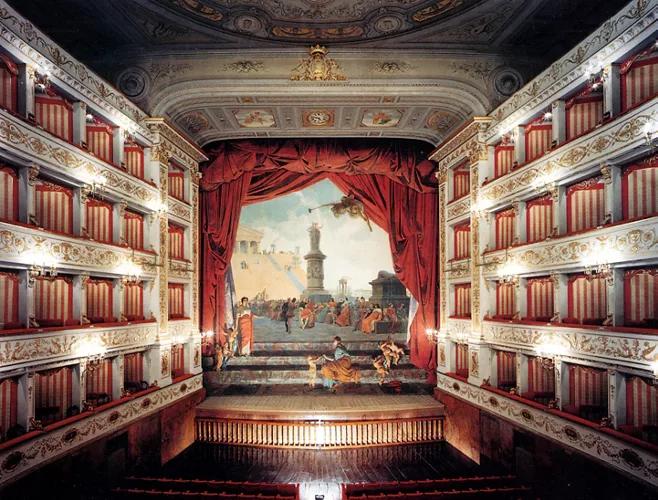
    The UNESCO-recognized serial site includes ten theatres distributed between Marche, Emilia-Romagna and Umbria. Eight are the Marches: the Teatro Gentile da Fabriano, the Pergolesi di Jesi, the Ventidio Basso di Ascoli Piceno, the Serpente Aureo di Offida, the Teatro dell’Aquila di Fermo, the Lauro Rossi di Macerata, the Feronia di San Severino Marche and the Bramante di Urbania. The Teatro Angelo Mariani of Sant’Agata Feltria and the New Gian Carlo Menotti of Spoleto join them.

    The inscription, deliberated according to the UNESCO III criterion, recognizes in these buildings an exceptional testimony of the transformation of the theatre from aristocratic space to cultural and civil institution. With this result rise to sixty-two Italian sites listed in the World Heritage List.

    For one evening, therefore, the proverbial sobriety of Marche can afford the luxury to applaud standing.

    That building where civilization was built

    The word condo, it must be admitted, it does not today enjoy a particularly lyric reputation. Evoca administrators, thousandths, grondaies in discussion and assemblies in which humanity sometimes offers less noble evidence than those contemplated by UNESCO.

    Yet, between the eighteenth and nineteenth centuries, that term could designate a much more ambitious pact.

    Municipalities and private citizens — nobles, professionals, traders, representatives of the emerging bourgeoisie — They participated together in the construction of the theatre, supported its costs, owned its stakes and shared its management. Thus the theatre was born not only by the will of a ruler or by the magnificence of a court, but through a collective investment of the community.

    It was not yet cultural democracy as we would like to see it today. The poles kept social distinctions, the hierarchies settled on different orders and, in addition to the show, everyone willingly contemplated himself. The story, moreover, never proceeds with the nectity of the manuals: it advances for compromises, contradictions and closed doors.

    But one of those doors really opened.

    The theatre came out of the exclusive aristocratic domain and became a city institution, a meeting place, a representation and even a formation of public opinion. UNESCO has recognized precisely this passage: not only the beauty of the rooms, but the social idea that had created them. The condominium model, founded on the collaboration between public institutions and citizens, made possible the diffusion of theatres even in small and medium cities, transforming them into centres of cultural, economic and political life.

    Those buildings, therefore, were not simply containers of shows. It was citizenship laboratories.

    On the stage there were passions, crimes, loves and revolutions; in the audience, in the meantime, a new society learned hard to look at, to recognize itself, sometimes even to discuss itself. And it is not a small thing that the public consciousness has found one of its first dwellings right there where men pretended to be others: often the theatre says the truth by using a mask, while daily life is very good at lying without even bothering to wear one.

    An architecture that can hear

    The Italian theatre is not a building in which, fortunately, music is produced. It is itself a musical instrument.

    The plant, the superimposed orders of the poles, the curvature of the room, the relationship between scene and plate, the reduced, the foyer and the ancient scenic apparatuses make up a true architecture of listening. Each element organizes vision, governs distance, collects and distributes sound. UNESCO emphasizes the attention reserved to acoustics and visibility, together with the presence of common architectural features, mainly linked to Neoclassicism, but still crossed by late Baroque influences.

    Before the orchestra agrees, the room has already chosen its stamp.

    The stakes placed vertically seem the voices of an agreement; the audience is the foundation; the stage opens the unstable area in which the order can turn into drama. The viewer looks at the scene, but also sees other spectators: he listens to music and, at the same time, takes part in a community gathered by listening.

    In these theatres opera found a capillary network through which to reach cities and villages. The crescendo of Rossinian, the long bellinian melody, the theatrical nerve of Donizetti, Verdi's word lit were able to circulate far beyond the great centers, penetrating the living fabric of the provinces. Before Italy became fully a political nation, the melodrama had already taught her a common vocabulary of passions, conflicts, sacrifices and freedom.

    The province, in this system, was not suburbs. It was blood circulation.

    Le Marche, a region built in the form of theatre

    Recognition would be important for any territory. For the Marches, however, has a particular force, almost the precision of an agreement finally resolved.

    This land is not organized around a single dominant city. It lives of large, small and very small centres; of villages lying on the heights; of communities that for centuries have defended their identity with tenacity. In this plural geography, the theatre became the place where each city could publicly pronounce its name.

    Alongside churches and civic palaces, ornate halls, stages, waiters, foyers rose. Not for decorative whims, but because a community that built a theater declared it wanted to be something more than a set of houses. He said he had a memory, imagination and a future.

    The Marches preserve a network of sixty-two historical theatres and a theatrical density, related to the population and the number of Municipalities, which has no equal in the Italian territory. Not all are formally part of the UNESCO serial site: the award covers ten theatres, eight of which are Marches. But the light that is now on those eight rooms inevitably illuminates the entire regional constellation.

    The Pergolesi, the Lower Wind, the Aureo snake, the Eagle, the Lauro Rossi, the Feronia, the Gentile and Bramante are not eight isolated monuments. They are the usual voices of a much larger choir.

    And this is perhaps the most beautiful victory: UNESCO has not rewarded the greatness of a capital, but the cultural tenacity of communities. He acknowledged that beauty can also become public in the centers away from the metropolis; that culture does not belong only to the places where power is concentrated, but also to those in which men decide to build together a space for listening.

    UNESCO is not a funeral crown

    It is at this point, just as the applause grows, that it is necessary to ask him to stop for the time of a breath.

    For every authentic feast bears with it a responsibility; and such a solemn recognition would risk taking a bitter irony if it celebrated as a living heritage what, in daily life, is left slowly to die.

    Alongside the large theatres with regular seasons, too many historic Marche theatres remain closed, inactive or entrusted to an occasional opening. Others are only on for a few appointments a year, devoid of continuous programming, stable staff, adequate resources and an artistic project able to really return them to the communities.

    We saved the stucco, but we risk losing our voice. We have restored the stakes, but we don't always let you back the public. We defended the facades from time, while silence, much more patient than moisture, continued to work inside.

    It must be said without celebratory attenuation: a restored theater is not necessarily a live theater. Open it once a year for a guided tour is not equivalent to living it; lighting the lights for a ceremony does not mean giving it back to the city; hosting some summer events does not replace a season thought, recognizable, capable of forming an audience.

    A theatre lives when the curtain rises regularly. When it offers work to artists and technicians. When he welcomes orchestras, companies, schools, conservatories, associations and young interpreters. When a child enters for the first time and understands, perhaps without knowing yet, that beauty is not a luxury reserved for adults or big cities.

    It is precisely the continuity of the theatrical function to constitute one of the essential elements recognized by UNESCO. The decision also recalls the need to involve local communities in the daily heritage management. This is not an accessory recommendation: these theatres were born through the participation of citizens and only through a new participation will survive.

    The recognition of 26 July must therefore become a reprimand for the institutions. It is not enough to finance the restorations: management, maintenance, personnel and especially programming must be supported. It is not enough to promote cinemas photographically: you have to fill them with shows. It is not enough to call them "cultural requirements" in the official speeches, if then, after the speeches, turn off the lights and close the door.

    The same regional cultural programming indicates among the objectives the support for fruition, integrated management, residential activities and the relationship between small theatres, conservatories and subjects of live show. This is where it is necessary to share: transforming the intent into calendars, projects into openings, resources into continuous cultural work.

    Municipalities must also be put in the conditions of collaborating, overcoming fragmentation and building a real regional network: shared productions, artists' circuiting, musical and theatrical residences, school projects, common ticketing, cultural itineraries. Sixty-two isolated theatres are likely to be sixty-two fragility; linked together they can become one of the most extraordinary cultural infrastructures in Europe.

    And a responsibility also belongs to the public. The theatres are not only saved by funding, but they cannot be abandoned by a few volunteers. They need citizens who frequent them, schools who know them, young people who feel their own. Culture is a right; but, like all the rights they want to remain alive, also ask for participation.

    UNESCO does not become a golden plate on a closed door. It is not the prestigious certification of a greatness spent, neither — worse — a funeral crown laid on beauty while it is still breathing.

    An extinguished theater is not a monument to rest. It's a betrayal promise.

    For this reason the recognition must mark the beginning of a new season: not only more visitors, but more shows; not only tourism, but cultural production; not only memory, but work, study, education and future.

    Otherwise we will have got the privilege of being admired from the world just as we stop listening to ourselves.

    An applause for the future

    On 26 July there was not simply an institutional path promoted by the Marche Region together with the Ministry of Culture, with the participation of Emilia-Romagna, Umbria and the Municipalities involved. It opened a new time.

    It's fair to celebrate. It is right to light the chandeliers, open the doors, tell this story to the boys, invite the audience to enter. It is right to thank those who have built the candidacy, scholars, administrators, restorers, technicians, artists and all the people who, often far from the spotlight, continued to believe that a provincial theatre was not a luxury of the past, but a necessity of the present.

    Above all, it is right to recognize the merits of the communities that have preserved these places over the centuries. The stones are not preserved by themselves. Velvets do not resist spontaneous devotion. Every heritage that has come to us is the result of someone who, at a time often difficult, decided not to abandon it.

    This time recognition not only celebrates what the Marches possess. It celebrates what the Marches are: a plural, laborious, discreet land; a region that has scattered theatres among hills, squares and villages because it has never considered beauty a privilege reserved to capital.

    But on July 26 it will really be a historical date only if, after the applause, someone will return to open all those doors.

    The world took place in the audience.

    He looked towards these small and great cities of central Italy and recognized in them a universal history: that of men and women who, putting together resources, ambitions and hopes, decided to build not only a building, but a space in which a community could imagine itself better.

    Now the lights go down. The caterpillar is silent.

    The curtain does not fall: it rises.

    And for the Marche region of the theatres, the story begins right from here.

    Leave a comment

  • When Verdi burns time

    When Verdi burns time

    The Finder at the Sferisterio of Macerata (MC) between the orchestral color of FORM and the ghosts of memory

    by Marialuisa Veneziano

    In the refurbishment of Francisco Negrin, taken up by Angela Saroglou, the Verdian masterpiece becomes a tragedy of time. Dmitri Jurowski and the FORM-Orchestra Filarmonica Marchigiana preserve its current obscurity, while voices attempt in vain to escape a past that has already taken possession of the future.


    The night at the Sferisterio seems to begin before the sky. It gathers against the large wall, follows its immense surface, penetrates into the corners of the stage and remains motionless, as if it waited not the beginning of a show, but the return of something that for a long time has no peace. When the first figures flow from the dark, one does not have the impression that they are entering the scene: they seem rather returned, for a few hours, to a story that has not yet finished using them.

    The first character of the FinderIt's not Ferrando, it's not Leonora, it's not the Count of Luna. It's the past. He does not have his own voice, yet he speaks through all voices; he does not hold arms, yet he prepares every crime; he does not appear in the inn, but governs the work with the silent authority of those rulers who do not need to show themselves why no one dares disobey.

    On the stage, two long black structures cross the space. At first glance they might look like tables, walks, boundaries; maybe they are all these things together. They run parallel, without ever joining, and force the characters to advance and reverse along an already established direction. They seek, pursue, promise one tomorrow; but every step of them seems to lead them back to what they would want to escape. In this geometry created by Francisco Negrin and resumed by Angela Saroglou, fate does not fall from above, as in ancient tragedies: it was built by men and then left in inheritance to their children. Who had come to the Sferisterio waiting for medieval Spain, with its towers, encampments, armours and all that dignified system of ironwork to which the romantic work has generously accustomed us, could on the first to believe that something is missing. But it would be a short impression. The walls did not disappear: they entered the characters. The war does not occupy the scene: it crosses its consciences. As for the fire, when it finally turns on, it immediately appears clear that it was not called to warm the eye.

    In the Finder the future does not come: damp. It has already been delivered to the flames before someone can live it.

    The story, as it is known, brings with it an almost bulky reputation as its music. For more than a century and a half it is accused of being obscure, inverosimile, intricate to the point that, to tell it without losing a child, to confuse a mother or unintentionally resurrect a dead person, a family register would seem necessary, the acts of two trials and the patience of a notary immune from dizziness. There are two brothers who do not know that they are, a kidnapped child, another thrown into the fire by a frightening mistake, a mother burned alive and a guarded revenge for so long that she had finished, as often happens to the very devout sellers herself, to assume the most respectable name of justice.

    It would be easy to liquidate all this with a smile; and it is precisely therefore that many have done so. Indeed, when it belongs to the misfortunes of others, it is increasingly easier to recognize. Green, however, does not ask the viewer to believe the probability of the facts: the question of recognizing the truth of their effects. Because an event can be exceptional, even absurd, and yet generate terribly common feelings: hate transmitted as an inheritance, love confused with possession, pain that, not finding consolation, seeks a guilty; and finally the children called to weld debts contracted before their birth.

    Almost everything that decides the fate of the protagonists happened before the music begins. The work opens when the catastrophe has already taken place, but no one fully knows its shape. Ferrando sends a story received from others; Azucena tells what he saw and what trauma forces her to review; Manrico seeks himself in the words of a mother who loves him and, at the same time, binds him to his obsession; the Count of Moon fights against an enemy without knowing that in him the same blood flows. Leonora, alone among all, attempts to stop that long administration of hatred. But the truth comes to her when she can no longer save: she can only illuminate the ruin.

    Nobody, in this work, is entirely where he thinks he is. No one knows enough of his past; no one receives the future he had imagined. Everyone comes a moment after the revelation that could change their lives. The real protagonist of Finder, therefore, is not the finder. It is a memory that ceased to guard and became command; an ancient creditor who perhaps lost the documents, but not the address of the descendants.

    And it's so late. — before even from weapons, from flames and blood — that the green tragedy receives its most terrible light.

    THE ANTICA FORMA AND THE NEW URGENCE

    When The Founder On 19 January 1853, Giuseppe Verdi had already recorded many of the certainties on which the Italian melodrama had built its fortunes. Rigoletto had appeared less than two years before; La traviata She would have been on stage a few weeks later. The posterity would bring together the three titles under the formula, comfortable and now inevitable, of "popular trilogy"; but in the three works there is not a single mold, but a common impatience towards everything that in the theatre had become habit without being needed.

    Just the Finder, between the three, it was sometimes judged the most tied to the past. There are the great two-part arias, choirs, caballets, concerted, that succession of moments that musicology defines "usual form" and that some criticism, eager to find progress only where the scaffolds are demolished, exchanged for a retreat. He's a curious misunderstanding. Verdi does not preserve those forms so that he can not get rid of it; he keeps them because he understood that in this history the form itself can become destiny.

    The cantabile gives the characters the illusion that time can stop; the cabal breaks that grace and reopens the wound of events. "Ah yes, well mine" shows the man that Manrico would like to be, "of that apira" brings him back to war; "Tacea la notte placida" makes the memory a refuge, "Di così amor che dire" converts it into decision. "The balen of his smile" even gives a soul to the Count, without fulfilling it.

    The score therefore lives on oppositions: immobility and race, explained chant and hammering rhythm, intimacy and collective violence. Its famous energy is not only the amount of memorable melodies, but the way they are placed against each other. Verdi lights up the vocal line on sometimes essential accompaniments, even dismissals; it puts on music a pulsation that does not give the characters the time necessary to understand. The debated figures, military calls, the ribbing of the brass and percussions are not limited to coloring the war: they introduce the law into human relations.

    The highest point of this dramaturgy is Mixing. On the one hand the choir of religious, severe and impersonal; on the other Leonora, alone with his own terror; far, almost removed from the visible space, the voice of Manrico. Three sound planes coexist without confusing: rite, individual pain, announced death. We are no longer in front of an air, nor a set in the usual sense, but to an authentic theater of simultaneity. What happens, what is feared and what is already lost sound at the same time. Long before the 20th century, Verdi had already understood that the theatrical time can be divided without stopping being one.

    The exhibition conceived by Francisco Negrin for the Macerata Opera Festival in 2013, redesigned in 2016 and today entrusted to Angela Saroglou, meets this musical structure without attempting to illustrate it. It does not show us what the booklet appoints; it makes visible what music hides. The scenes and costumes of Louis Désiré give up the picturesque and concentrate the entire universe of the work in a few elements: two tables, a tower, a catwalk, seven lamps, the dark and the fire. Few, he will say; but also a sentence is made of few words, and not for this it weighs less. The two black tables run the stage for about seventy meters. One runs on the right side and in the front; the other, placed on the left side, retracts from the first. The center is parallel. Their outer sides are now illuminated by white, red time, as if the time itself had a secret circulation, capable of cooling in light or lighting in blood. The right table represents the future: not an open place, but a line already outlined. On the opposite side, close to the large bottom wall, rises a black square tower. It is accessed through a lateral opening; it is the point in which past and present come together, and therefore the place from which no one really comes out. The ghost of Azucena's mother lives there, the gypsy led to the stake. Along the wall there is also a walkway that crosses the entrance of the tower: on it the protagonists advance and reverse, as creatures persuaded to walk towards tomorrow while

    Black, white and red are almost the whole palette. Black belongs to mourning and to a night that seems to have no morning; white to ghost faces, to death become presence; red to ties, veils, flames and to all that characters believe passion when it is already condemnation. The lights of Bruno Poet, filmed by Marc Heimendinger, do not just make the bodies visible: they establish at which time they belong. The large wall of the Sferisterio, left naked, thus stops being a backdrop and becomes the surface on which the memory projects its debts. Saroglou preserves the severity of the project without embalming it and reasserts it to the new interpreters. Leonora is not a disputed award, but the only creature able to choose in the present against the law of ghosts. The direction mainly includes that Leonora is not a disputed prize between two men, nor the luminous ornament of a story dominated by warriors and sold. It is the only creature that understands the possibility of subtracting from the law received. He loves in the present, chooses in the present, attempts to save a man not for what he represents, but for what he is. If it fails, it is not because his love is weak: it is because it comes to a world in which all others have already promised obedience to their ghosts.

    Such an essential scene gives the music a greater responsibility. When the eye is not distracted by abundance, the ear no longer has alibi; and in Finder, that a bad habit can easily reduce to an anthology of famous arias connected by some opportune misfortune, the quality of the concertation decides whether the drama should advance or simply follow.

    Dmitri Jurowski addresses the score with control, clarity and evident attention to the overall hold. Its direction avoids both the military emphasis, which makes rough what should be incalciating, and the lyrical satisfaction, which risks transforming the cantables into decorative supports. It holds together stage, choir and hole in the vastness of the Sferisterio, where distances also test the best intentions and precision, before even becoming aesthetic virtue, is a material necessity.

    The FORM- Orchestra Filarmonica Marchigiana responds with discipline, compactness and theatrical sensitivity. It would be unfair to consider it a simple presence in the inn: it is the connective fabric of the show, which allows the different temperatures of the score to belong to the same night. The attacks keep clear; the overall pages find cohesion; the accompaniment supports the voices without covering the word. Above all, the orchestra can change function: it is step in the marches, blade in the rhythmic shots, brace under the confessions of Azucena, breath when Leonora's singing demands space. This aspect deserves attention, because the green orchestra is not yet, in Finder, the great symphonic-dramatic organism of the works tarde; yet it is not at all a helpful accompanying machine. He comments less than he does. Prepare the shocks, put a direction in time, reveals in rhythm what the characters try to hide in words. The FORM makes it perceptible to function without inflating sound, keeping that transparency that allows the vocal line to remain the main place of truth.

    Precious Choir Relic Marchigiano "Vincenzo Bellini", prepared by Christian Starinieri: the Gypsies avoid folklore and become a multitude of spectra, while hammers and incudins forge destiny and condemnation. Sauce compactness, precision and projection. The AMS–Helvia Recina Ensemble builds the spatial depth that in Mixing becomes dramaturgy.

    THE VOCI, WHERE THE DRAM DECEMES THE TRUE

    It is handed down to The Founder the four best singers in the world. The statement, attributed with the usual generosity to at least a few great tenors, contains an exaggeration and a truth. The exaggeration is evident: the world is vast and rarely its four best singers have the courtesy of being free in the same evening. The truth is that Verdi entrusts to the four protagonists very different and equally demanding scriptures, in which the technique cannot be separated from the character without the entire construction losing credibility.

    Marta Torbidoni offers a Leonora accomplished: brightness, mobility, tied and musical thought weld belcanto and green weight. "Tacea la notte placida" comes from a silence really listened; in "D'amor sull'ali rosee" the sound becomes thin without losing substance, as a prayer now uncertain of being accepted. Agility becomes will, making Leonora the morally more free character.

    Sofija Petrović puts Azucena in the dark centre: a broad and brunito stamp, severe sustained and richness of light remove it to the left effect. In "Stride la vampa" does not tell the trauma: it falls inside. With Manrico, a motherhood contaminated by revenge. Petrović makes audible the crack between mother, daughter and involuntary murderer of his child.

    Haiyang Guo faces Manrico with frank stamp, focused emission and musicality. In "Ah yes, well mine" find vulnerabilities; The "of that apira" is governed with prudence more than hurled like an ordigno. The famous acute do, popular court son of tradition more than the page, does not sum up the character. You want a more engraved word, but the evidence grows.

    Vito Priante gives the Count softness and authority, without reducing it to the necessary bad. "The balen" discovers the wounded man under pride: evil, in Verdi, is not a mask, but often a pain ruled badly. The line acquires nobility; some acute tension does not compromise a coherent and human figure.

    Dongho Kim, round Ferrando, homogeneous and well projected, returns to the initial account the weight of the horror portal. Alessia Camarin gives freshness to Ines; Simone Fenotti is a Ruiz participant; Mauro Sagripanti successfully completes the company as put.

    This Finder convinces because it does not claim to make Verdi present by overlapping the topicality. You do not need to add chronicles, occasional symbols or preventive explanations. It liberates, rather, the contemporary force already contained in the work: the guilt that passes through generations, the memory transformed into identity, the pain that prefers revenge instead of knowing oneself. The nineteenth century forms, with their returns, symmetries and repetitions, become the very model of obsession. Extreme vocality is not an athletic performance, but the measure of passions incapable of tone means.

    When the last flame is lowered and the big wall returns to be stone and night, the question remains. It is no longer just about Azucena, Manrico or the Count of Luna. It concerns every pain which, not knowing how to burial, we continue to offer descendants; every memory we say to guard while, in secret, it is she who guards us.

    The theater, when it is big, does not deliver a moral ready. It does something less comfortable: it takes away an alibi.

    And it is then that the fire of Negrin, Saroglou and Désiré stops being scene. It illuminates the public for an instant; and, with that light, it begins to concern us.

    Macerata Opera Festival 19 July 2026 – The Founder

    Four parts. Libretto by Salvadore Cammarano, completed by Leone Emanuele Bardare. Music by Giuseppe Verdi.

    Photo credits: Macerata Opera Festival

    Leave a comment

  • Partition by bell, organ and missing country

    Small civil requiem for Italy who knew how to listen.

    Before the country had a name, it had a sound

    by Marialuisa Veneziano


    9 July 2026

    ANDANTE. With MEMORIA.

    Before the country had a name, it had a sound.

    It was not written on the maps, it was not in the municipal registers, it was not engraved on the stone at the entrance of the square. It was in the air. It was enough to arrive from afar, perhaps along a white road, with the sea hidden behind a curve or hill leaning to the sky as an old shoulder, and the village began to appear not with the houses, but with a voice.

    The bell.

    She did not ask for permission. He descended from above and went through everything: roofs, kitchens, workshops, filthy hands of flour, chairs left out of the doors, children running without knowing yet that one day they would have even nostalgia for dust. The bell didn't sound to be heard by someone. It sounded because everyone, even without wanting, belonged for an instant at the same time.

    Today we look at it on a screen.

    Once the hour came to us from heaven.

    The difference is all here: tiny and immense.

    The screen informs. The bell summons.

    The screen says it's 12.

    The bell said, stop, you're in time, not out.

    The bell was not only an hour: he called a community to recognize himself

    ALLEGRETTO. OLD A LONTAN MARK.

    Then the band came.

    She felt it before she saw her. From a crossing, from a climb, from a narrow alley to contain all that popular solemnity. He arrived with clarinets a little feverish, the golden brass as saints of the province, the drum that gave the men a higher discipline than fatigue.

    The band was the theatre of the poor and the conservatory of the countries.

    The great music, before becoming elite, knew how to cross the squares

    It was Verdi who came out of the stakes and came to take air in the square. It was Rossini who took the frac and let himself be translated into dust, sweat, luminaries, processions, children clinging to the skirts of the mothers. It was opera without velvet, but not without nobility.

    In fact.

    Perhaps a melody, when it passes among people, loses something of its external elegance, but earns destiny.

    Not everyone knew the form-sonata, the counterpoint, the modulation, the structure of an opera symphony. Yet everyone understood when a theme came back, when music expanded, when a crescendo asked the heart to stand before even legs. Musicology, with its necessary words, would say that the band played a function of cultural mediation between the cultured repertoire and the popular community.

    The country would have said simply: today there is a feast.

    And it was the same thing.

    Because true culture is not the one that closes in a room not to contaminate. It is the one who knows how to cross the streets without becoming trivial. It is the one that allows a child to listen for the first time a theme of Verdi without knowing that it is Verdi, and yet feel growing inside a new room.

    ADAGIO.

    The organ, however, did not walk.

    She stayed.

    He was the still keeper of the breath. He lived churches like some old people live in houses: in silence, knowing everything. When the organizer leaned his hands on the keyboard, the air changed substance. The barrels did not only produce sound; they seemed to make visible the invisible. Every deal climbed along the aisles, touched the arches, touched the images of the saints, entangled for a moment in the light of the candles, then fell on people as a bigger question than them.

    The organ has a mysterious nature: it is human because it breathes, superhuman because it has no voice alone. Contains flute, trumpet, chorus, wind, lament, thunder. It is a tool and a city together. In it they coexist many voices, and none, alone, claims to be everything.

    Perhaps for this reason the organ is the most similar tool to a community. A healthy community is not made of a single voice that covers others, but of different registers that learn to stay in the same agreement. There are those who bring the theme, who supports it, who enters for a few jokes and then silent. There are those who seem marginal and instead gives color to the whole harmony. There are those who do not feel any more, but left a vibration that continues to hold everything else.

    The organ does not sound only: it breathes, sustains, consoles

    Every country had its organ, its bell, its band.

    So every country had its own score.

    Not always beautiful, not always plastered, not always right. The countries also have their dissonances: envy, silences, closed doors, bad words. But even dissonances, when they find resolution, belong to music. The problem of our time is not dissonance. It is acoustic indifference. We no longer fight in a common score; we play each on our own, with earphones and the world reduced to background.

    LENTO.

    There are sounds that do not belong to the history of music, yet they know the center.

    A laugh.

    One step.

    A voice that pronounced our name in an unrepeatable way.

    A song once heard, perhaps by chance, and then remained at the bottom of the memory as a dried flower among the pages of a book. We weren't looking for her, we didn't study her, we didn't give her importance. And instead, years later, it is enough to suffer a splinter, a range, a cadence, and something within us opens with the painful precision of a key.

    Memory is not an archive.

    It is an organ.

    He's got records we don't know we own. Some remain silent for years. Then a sound recalls them and suddenly respond.

    There are people who continue like this: not in the news, not in the explanation, not in the ordered account that we can do to others. They keep in a stamp. On a threshold of the soul. At that moment when a distant bell beats the evening and we, without apparent reason, feel joined.

    It's not just sadness.

    It is transformed presence.

    Like the last choral agreement: it ends, but it does not leave immediately. It remains in the air, in the stone, in the chest of those who listened. No one can grasp it, no one can prove it, but it would be foolish to say that it no longer exists only because we do not see it.

    Music teaches this better than any philosophy: what disappears does not always disappear.

    INTERMEZZO. WATER.

    We saved many things in Italy.

    We have restored facades, counted capitals, protected canvases, measured apses, cataloged archives. We discussed, and rightly, stones, frescoes, monuments, landscapes. But who will save the sound?

    Who will save the way a bell called a country to the party?

    Who will save the bands that brought the work to the squares before television brought the world to the living rooms?

    Who will save the small, tired, forgotten organs, which still guard the breath of generations in the barrels?

    Who will tell the boys that Italy was not only a civilization of gaze, but also of listening?

    Because a bell tower without bell is a tower.

    A church without organ is a building.

    A bandless party is a gathering.

    A country without common sounds is a set of houses that stopped being fate.

    GRAVE. But I didn't.

    It's not about nostalgia.

    Nostalgia alone is a closed room. It smells of lost things, but does not always generate future. Here, however, this is responsibility. Education in listening means educating in relation, measure and waiting. It means teaching that not everything that matters screams. That a fragile voice can be decisive. That silence is not empty, but space prepared.

    In the school, in culture, in the countries, we should go back to talking about soundscape as we speak of artistic landscape. The bells, bands, organs, popular songs are not folk frames for summer photographs. They're living archives. They are the way a community learned to cry together, celebrate together, wait together.

    And who can't wait together any more, sooner or later doesn't even know how to live together.

    Music does not save the world naively. It is not enough a march to make a society right, nor a coral to comfort every pain. It would be rhetoric, and rhetoric is always a music that has lost truth.

    But music can remind us of the form of salvation: breathing at the same time without becoming identical.

    This is already a huge lesson.

    Maybe even political.

    Certainly human.

    FINAL. I'm sorry.

    Next time a bell rings, let's not ask for hours.

    Let's ask who he's calling.

    Maybe he calls the child we've been sitting on a wall watching the gang pass. Maybe he calls a woman in front of the window, a man returning from work, an organist in a stone church, a slow procession under the lights, a whole country before the rush made him distracted.

    There are presences that remain in the timbre of things

    Maybe he also calls someone we can no longer reach with his hands, but that a sound, sometimes, returns us with a delicacy almost unbearable.

    Not to bring him back.

    To remind us that love, when it was true, changes register but does not stop playing.

    And then the missing country is no longer just a place of the past. It is a harmonic case within us. Every bell awakens it, every organ dilates it, every band far puts it on the way.

    We believe we hear a sound.

    Actually, we're listening to what's left.

    And what remains, when he was loved, is never little.

    It is the invisible part of music.

    It is the secret home of memory.

    It is the exact point where silence, not to hurt us too much, decides once again to sing.

    Leave a comment

Apeiron Library


Other horizons – read on

EnglishenEnglishEnglish