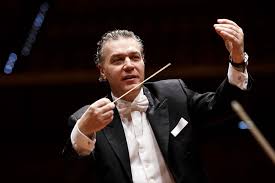
With Luigi Piovano, Silvia Careddu and the Malta Philharmonic Orchestra, "Voices of the Wind" becomes a meditation on the sound born from the invisible and returns to the heart.
by Marialuisa Veneziano
St. Julian’s, Malta – 10 May 2026
The wind is the most mysterious creature in the world. He has no body, yet every body recognizes him. He has no voice, yet he can complain between the cracks, singing on the water, fragrant among the leaves, omen in the closed rooms. It does not belong to anyone, it does not let itself be retained, it cannot be possessed; and yet, when it passes, nothing remains exactly as it was before.
The music resembles him in this: it comes from the invisible and the invisible returns. It lives in the air, but it is not only air. It is vibration, breath, time that takes body for an instant and then melts, leaving in the soul a deeper trace of many visible things. That's why "Voices of the Wind", the Malta Philharmonic Orchestra concert conducted by Luigi Piovano, with Silvia Careddu at the flute, in the Grand Ballroom of the Radisson Blu Resort in St Julian’s, it appears as something more than a musical program: it appears as a meditation on the very essence of sound.
The wind, in this poetic architecture, is not a simple theme. It's a secret law. It is the principle that unites what might seem far away: Responsibility by Matteo Rubini, presented in the world premiere; the Concerto for flute and string orchestra by André Jolivet; Symphony No. 40 in G minor K. 550 by Wolfgang Amadeus Mozart. Three different worlds, three epochs, three languages, and yet one question: how can the invisible be voiced? How can what has no matter become form, emotion, destiny?

The concert moves like an inner novel. It does not proceed by brusque combinations, but by successive transformations. At first there is the material that is still enigmatic, still collected in its own sound womb. Then that matter becomes thin, air, breath, invocation. Finally the breath enters the great classical form and discovers a wound: Mozart, that is, beauty when it stops being ornament and becomes consciousness of pain.
The centre of this journey is Luigi Piovano. Not simply director, but interpreter in the highest and oldest sense of the term: he who crosses a text to reveal not only the structure, but the spiritual necessity. In him the directory gesture never appears as an exercise of power. There is no will of domination, there is no spectacular fulfillment, there is no anxiety to leave a personal footprint that sometimes ends up obscuring music. There is, however, a more rare form of authority: that of those who can listen so deeply to be able to drive.
Its direction seems to be born from a silent pact with sound. They rained not force the score: interrogates her. Not the capacity of external intentions: it seeks its inner heartbeat. It does not turn on emotion with external gestures: it lets it rise from the form itself, like water from a hidden source. It is this, perhaps, its most seductive quality: to make discipline a form of ardour, and of anger a form of thought.
The Malta Philharmonic Orchestra, under this guide, does not appear as a simple executive companion, but as a sensitive organism. The sound of the arches, in particular, seems to become mobile matter: now dense and terrestrial, now transparent, now restless, now suspended. Piovano knows the nature of the bows not far away, but from the inside; he knows the weight of the ham on the rope, the point where the pressure becomes voice, the thin threshold beyond which the sound risks to stiffen or, on the contrary, to evaporate. For this reason he manages to obtain from the orchestra not only precision, but breath.
And it is from the breath of the arches that the journey begins.
Responsibility by Matteo Rubini stands as an initial threshold, and there could be no more suitable threshold. The title belongs to the alchemic imagination: the Responsibility is the double creature, the union of opposites, the figure in which what was separated finds a new identity. It is matter and spirit, male and female, light and shadow, one and multiple. Already in this word is contained a philosophy of music: because every sound, in the end, is union of opposites. It comes from a physical gesture, but it produces an immaterial effect; it belongs to time, but it seeks the eternal; it vibrates in a concrete space, but it opens up interior places that no geography can measure.
Sharpened to the string orchestra, this idea acquires a particular force. The arches are, by their nature, alchemic instruments. They need more concrete matter — wood, ropes, arch, hand, pressure — to generate something that immediately seems to get rid of matter. Their sound can be flesh and fog, nerve and light, body and ghost. In Responsibility, this duplexity becomes an expressive principle: the sound seems to seek a form while still remembering the chaos from which it comes.
Piovano accompanies this birth with a cure that has something rabdomanti. It does not stiffen the page in a demonstration reading; it does not make it ostentatiously contemporary, as if the novelty coincides with the harshness. It allows her to breathe in its complexity. It brings out tensions, stratifications, internal planes; it lets the orchestra become a laboratory of metamorphosis. The Malta Philharmonic Orchestra responds with a careful, moldable sound, able to switch from compactness to rarefaction without losing intensity.
At this moment the wind still has no recognizable voice. It's original energy. It is what moves the matter before matter can sing. It is the initial fremite of creation, the dark and powerful moment in which sound is not yet speech, but already contains in itself the desire to become it.
From here the passage to Jolivet does not appear as a change of scene, but as a natural consequence. The matter that in Rubini sought form now finds its breath in the flute. The string orchestra, after being an alchemic laboratory, becomes a ritual landscape. The wind, which first stirred the sound substance from the inside, now concentrates in a luminous point: the human breath that passes through the flute and turns into invocation.

The Concerto for flute and string orchestra by André Jolivet thus occupies the spiritual center of the program. Jolivet does not conceive the flute as an instrument of simple grace, nor as a pastoral voice destined to embroide arabesque over an orchestral fabric. Its flute belongs to a more ancient, almost sacred dimension. It is a tool that seems to recall the time when music was not yet entertainment, nor encoded form, but magic gesture, prayer, man’s attempt to dialogue with what oversees it.
In Jolivet the flute is exposed breath. It does not hide its body origin; on the contrary, it transfigures it. Every sound seems to be born of a primary need: inhale, exhale, call, respond. It is a song that preserves the memory of the body and, however, overcomes it, as if the breath, coming out of the instrument, stopped belonging to an individual and became the voice of something wider.
Silvia Careddu enters this page as an essential figure. His role is not that of a soloist who stands on the orchestra for virtuosity or brilliance. It is something subtler and more difficult: it must embody the point where air becomes thought. The flute, in his hands, must be able to be light and wounded, lightness and restlessness, grace and sorrow. In Jolivet the technique can never remain surface: it has to burn without consuming, it has to become controlled fever, probation, singing that seems to be born from a remote place of the soul.
Dialogue with the orchestra is then decisive. And here the passage from Rubini to Jolivet shows all his poetic intelligence: the arches that before were matter in transformation now become space of appearance. They do not simply accompany the flute; they surround it, wait for it, provoke it, sometimes protect it. I am ground under a voice of air. I am shadowed because the light can be perceived. They are collective memory around a solitude that sings.
Piovano builds this relationship with particular finesse. The balance between soloist and orchestra is never only a question of sound proportions; it is a question of musical thought. A less sensitive director could just not cover the flute. Piovano does more: creates emotional space so that the flute can mean. The orchestra retracts without emptying itself, sustains without restraining, participates without intruding. Careddu can move in a living landscape, not in front of an inert background.
The result is a dramaturgy of breath. The flute rises, bends, turns thin, turns on; the bows respond with a sound matter that is now pulsated, now it becomes veiled, now it seems to hold under the surface an ancient energy. It is like witnessing a rite in which no one proclaims the sacred, but everything suggests it. The wind, here, finally has a voice. But not a domestic voice, not a peaceful voice. It's a rumor. A voice that does not comfort immediately, because first he wants to awaken.
And after the rite, after the breath, after this ascent of the air towards the song, Mozart arrives. But not as a return to serenity. Not as a reassuring approach to classical clarity. The passage to Symphony No. 40 in G minor K. 550 It is much deeper: it is the moment when the breath, after being voiced, enters the form and discovers its restlessness.
Mozart comes as a light, yes, but a light that knows the shadow. Lent is one of the most famous works of the entire musical history, and this celebrity often risks betraying it. Familiarity can become a fog: we believe we know what we recognize. But the Symphony no. 40 is not a page to be recognized; it is a page to be subjected, in the noblest sense of the term. You have to let yourself be reached by his trouble, his fever, his painful grace.
The famous attack of the first movement is not a theme that presents itself to the world with safety. It's a tremor. It seems to be born already on the run, like a thought that can't stand still in itself. The melodic line has the naturalness of the breath, but a restless, anxious, almost pursued breath. Under the perfection of writing, under the balance of proportions, a dark current runs. Mozart does not cry the pain: it makes it inevitable.
Here is the great interpretative difficulty. Mozart does not allow sentimental abandonment or academic coldness. If you charge it too much, you betray it; if you wash it too much, you kill it. Piovano seems to be at the most difficult and true point: the one in which the form remains clear, but lets see the wound that it contains. It does not romanticize Mozart from the outside; it frees hidden romance. It does not add pathos; it removes what would prevent authentic pathos from breathing.
The Malta Philharmonic Orchestra is called, in this symphony, to a very high exercise of emotional discipline. In the first movement, the bows must support a continuous nervous pulsation, without turning it into concitation. Energy must advance, but without losing elegance; tension must grow, but without becoming an emphasis. Each sentence requires a control of the phrasing that is both rational and ardent: because in Mozart the most intense feeling often lives in the purest line.
TheAndante opens another space, but not an easy peace. It is a thoughtful sweetness, an oblique light, a tenderness that seems to know already to be threatened. Here the orchestra must sing without abandoning itself; it must make the Mozartian calm feel that it is not absence of pain, but pain kept in shape. They rained, on a similar page, can reveal their taste for the measure: that measure that does not turn off emotion, but makes it more penetrating, like a word called low voice at the exact moment.
The Minu is not an elegant parentheses. It is a severe dance, almost sculpted, in which the 18th century grace stiffens into something more shady. Here the rhythm must not float: it must affect. It must show how dance, in this symphony, is crossed by a more serious force. And the Final, with its lucid and relentless race, it achieves not a liberation, but a necessity. It does not seem to end a speech: it seems to seal a destiny.

And then the whole itinerary becomes clear. Responsibility was the birth of sound matter, its restless alchemy. Jolivet It was the time when that matter was breathing, and the breath invocation. Mozart is the point where breathing becomes consciousness, and consciousness discovers its fragility. The wind passes through the three works changing face: first primordial force, then breath ritual, finally inner motion of the soul.
This gradualness is the true soul of the program. Nothing is random. Rubini prepares Jolivet because the string orchestra, after exploring its subject, can open itself to the voice of the flute. Jolivet prepares Mozart because the breath, once become a song, can enter the highest architecture of the form. Mozart collects both and transfigures them: matter and breath become thought, thought becomes destiny, destiny becomes music.
In this design, Luigi Piovano appears as the secret narrator. He does not tell with words, but with proportions, breaths, transitions, sound weights, silences. His way of directing possesses something deeply romantic, not because it induces sentimentalism, but because it conceives music as a revelation of interiority. The most true romance, in fact, is not excess of tears: it is the ability to feel the infinite in a finite form.
Piovano directs as he knows that every note has a responsibility. There is no superfluous gesture, there is no complete abandonment. Even when the music turns on, it seems to be guided by an inner clarity. Yet this lucidity does not cool: on the contrary, it moves. Because what really touches is not the emotion shown, but the one held to the point where it becomes necessary. The heart, sometimes, beats stronger not when it is assaulted, but when it is recognized.
The Malta Philharmonic Orchestra, in this perspective, becomes the body through which the thought of Piovano becomes audible. His most precious quality is not only in precision, but in the ability to change emotional state. In Rubini, the orchestra becomes a cangiant matter, almost mineral and vibrating together; in Jolivet, it becomes a ritual landscape, able to breathe around the flute; in Mozart, it rediscovers the clarity of form, but without losing the human temperature conquered in the previous path. It is as if the orchestra learned, during the concert, to speak three different languages of the same truth.

And Silvia Careddu, at the centre of this journey, represents the most fragile and brightest step. Its flute is the threshold between the orchestra and the soul, between the matter of the bows and the Mozartian consciousness. Without that breath, the journey from Rubini to Mozart would be less necessary. Jolivet instead becomes the bridge: the page in which the air acquires a face and prepares the listener to understand that, in Mozart, even the most perfect form is nothing but breath rendered immortal.

The frame of Malta adds an almost symbolic resonance to the concert. An island is a romantic place par excellence: separate and open, collected and crossed, stops in its stone and delivered to the winds. The Mediterranean, with its lights and shadows, with its memory of departures, landings, shipwrecks and returns, seems to resonate ideally around this program. Outside, the real wind of the sea; inside, the transfigured wind of music. Outside, the air that passes through the water; inside, the sound that passes through the bodies.
But the most important place, in the end, is not the hall. He is the listener. Because music, when it is really such, is not limited to happening before us: it happens in us. Enter a region where thought is not yet a word and feeling is not yet a confession. He finds us before we explained ourselves. Perhaps this is his highest power: not simply saying what we feel, but revealing what we did not know to try.
"Voices of the Wind" thus becomes an almost prophetic title. The voices of the wind are not only those of the instruments. They are the voices of matter, breath, memory, form, wound. They are the voices of everything in music passes without staying and, just passing, remains forever.
Eventually, the wind can't be seen. But no one, after hearing it, can deny that it existed. So music: vanishes in the air, yet it continues to vibrate where the air no longer arrives. It remains in thought, in the body, in a sort of nostalgia without precise object. It's like a call. Like a promise. Like a wound that doesn't hurt because it finally found its shape.
And in this form — built by the vision of Luigi Piovano, by the breath of Silvia Careddu, by the changing voice and participation of the Malta Philharmonic Orchestra — the concert finds its deepest truth: music is not evasion from the world, but revelation of its secret. It does not leave us from life; it returns more intense, more fragile, more worthy of being listened.
When the last note turns out, the void remains. It remains that particular silence that follows only the necessary experiences: a inhabited silence, thoughtful, almost grateful. That's where the concert continues. No more in the instruments, no more in the room, no more in the manager's gesture, but inside those who really listened.
Because the wind passes.
Music passes.
But what they have moved in us, that not: that continues to tremble.


Leave a comment